

On this page
Top picks at a glance
As an Amazon Associate I earn from qualifying purchases.
- 1
 TIGEROAR 110V Oil Pump9.7/10View on Amazon
- 2
 OMT 12V Diesel Pump9.7/10View on Amazon
- 3
 BestCosy 3.4 GPM Pump9.6/10View on Amazon
- 4
 BestCosy 2.8 GPM Pump9.6/10View on Amazon
The generator needs fuel on a cold morning, the can is too heavy to tip without spilling, and the battery vs electric transfer pump question suddenly matters. Both kinds move fuel without lifting and pouring, and the real difference is where the power comes from and how fast each one moves it. Battery and electric models were compared side by side on flow rate, hoses, lift, power source and warranty, using only what each Amazon listing publishes.
GoatGearLab earns a commission when you buy through links on this page, at no extra cost to you. As an Amazon Associate I earn from qualifying purchases. Affiliate disclosure.
Quick verdict: choose the battery side if the fuel sits far from any outlet and the job is a can or a barrel at a time, as the BestCosy examples show with battery power, a 47 inch discharge tube and a stated flow of 2.8 or 3.4 GPM. Choose the electric side if power is nearby and the job needs higher flow, as the Orion Motor Tech example shows at up to 11.9 GPM and the TIGEROAR example shows at 18 GPM. Read this as a comparison of power sources first and of models second.
Four examples
| # | Product | GoatGear Score | Buy |
|---|---|---|---|
| 1 | TIGEROAR 110V Oil Pump | 9.7/10 | Buy on Amazon |
| 2 | OMT 12V Diesel Pump | 9.7/10 | Buy on Amazon |
| 3 | BestCosy 3.4 GPM Pump | 9.6/10 | Buy on Amazon |
| 4 | BestCosy 2.8 GPM Pump | 9.6/10 | Buy on Amazon |

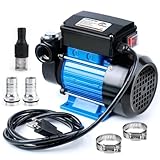
TIGEROAR 110V Oil Pump
A 110V AC electric transfer pump rated at 18 GPM with a 49 ft lift, a 1/2 HP motor and a 1-year limited warranty.
Pros
- Maximum flow of 18 GPM, the highest flow rating among these four models
- 1/2 HP all-copper motor with a cooling fan for heat dissipation while running
- Cast aluminum casing, cast iron pump head and iron rear cap with an anticorrosion process
- 1-year limited warranty with lifetime technical support and replies within 24 hours
Cons
- Needs a 110V AC outlet, so it cannot run where no mains power exists
- No hose length is stated and no hose is named, so the buyer sources hose and fittings for the G3/4 adapters
- Stated fluids are diesel, biodiesel, kerosene and light oils, with no mention of gasoline
- Power cord is 5.9 ft, so the outlet must sit close to the pump

OMT 12V Diesel Pump
A self-priming 12V DC diesel transfer pump kit rated up to 11.9 GPM with a 0.2 HP motor, a 32 ft 10 in lift and a 1 year warranty.
Pros
- Up to 11.9 GPM with a self-priming 0.2 HP (175W) motor
- 16 ft 5 in maximum suction and 32 ft 10 in maximum lift
- Kit includes inlet and outlet hoses, nozzle, bypass valve, mesh strainer and mounting base
- Adjustable trigger nozzle gives manual flow control and continuous pumping
Cons
- Needs a 12V power source, so it cannot run from a wall outlet or on its own batteries
- Maker asks for a 5 minute rest after every 10 minutes of continuous use when ambient temperatures exceed 45 degrees C (113 degrees F)
- High-viscosity fluids such as motor oil are not for this pump, per the maker
- Stated fluids are diesel, kerosene and light oils, with no mention of gasoline

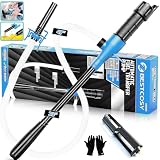
BestCosy 3.4 GPM Pump
A battery powered cordless fuel transfer pump rated at 3.4 GPM with a 47 inch discharge tube, an adjustable nozzle and a 1 year warranty.
Pros
- 3.4 GPM flow, the fastest of the two battery models
- Runs on 2 D-cell or 6 AA batteries, so it works where no outlet exists
- Built-in adjustable nozzle dials in flow or locks for a leak-free, drip-proof stream
- Over 1,000 gallons on a single set of fresh batteries, per the maker
Cons
- Batteries are not included, so the first use needs a fresh set
- 3.4 GPM sits well below the electric models' stated flow
- No lift or suction figure is stated
- Suits non-corrosive liquids only, so corrosive chemicals are out
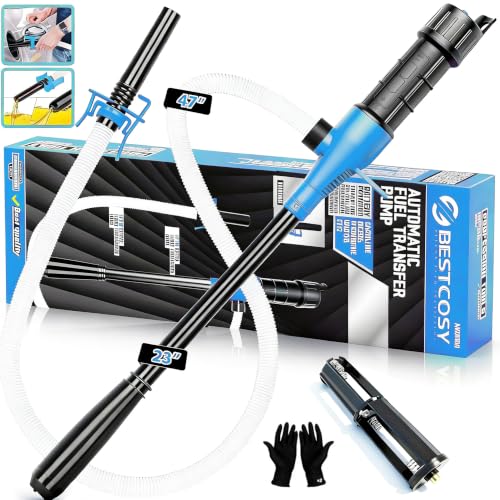
BestCosy 2.8 GPM Pump
A battery powered cordless fuel transfer pump rated at 2.8 GPM with a 47 inch discharge tube, gloves and a 1 year warranty.
Pros
- 2.8 GPM flow with a 47 inch discharge tube
- Runs on 2 D-cell or 6 AA batteries, so it works where no outlet exists
- 16 inch suction tube fits 3- to 5-gallon gas cans, Jerry cans, pails and 55-gallon barrels
- Over 1,000 gallons on a single set of fresh batteries, per the maker
Cons
- Batteries are not included, so the first use needs a fresh set
- 2.8 GPM is the lowest flow rating in this comparison
- No adjustable nozzle is named, unlike the 3.4 GPM BestCosy model
- Suits non-corrosive liquids only, so corrosive chemicals are out
As an Amazon Associate I earn from qualifying purchases.
Also worth comparing
 PUMPTOR Fuel Transfer Pump Battery Powered PortableCheck price on Amazon
 Milwaukee 2771-20 M18 Transfer PumpCheck price on Amazon
 Battery Powered Water Transfer PumpCheck price on Amazon
 SEDY Electric Hand PumpCheck price on Amazon
 HORUSDY Battery Portable Battery Operated Gas & Water PumpCheck price on Amazon
 ANSE Rechargeable Fuel Transfer Pump Battery Powered Model X1Check price on Amazon
Battery vs electric transfer pump: side by side
| Pump | GoatGear Score | Power | Flow rate | Discharge hose | Max lift | Warranty | Amazon |
|---|---|---|---|---|---|---|---|
| TIGEROAR 110V Oil Pump | 9.7/10 | 110V AC | 18 GPM | Not stated | 49 ft | 1-year limited | View on Amazon |
| OMT 12V Diesel Pump | 9.7/10 | 12V DC | Up to 11.9 GPM | 6 ft 6 in discharge hose | 32 ft 10 in | 1 year | View on Amazon |
| BestCosy 3.4 GPM Pump | 9.6/10 | 2 D-cell or 6 AA batteries | 3.4 GPM | 47 inch discharge tube | Not stated | 1 year | View on Amazon |
| BestCosy 2.8 GPM Pump | 9.6/10 | 2 D-cell or 6 AA batteries | 2.8 GPM | 47 inch discharge tube | Not stated | 1 year | View on Amazon |
Figures come from the product pages and reflect what the maker rates, current as of 20 November 2026.
How each side moves fuel
A battery pump carries its power with it. Both BestCosy models run on 2 D-cell or 6 AA batteries, not included, and the maker states each set of fresh batteries can move over 1,000 gallons.
An electric pump needs power at hand. The Orion Motor Tech kit runs on 12V DC and the TIGEROAR pump on 110V AC through a 5.9 ft cord. For more kits with hoses and nozzles in the box, see the transfer pump kits picks.
Flow rate, suction and lift
Flow rate splits the sides most clearly. The battery models state 2.8 GPM and 3.4 GPM, while the electric models state up to 11.9 GPM and a maximum of 18 GPM.
Lift and suction are stated only on the electric side: the Orion Motor Tech kit lists 16 ft 5 in of maximum suction and 32 ft 10 in of maximum lift, and the TIGEROAR pump lists a maximum lift of 49 ft. Neither battery model states a lift figure. The diaphragm vs centrifugal transfer pump comparison explains two pump mechanisms behind the flow figures.
Hoses, nozzles and fittings
Both battery models come with a 47 inch discharge tube and a 16 inch suction tube for 3- to 5-gallon gas cans, Jerry cans, pails and 55-gallon barrels. The 3.4 GPM model adds a built-in adjustable nozzle; the 2.8 GPM model names no nozzle.
The Orion Motor Tech kit includes a 4 ft 11 in supply hose and a 6 ft 6 in discharge hose with a nozzle. The TIGEROAR pump comes with G3/4 hose adapters at the G1 inlet and outlet, with no hose length stated.
Warranty and listing gaps to check
All four models state a warranty term: both BestCosy models and the Orion Motor Tech kit state a 1 year warranty, and the TIGEROAR pump states a 1-year limited warranty with lifetime technical support.
The gaps sit elsewhere: neither battery model states a lift figure, the TIGEROAR pump states no hose length, and the Orion Motor Tech kit asks for a rest break in hot weather.
Which should you choose?
Choose a battery transfer pump if the fuel sits far from any outlet and the job is a can or a barrel at a time, as the BestCosy models show with 2.8 and 3.4 GPM and a 47 inch discharge tube. Keepers moving smaller loads can also compare the small oil transfer pump picks.
Choose an electric transfer pump if power is nearby and the job needs higher flow or a stated lift, as the Orion Motor Tech kit shows at up to 11.9 GPM and the TIGEROAR pump at 18 GPM with a 49 ft lift. For water from a rain barrel, see the transfer pump for rain barrel picks.
Whichever side fits, match the pump to the fluids the maker names and to the power at hand.
Around the Barn
- Use fresh batteries in a battery pump, and clean the tube after each use.
- Keep battery pumps to non-corrosive liquids only, and keep the electric kit away from high-viscosity fluids such as motor oil.
- Rest the Orion Motor Tech kit for 5 minutes after every 10 minutes of continuous use when ambient temperatures exceed 45 degrees C (113 degrees F).
- Fix the TIGEROAR pump down through the mounting holes in its base, and keep its 5.9 ft cord within reach of an outlet.
FAQs from goat keepers
Is a battery or electric transfer pump better for a farm?
It depends on power and flow. Battery models run on 2 D-cell or 6 AA batteries and state 2.8 and 3.4 GPM, while the electric models state up to 11.9 GPM and 18 GPM but need a 12V source or a 110V outlet.
How much fuel can a battery transfer pump move on a single set of batteries?
Both BestCosy models state over 1,000 gallons on a single set of fresh batteries. The maker also says to always use fresh batteries.
Can these pumps move gasoline?
The two battery models name gasoline, diesel, water and light oils, non-corrosive liquids only. The electric models name diesel, kerosene and light oils, with no mention of gasoline.
What hoses come with an electric transfer pump?
The Orion Motor Tech kit includes a 4 ft 11 in supply hose and a 6 ft 6 in discharge hose with a nozzle. The TIGEROAR pump comes with G3/4 hose adapters and states no hose length.
Do any of these transfer pumps state a warranty?
Yes, all four do: three state a 1 year warranty, and the TIGEROAR pump states a 1-year limited warranty with lifetime technical support.
Behind the Farm Score
| Product | GoatGear Score | Perf. /35 | Build /25 | Value /25 | Safety /10 | Warranty /5 |
|---|---|---|---|---|---|---|
| TIGEROAR 110V Oil Pump | 9.7 | 32 | 22 | 21 | 7 | 4 |
| OMT 12V Diesel Pump | 9.7 | 30 | 21 | 21 | 7 | 4 |
| BestCosy 3.4 GPM Pump | 9.6 | 29 | 20 | 21 | 5 | 4 |
| BestCosy 2.8 GPM Pump | 9.6 | 28 | 20 | 20 | 5 | 4 |
Points become a score between 9.2 and 9.8 by simple proportion, which means a higher point count always reads higher.
The GoatGear Score weighs performance, build, value, safety and warranty. All four models state at least one safety feature and a warranty term, so all four earn points on both. The TIGEROAR leads on stated flow and lift, the Orion Motor Tech kit on hoses in the box, and the battery models on working away from power. How we pick explains the weights.
More from the barn
See every tractor and farm implements guide and all farm water guides.
More picks: transfer pump kits, transfer pumps for rain barrels, small oil transfer pumps and diaphragm vs centrifugal transfer pumps.