

On this page
Top picks at a glance
As an Amazon Associate I earn from qualifying purchases.
- 1
 DRATO Goat House9.6/10View on Amazon
- 2
 ShelterLogic Corral Livestock Shelter9.5/10View on Amazon
- 3
 Aoxun 12' x 12' Corral Horse Shelter Shed9.5/10View on Amazon
- 4
 TEHAUX Goat BlanketView on Amazon
- 5
 YOHKOH Horse ShelterView on Amazon
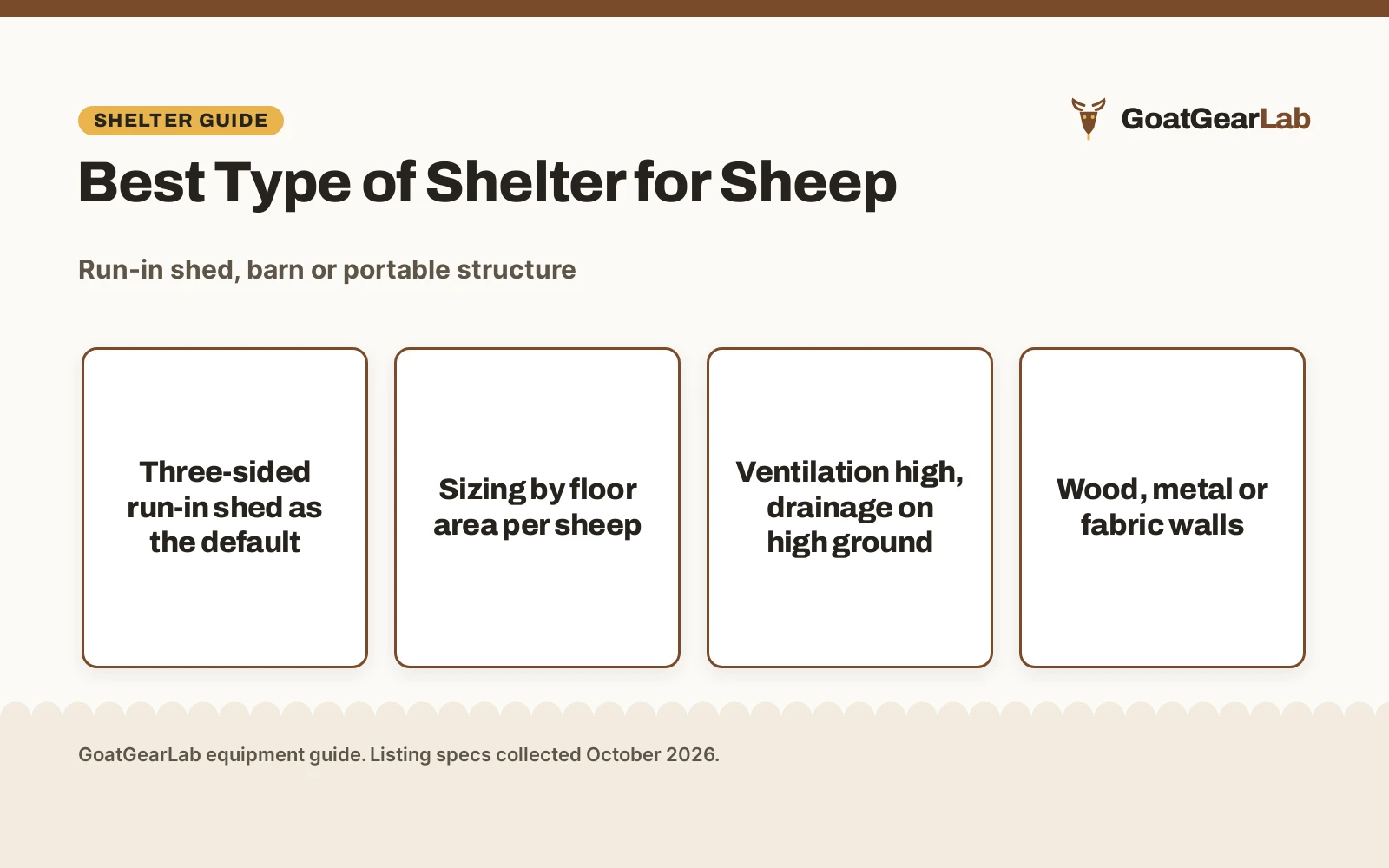
Sheep handle cold better than they handle wet wind, so the best type of shelter for sheep is a simple three-sided run-in shed that blocks wind and rain while leaving one side open for air. The short version: give them a roof, three walls and a dry floor, face the open side away from the prevailing wind, and size it so every sheep can lie down inside. This guide covers shelter styles, sizing, ventilation, materials and the portable options that move with the flock.
Also worth comparing
 TEHAUX Goat BlanketCheck price on Amazon
 YOHKOH Horse ShelterCheck price on Amazon
GoatGearLab earns a commission when you buy through links on this page, at no extra cost to you. As an Amazon Associate I earn from qualifying purchases. Affiliate disclosure.
Best type of shelter for sheep: the short answer
A three-sided loafing shed is the best type of shelter for sheep in most climates: it keeps rain off the fleece, blocks the wind that chills wet wool, and leaves one side open so air keeps moving and ammonia never builds up. Sheep walk in and out as they please, which means less stress and fewer of the health problems that come from confinement. A fully enclosed barn works too, but it needs real ventilation planned into the build, not added later.
Three shelter styles compared
Three-sided run-in shed
The workhorse of sheep housing. Three walls, a sloped roof and one open side. Sheep choose when to use it, which is exactly the point: they shelter when the weather turns and stay out when it is fine. Build it sturdy enough to stand up to a flock leaning on the walls, and face the open side away from the wind that brings rain.
Enclosed barn
A barn suits lambing season, sick animals and climates with long hard winters. The trade-off is air: a closed barn traps moisture from breath and bedding, and still, damp air is worse for sheep than cold air. If you enclose, plan high vents and doors on both ends so you can open the barn up on calm days.
Fabric and hoop structures
Hoop houses and fabric-covered structures cover ground fast and move when the flock moves. As a size reference, one fabric structure in our listings measures 13.9 by 8 feet with a 4.3 foot peak and 111.2 square feet of floor area, and carries a 3000 mm waterproof figure. That is the kind of number to look for: a stated waterproof figure, not just the word waterproof.
Sizing the shelter for your flock
The only honest way to size a sheep shelter is floor area per animal: every sheep should be able to lie down at the same time with room between them. A 111.2 square foot structure holds a small flock comfortably; double the flock and you need roughly double the floor. Lambing season changes the math, because ewes with lambs need corners and jugs, not just floor.
Height matters less than floor, but head clearance still counts for the keeper: a 4.3 foot peak lets sheep stand tall while keeping the volume small enough to stay warm. Walk the structure before the flock uses it and check that no frame member sits at head height for a horned ram.
Ventilation and drainage
Ventilation is the difference between a shelter and a damp box. Warm air rises, so vents belong high: a ridge vent or gable openings pull moist air out while the open side or doors supply fresh air low. Never close a shelter tight against the cold. Sheep generate heat and moisture with every breath, and a sealed building turns that moisture into condensation on the walls.
Drainage starts with the site, not the building. Put the shelter on the highest ground the flock can reach, grade the floor so water runs out the open side, and bed deep with straw. A shelter on low ground stays wet no matter how good the roof is, and wet bedding is the quickest route to hoof problems.
Materials: wood, metal or fabric
Wood is the traditional choice: warm, easy to repair and forgiving to build with. Metal panels go up fast and shrug off weather, but they condense moisture on the underside and ring loud in a hailstorm. Fabric covers are the quickest way to add square footage and the easiest to move, with the trade-off of a shorter working life.
Whatever the walls, the floor is where the money goes. Dirt floors work if they drain, but they turn to soup in a wet season. Raised platforms or deep bedding over gravel keep feet dry. Our wood vs metal shelter comparison walks through the material trade-offs in more detail.
Windbreaks and portable options
A full shelter is not always the answer. In open pasture, a windbreak fence cuts the wind chill that does most of the damage, and sheep will bed down in its lee on all but the worst nights. Portable panels and fabric shelters let the shelter follow the rotation instead of the flock walking back to the barn every night.
Portability has a weight cost: one fabric structure in our listings weighs 12.7 pounds in its carry bag, which is moveable by one person, while a wooden run-in shed never moves at all. Match the structure to how you graze: daily moves want light and portable, winter quarters want solid and permanent. Our portable vs permanent shelter guide compares the two approaches.
Read the listing twice
Portable shelter listings are full of big claims, so read for the figures. Look for stated dimensions, like the 13.9 by 8 foot footprint above, a stated waterproof figure in millimeters, and a stated weight, like the 12.7 pound carry weight. If a listing says waterproof without a number, treat it as water resistant until proven otherwise.
Individual protection is a different product entirely: one livestock blanket in our listings measures 108 by 85 centimeters, or 42.44 by 33.41 inches, weighs 1 pound and is rated waterproof and windproof. Blankets suit lambs, show animals and shearing-season recovery; they are not a substitute for a flock shelter.
What this guide does not cover
This guide does not cover lambing jugs in detail, predator fencing or guardian animals; those belong to their own guides. It also does not cover shearing schedules, though the shelter you choose affects fleece: wet fleece is heavy fleece, and a dry shelter keeps the clip clean. See our fencing and shelter category for the full set.
FAQs from goat keepers
Why does sheep shelter matter if sheep handle cold well?
Sheep handle cold, but wet wind is a different problem: rain drives through the fleece and wind strips the heat. A three-sided shelter blocks both while keeping air moving, which is why it suits sheep better than a sealed barn.
Do sheep need shelter in mild climates?
They still need a windbreak and a dry place to lie down. Even in mild climates, a week of cold rain is the weather that causes trouble, and a run-in shed gives the flock a place to wait it out.
How do I build a shelter for sheep?
Start with the site: high, drained ground. Frame three walls and a sloped roof, face the open side away from the prevailing wind, and bed the floor deep. Size it so every sheep can lie down at once.
More from the barn
See every goat shelter guide and all fencing and shelter guides.
More guides: portable vs permanent shelter and wood vs metal shelter.