

On this page
Top picks at a glance
As an Amazon Associate I earn from qualifying purchases.
- 1
 Frost Proof Yard Hydrant Frost Free Outdoor Faucet FreezeView on Amazon
- 2
 Frost Proof Yard HydrantView on Amazon
- 3
 4.25FT Frost-Free Yard HydrantView on Amazon
- 43.25FT Frost-Free Yard HydrantView on Amazon
- 5
 Frost-Free Outdoor Faucet: Freeze-Proof Yard Hydrant HeadView on Amazon
- 6
 4.25FT Frost Proof Yard HydrantView on Amazon
Morning chores in a goat yard start with water, and the choice of frost free hydrant vs hose bib decides whether that water keeps flowing when cold weather arrives. A hydrant puts the shutoff valve underground, where it drains itself when shut, while a hose bib keeps the valve on a wall, above ground and exposed to the cold. This guide compares frost-free yard hydrants and explains burial depth, drain valves and hose connections in plain terms.
Also worth comparing
 Frost Proof Yard Hydrant Frost Free Outdoor Faucet FreezeCheck price on Amazon
 Frost Proof Yard HydrantCheck price on Amazon
 4.25FT Frost-Free Yard HydrantCheck price on Amazon
- 3.25FT Frost-Free Yard HydrantCheck price on Amazon
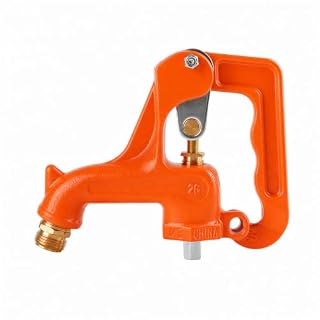 Frost-Free Outdoor Faucet: Freeze-Proof Yard Hydrant HeadCheck price on Amazon
 4.25FT Frost Proof Yard HydrantCheck price on Amazon
GoatGearLab earns a commission when you buy through links on this page, at no extra cost to you. As an Amazon Associate I earn from qualifying purchases. Affiliate disclosure.
Frost free hydrant vs hose bib: the short answer
Pick a frost-free hydrant when the water source must sit out in the yard, away from a building, and keep working through cold weather. The valve sits underground, below the frost line, and a drain hole empties the pipe when the hydrant is shut, so standing water does not sit in the pipe to freeze. Pick a hose bib when the water source sits on the wall of a barn or house, close to the building, and the pipe behind it stays protected from cold. A hose bib is a wall spigot with the valve above ground, so it suits a sheltered spot near the building rather than an open pasture.
For a goat yard, the hydrant is the usual answer: it brings water to the pasture, the pen or the garden. The hydrants below run in ranking order. A heated hose pairs with either choice; see the frost free vs heated water hose guide for the comparison.
Hydrants compared
| Hydrant | Total length | Bury depth | Hose connection | Valve and build |
|---|---|---|---|---|
| JIANBENKJ 5.25 ft hydrant | 5.25 ft, 63 inches | 36 inches | 3/4 inch | Brass lead-free foot valve, cast iron head, NSF/ANSI 372-2016 |
| FODACEL 4.25 ft hydrant | 4.25 ft, 51 inches | 24 inches | 3/4 inch | Brass lead-free foot valve, cast iron head, NSF/ANSI 372-2016 |
| Ebusin 4.25 ft hydrant | 4.25 ft, 51.0 inches | 24 inches | 3/4 inch NPT | Copper adapter, galvanized steel hose, lead-free material |
| Himaweek 3.25 ft hydrant | 3.25 ft | Not stated | 3/4 inch NPT | Copper adapter, galvanized steel hose, lead-free material |
JIANBENKJ 5.25 ft hydrant
The JIANBENKJ hydrant is the longest here, at 5.25 ft total length with a 36 inch bury depth, and it carries the heaviest stated build: a cast iron head, a 1 inch diameter zinc-plated tube with a green polyester powder coated finish, and a brass lead-free foot valve certified to NSF/ANSI 372-2016. The maker lists a 3/4 inch FNPT hose connection and a weight of 14.3 pounds. The install note says to bury the hydrant at least 12 inches deep, deeper in colder climates, and to check the local frost line depth. Keep the drain hole clear: the maker suggests a small bucket or gravel over it, not soil.
FODACEL 4.25 ft hydrant
The FODACEL hydrant totals 4.25 ft, or 51 inches, with a 2 ft bury depth, and the maker gives 2.25 feet as the recommended height for the part above ground. The build pairs a cast iron head with a galvanized pipe and a brass connector, and the brass lead-free foot valve is certified to NSF/ANSI 372-2016. The hose connection is 3/4 inch FNPT for a standard 3/4 inch hose coupling. The maker says it can sit below the frost line in most areas of the United States, with the brass valve below the ground frost line, so the length must match the local frost depth.
Ebusin 4.25 ft hydrant
The Ebusin hydrant totals 4.25 ft with a 24 inch bury depth and a 3/4 inch NPT garden hose connection. The hose adapter is copper and the hose is galvanized steel, and the maker describes the hydrant as lead-free material with fast drainage and smooth valve action. No assembly is required, and water drains out the bottom when the hydrant is shut, with no need to plug the bottom drain hole. Questions go to the maker by email, with answers promised within 24 hours, plus one year of aftermarket support.
Himaweek 3.25 ft hydrant
The Himaweek hydrant is the most compact of the group at 3.25 ft total length, with a 3/4 inch NPT garden hose connection. The build uses lead-free materials with a copper adapter and a galvanized steel hose, with fast drainage, smooth valve action and no leaks. It needs no assembly and drains at once when shut, with no need to plug the bottom drain hole. The maker offers customer service within 24 hours for questions.
How a frost-free hydrant drains
When the hydrant is shut, the underground valve opens a small drain hole and the water stored in the pipe drains out. When the hydrant is turned on, the underground valve closes and water flows. The drain hole is the part that makes the frost-free design work, so it must stay clear: the maker suggests a small bucket over it or gravel around it, not soil, so water drains fully when the hydrant is shut. The Ebusin and Himaweek hydrants drain at once when shut, with no need to plug the bottom drain hole.
Bury depth and the frost line
Bury depth decides whether a hydrant fits the local frost line. The JIANBENKJ hydrant lists a 36 inch bury depth, the Ebusin and FODACEL hydrants list 24 inches, and the Himaweek hydrant does not state a bury depth. The JIANBENKJ install note says to bury the hydrant at least 12 inches deep, deeper in colder climates, and to check the local frost line depth, which varies by region. The FODACEL hydrant gives 2.25 feet as the recommended height above ground, with the brass valve below the ground frost line, so the length must match the local frost depth. Measure the frost line before ordering.
Hose connections and materials
Each hydrant in this guide lists a 3/4 inch hose connection, so a standard 3/4 inch hose coupling fits. The JIANBENKJ and FODACEL hydrants state a 3/4 inch FNPT connection, while the Ebusin and Himaweek hydrants state 3/4 inch NPT. The JIANBENKJ and FODACEL hydrants state a solid brass lead-free foot valve, certified to NSF/ANSI 372-2016 for drinking water system components, and the Ebusin and Himaweek hydrants state lead-free materials with a copper adapter. Galvanized steel shows up in the hoses and pipes, and the JIANBENKJ and FODACEL hydrants add a cast iron head. The JIANBENKJ tube is 1 inch in diameter, zinc-plated with a green polyester powder coated finish, and the hydrant weighs 14.3 pounds. For winter hose options, see the best heated water hose for goats picks.
Read the depth figures twice
The JIANBENKJ hydrant lists a 36 inch bury depth alongside a note to bury at least 12 inches deep, deeper in colder climates. Treat the bury depth as the length of the hydrant below ground and the 12 inch note as the minimum the maker advises, then match the hydrant to the local frost line depth before ordering. The FODACEL hydrant lists a 2.25 feet height above ground next to a 24 inch bury depth, so check the total length of 4.25 ft against the space above ground and the depth below it. Check the figures before ordering to avoid a hydrant that is too short for the frost line.
What this guide does not cover
This guide covers hydrant hardware only. It does not cover well capacity, pipe sizing or plumbing work, and it does not cover how much water a goat needs. Ask a local plumber or extension office about the water supply and the install.
FAQs from goat keepers
What is the difference between a frost free hydrant and a hose bib?
A frost-free hydrant puts the shutoff valve underground, below the frost line, and drains the pipe when shut. A hose bib mounts on a wall with the valve above ground, so the pipe behind it needs shelter from cold.
How deep should a frost-free hydrant be buried?
Match the bury depth to the local frost line. The JIANBENKJ hydrant lists a 36 inch bury depth, the Ebusin and FODACEL hydrants list 24 inches, and the JIANBENKJ note says to bury at least 12 inches deep, deeper in colder climates.
What hose size fits these hydrants?
Each of the hydrants in this guide lists a 3/4 inch hose connection, so a standard 3/4 inch hose coupling fits. The Ebusin and Himaweek hydrants state 3/4 inch NPT, and the JIANBENKJ and FODACEL hydrants state 3/4 inch FNPT.
Are these hydrants lead free?
The JIANBENKJ and FODACEL hydrants state a brass lead-free foot valve certified to NSF/ANSI 372-2016 for drinking water system components. The Ebusin and Himaweek hydrants describe lead-free materials and a copper adapter.
What keeps a frost-free hydrant from freezing?
When the hydrant is shut, the underground valve opens a drain hole and the water in the pipe drains out. The drain hole must stay clear, and the maker suggests covering it with gravel, not soil.
More from the barn
See every water trough guide and all feeding and water guides.
More picks: cold weather garden hoses, galvanized vs plastic water troughs, water trough heaters vs insulation wrap and goat waterer ideas.