

On this page
Top picks at a glance
As an Amazon Associate I earn from qualifying purchases.
- 1
 Weaver Livestock Brahma Webb Goat Halter9.6/10View on Amazon
- 2
 Weaver Leather Livestock Adjustable Brahma Webb Goat Halter9.6/10View on Amazon
- 3
 Weaver Livestock Water Buffalo Leather Goat Halter with Chain9.6/10View on Amazon
- 4
 Jeffers Livestock Goat HalterView on Amazon
- 5
 M METERXITY 1-Pack Adjustable Cattle Cow Calf HalterView on Amazon
- 6
 M METERXITY 2-Pack Adjustable Cattle Cow Calf HalterView on Amazon
- 7
 Jeffers Livestock Nylon Sheep Halter & Lead SetView on Amazon
- 8
 Cow Halter Cattle Halters Calf Halter with LeadingView on Amazon
- 9
 Weaver Livestock Poly Rope Sheep HalterView on Amazon
Hay lands on the ground, the gate stands open, and the goat that needs to move to the milking stand is already halfway across the yard. This guide covers how to halter a goat from the approach to a calm walk on the lead, using the fitting steps and sizes that halter listings publish. A halter gives a handler a noseband and a crownpiece to guide the head, and a snug fit keeps the straps clear of the eyes while the goat walks, stands for grooming, or loads for travel.
Also worth comparing
 Jeffers Livestock Goat HalterCheck price on Amazon
 M METERXITY 1-Pack Adjustable Cattle Cow Calf HalterCheck price on Amazon
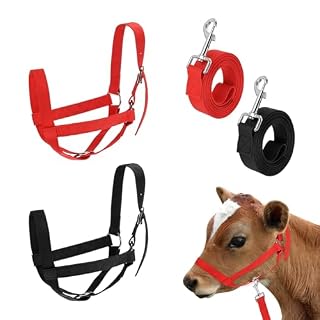 M METERXITY 2-Pack Adjustable Cattle Cow Calf HalterCheck price on Amazon
 Jeffers Livestock Nylon Sheep Halter & Lead SetCheck price on Amazon
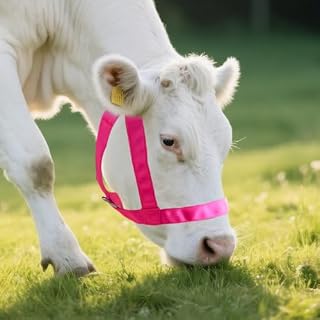 Cow Halter Cattle Halters Calf Halter with LeadingCheck price on Amazon
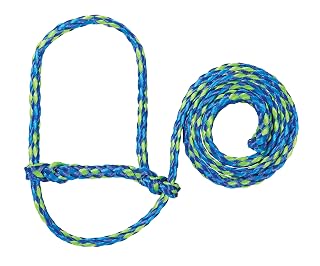 Weaver Livestock Poly Rope Sheep HalterCheck price on Amazon
GoatGearLab earns a commission when you buy through links on this page, at no extra cost to you. As an Amazon Associate I earn from qualifying purchases. Affiliate disclosure.
How to halter a goat: the short answer
To halter a goat, stand at the shoulder, slip the noseband over the nose, settle the crownpiece behind the ears, and adjust the straps until the fit is snug without pinching. Measure a figure-8 around the nose, crossing under the chin and meeting behind the ears, and match the measurement to the size range the listing states. On the Jeffers webbing halter, Small covers 30 to 34 inches, Medium covers 35 to 38 inches, and Large covers 39 to 42 inches.
Clip the lead to the ring or dee on the noseband and walk at the shoulder, keeping the rope short enough to guide the head without dragging on the ground. Halters suit leading, training, grooming, veterinary care, shows, loading, and daily farm routines, according to the Jeffers listing.
Halter styles compared
| Style | Example listing | Stated size | Material and hardware |
|---|---|---|---|
| Webbing halter | Jeffers Goat Halter, Medium | 35 to 38 inches | 2-ply poly webbing, brass-plated hardware |
| Training halter | Weaver Training Halter, Large | Over 170 lbs | 3/4 inch nylon, nickel plated dees |
| Halter and lead set | Jeffers Halter and Lead Set | 6ft lead included | 3/4 inch nylon webbing, brass-plated hardware |
| Rope halter | M METERXITY Cow Calf Halter | 12.6 to 18.9 inches | Nylon, with leading rope |
| Harness and leash | HIHETE Goat Harness Leash | Chest less than 35 inch | Polyester rope, 0.47 inch diameter |
| Show collar | Chapou Show Halter Chain Collar | 7 to 10.5 inches | Synthetic leather and welded chain |
Webbing halters
The Jeffers webbing halter is the plainest goat halter in the listings. It uses 2-ply poly webbing with brass-plated hardware, weighs 0.3 pounds, and comes in Small, Medium, and Large. The listing gives the fitting order plainly: noseband over the nose, crownpiece behind the ears, then adjust the straps. The halter lists no lead rope, so a lead stays a separate buy.
Training halters
The Weaver Livestock training halter (on Amazon) is built for the show barn rather than the pasture gate. It uses 3/4 inch doubled and stitched black nylon, weighs 0.15 pounds, and carries nickel plated dees at the top of the noseband and on the side bands as attachment points. Large fits goats and sheep weighing over 170 lbs, while market-ready goats typically wear a small.
Halter and lead sets
The Jeffers halter and lead set pairs an adjustable halter with a 6ft lead rope, which answers the lead question in the same box. It uses 3/4 inch nylon webbing with brass-plated hardware, weighs 0.55 pounds, and comes in Black and Turquoise. The listing names sheep, goats, lambs, kids, and rams, and lists training pens, milking stations, grooming, and fairgrounds as the places the set suits.
Rope halters and harnesses
Rope halters adjust across a wide range. The M METERXITY halter states an adjustable length of 12.6 to 18.9 inches, a width of 7.48 inch, and a leading rope of 280 x 2.5 cm, listed as 110 x 0.98 inch. It ships as a 1 pack or a 2 pack, and the maker warns against tying the straps too loosely or too tightly. The HIHETE harness (on Amazon) works differently: a body-loop design that puts the rope on the body rather than the neck, with a loop length for a goat chest less than 35 inch and a rope diameter of 0.47 inch. For a comparison of head control against body control, see goat halter vs goat harness.
Show collars and chains
Show collars trade the noseband for a chain and leather strap around the neck. The Chapou collar (on Amazon) fits neck sizes from 7 to 10.5 inches, listed as 17.78cm to 26.67cm, ships as a 2 pack, and pairs rust-proof welded chain with thickened synthetic leather. The listing advises leaving 1 to 2 inches extra for comfort and free movement. The Derby Originals cattle show halter is rolled leather with a matching chain lead, with Large sized for 950lbs to 1500lbs cattle: cattle gear, not a goat halter.
Measure before you buy
Measure the goat before ordering, because halter sizes run by inches around the head, not by breed name. The Jeffers figure-8 method runs around the nose, under the chin, and behind the ears, and the ranges are Small 30 to 34 inches, Medium 35 to 38 inches, and Large 39 to 42 inches. A goat that measures near the top of a range suits the next size up, since the straps adjust and a halter at the end of its adjustment leaves no room for a growing kid.
Neck collars measure differently. The Chapou collar fits neck sizes from 7 to 10.5 inches, and the listing advises leaving 1 to 2 inches extra, so the tape reading plus the extra space decides the fit. The HIHETE harness measures the chest, with a loop length for a chest less than 35 inch.
Fit the halter step by step
Stand at the shoulder on the same side as the lead hand, and let the goat settle before lifting the halter. Slip the noseband over the nose, settle the crownpiece behind the ears, and adjust the straps until the noseband sits clear of the eyes and the crownpiece rests behind the ears without sliding forward. The Jeffers listing gives exactly that order, and it works for the webbing halter, the training halter, and the halter and lead set alike, since all share the same noseband and crownpiece shape.
Attach the lead to the ring or dee and take up the slack before moving. The Jeffers set includes a 6ft lead rope, and the M METERXITY halter includes a leading rope listed at 110 x 0.98 inch. Walk at the shoulder with the rope short enough to guide the head, and stop when the goat plants its feet rather than dragging it forward.
Materials: webbing, nylon, rope, leather or chain
Material sets how the halter feels, how it cleans, and how it holds up in the barn:
- 2-ply poly webbing: the Jeffers goat halter, with brass-plated hardware and a 0.3 pound weight.
- Doubled and stitched nylon: the Weaver training halter, 3/4 inch wide, with nickel plated dees.
- Nylon webbing with a lead: the Jeffers halter and lead set, 3/4 inch wide, with brass-plated hardware and a 0.55 pound weight.
- Polyester rope: the HIHETE harness, 0.47 inch diameter, with a handmade leather slider, and the M METERXITY rope halter in nylon.
- Synthetic leather and welded chain: the Chapou show collar, and rolled leather with a chain lead on the Derby cattle halter.
Webbing and nylon rinse or wipe clean after barn use, according to the Jeffers set listing, while rope halters pack down small for travel.
Leading and daily handling
A halter earns its keep in daily handling, not on the shelf. The Jeffers listing names leading, training, grooming, veterinary care, livestock shows, loading, and daily farm routines, and the set listing adds milking stations, training pens, and fairgrounds. A halter that fits lets a handler move a goat between pens or load it into a trailer without chasing it around the pen.
Colour coding helps in a herd. The Jeffers webbing halter comes in Red, Royal Blue, Forest Green, and Black, and the listing notes that colours make it easy to code goats by herd or age group. For a closer look at a rope halter in use, see the Weaver Livestock rope sheep halter review.
Read the listing with care
Halter listings carry small contradictions, and the numbers that conflict are usually the ones that decide the fit:
- M METERXITY: 12.6 to 18.9 inches in the title against 12.6 to 18.97 inch in the bullets, and a width of 7.48inch against 19cm in the same line.
- Derby Originals: a spec table that lists an item weight of 100.0 kilograms and dimensions of 100.0 centimeters x 100.0 centimeters x 50.0 centimeters beside a size of Large (950lbs-1500lbs), which reads as placeholder figures rather than measured specs.
- HIHETE: a title that calls it a goat halter rope while the bullets describe a body-loop harness that controls the body, not the neck, so the fitting advice differs from a head halter.
- Weaver: a Large size that fits goats and sheep weighing over 170 lbs, with market-ready goats typically wearing a small, so the size name alone says little about the animal it fits.
Measure the goat, match the measurement to the stated range, and allow for the larger figure where a listing gives conflicting figures. Warranty terms vary too: Jeffers lists a 90-day term against manufacturing defects under normal use, and the Weaver, HIHETE, M METERXITY, and Chapou listings state no warranty term at all.
What this guide does not cover
This guide covers halter hardware, sizing, fitting, and leading only. It does not cover rations, hay types, or any health question. Ask a veterinarian or local extension office about goat health and feeding.
FAQs from goat keepers
What size goat halter fits?
Measure a figure-8 around the nose, crossing under the chin and meeting behind the ears. On the Jeffers webbing halter, Small covers 30 to 34 inches, Medium covers 35 to 38 inches, and Large covers 39 to 42 inches.
How do you put a halter on a goat?
Slip the noseband over the nose, settle the crownpiece behind the ears, and adjust the straps until the fit is snug without pinching. Attach the lead to the ring or dee before walking.
Does a goat halter come with a lead rope?
Some do and some do not. The Jeffers halter and lead set includes a 6ft lead rope, and the M METERXITY halter includes a leading rope listed at 110 x 0.98 inch, while the Jeffers webbing halter lists no lead rope.
Halter or harness: which suits a young goat?
A halter gives head control for leading, training, and grooming, while the HIHETE harness uses a body loop that controls the body rather than the neck, with a loop length for a chest less than 35 inch. For a comparison of the styles, see goat halter vs goat harness.
More from the barn
See every goat halter for training kids guide and all sheep halter vs goat halter guides.
More picks: best goat halter for training kids, best leather sheep halter, best goat collars under 15 and best calf halter for beginners.