

On this page
Top picks at a glance
As an Amazon Associate I earn from qualifying purchases.
- 1
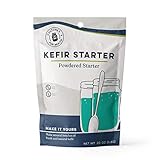 Cultures Kefir Starter Powder9.5/10View on Amazon
- 2
 Fusion Teas Milk Kefir Grains9.5/10View on Amazon
- 3
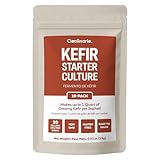 Coolinario Kefir Starter9.4/10View on Amazon
- 4
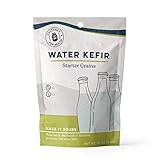 Cultures Water Kefir Grains9.4/10View on Amazon
To use kefir grains, add the grains to milk, leave the jar at room temperature for the stated time, then strain the grains out and start the next batch with the same grains. That is the whole method: the grains do the culturing, and you keep them moving from batch to batch. This guide covers how to use kefir grains with milk and with sugar water, the timing each listing states, and the starter gear for each step.
GoatGearLab earns a commission when you buy through links on this page, at no extra cost to you. As an Amazon Associate I earn from qualifying purchases. Affiliate disclosure.
| # | Product | GoatGear Score | Buy |
|---|---|---|---|
| 1 | Cultures Kefir Starter Powder | 9.5/10 | Buy on Amazon |
| 2 | Fusion Teas Milk Kefir Grains | 9.5/10 | Buy on Amazon |
| 3 | Coolinario Kefir Starter | 9.4/10 | Buy on Amazon |
| 4 | Cultures Water Kefir Grains | 9.4/10 | Buy on Amazon |
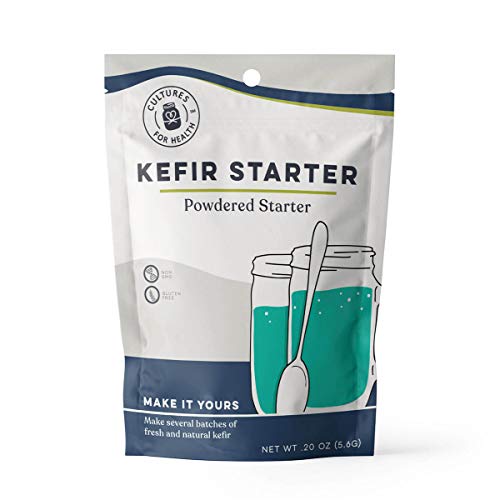
Cultures Kefir Starter Powder
A freeze-dried kefir starter powder in 4 packets that works with milk, water or juice and re-cultures 2-7 times.
Pros
- 4 packets of freeze-dried starter powder
- Re-cultures 2-7 times by reserving 1/4 cup
- Works with milk, water, juice, coconut water or plant based milk
- Each batch is checked by a trusted third-party laboratory
Cons
- A powder starter, not live grains to reuse batch after batch
- No warranty term is stated
- Each starter re-cultures 2-7 times only
- No temperature is stated for culturing

Fusion Teas Milk Kefir Grains
Live milk kefir grains in a 1 TBSP starter portion, with a 52-page eBook and unlimited email support.
Pros
- Live, active grains in a 1 TBSP starter portion
- Grains can be reused over and over
- 52-page eBook with a video tutorial and recipes
- Unlimited email support for fermenting questions
Cons
- Fresh grains are meant to be revived upon arrival
- No warranty term is stated
- No milk quantity per batch is stated
- No temperature or timing is stated for the first batch

Coolinario Kefir Starter
A 10-pack of 1.5g kefir starter sachets with a step-by-step method for 1 liter of cow's milk.
Pros
- 10-pack of 1.5g sachets
- Exact method stated: 82°C, then 25°C, then 24 hours
- Non-GMO, no preservatives, gluten free
- Suits cow's milk kefir, smoothies and dips
Cons
- No warranty term is stated
- Sachets are single-use, with no re-culture stated
- Needs milk heated and cooled to exact temperatures

Cultures Water Kefir Grains
Heirloom water kefir grains that re-culture continuously in sugar water and yield a quart of kefir every day.
Pros
- Heirloom grains re-culture continuously
- Yields a quart of kefir every day
- Dairy-free alternative to milk kefir
- Dehydrated grains keep a longer shelf life
Cons
- No warranty term is stated
- Needs sugar water, not milk, so it makes water kefir only
- The listing says a quart every day and also 24-48 hours
- Grains arrive dehydrated and need culturing before use
As an Amazon Associate I earn from qualifying purchases.
How to use kefir grains: the short answer
Start with live grains or a starter powder, add milk or sugar water, wait the stated time, then strain and repeat. The Coolinario method is the most exact: heat 1 liter of cow’s milk to 82°C (180°F), cool to 25°C (77°F), mix in 1 sachet, keep it in an airtight container at 25°C (77°F) for 24 hours, then refrigerate for 8 hours. Water kefir works the other way: let the grains sit in sugar water for 24-48 hours at room temperature, and the listing says a quart comes out every day. Live milk grains from Fusion Teas are reused over and over, and the powdered starter re-cultures 2-7 times by reserving 1/4 cup from the previous batch.
If you would rather go straight to the gear, the kefir starter vs yogurt starter comparison explains how a kefir starter differs from a yogurt starter.
Live grains, water grains or a starter powder
| Starter | Form | Cultures | Yield or reuse | Amazon |
|---|---|---|---|---|
| Fusion Teas Milk Kefir Grains | Live grains | Milk | Reused over and over | View on Amazon |
| Cultures Water Kefir Grains | Live grains | Sugar water | A quart every day | View on Amazon |
| Coolinario Kefir Starter | 1.5g sachets | Cow’s milk | 1 sachet per 1 liter | View on Amazon |
| Cultures Kefir Starter Powder | Freeze-dried powder | Milk, water or juice | Re-cultures 2-7 times | View on Amazon |
Live milk grains
Live milk grains are the classic form, a starter portion that grows and expands with continued use. Fusion Teas lists 1 TBSP of live, active grains, and says the grains can be reused over and over and will last as long as you take care of them. The purchase includes a 52-page eBook with images, a video tutorial, step-by-step instructions and recipes, plus unlimited email support for fermenting questions.
Water kefir grains
Water kefir grains work in sugar water instead of milk, for a dairy-free drink. Cultures for Health lists heirloom grains that re-culture continuously, with a supply the listing calls limitless from a single purchase. The grains sit in sugar water for 24-48 hours at room temperature and yield a quart of kefir every day. They arrive dehydrated, which gives them a longer shelf life than live grains that need culturing right away.
Powdered starters
Powdered starters suit keepers who do not want to maintain live grains. The Cultures for Health powder comes in 4 packets, works with milk, water, juice, coconut water or plant based milk, and re-cultures 2-7 times by reserving 1/4 cup from the previous batch. The Coolinario starter (on Amazon) comes in a 10-pack of 1.5g sachets, 1 sachet for 1 liter of cow’s milk, and gives the exact temperatures and times for the batch. The Coolinario listing states no re-culture count, so each sachet covers a single liter batch.
The gear
Each step above needs a starter culture, so the gear below covers the 4 starters in this guide: live milk grains, live water grains and 2 powdered starters.
Read the listing twice
Kefir listings contradict themselves on pack sizes, and the conflicting numbers are the ones you need to plan a batch:
- Coolinario: 1.5g sachets in the title against a 10-Pack (10g) size in the spec table.
- Cultures for Health powder: 4 packets in the title against a 0.20 Ounce (Pack of 1) size in the spec table.
- Water kefir grains: a quart every day against a 24-48 hour culture time.
Trust the title and bullets over the spec table when you measure milk against the sachet or packet count.
What this guide does not cover
This guide covers the steps and the gear only, not how much kefir to serve or any health question. Ask your veterinarian about feeding kefir to goats.
FAQs from goat keepers
Can I use the same kefir grains again?
Yes. The Fusion Teas milk grains (on Amazon) can be reused over and over, and the water kefir grains re-culture continuously. The powder re-cultures 2-7 times.
How long does milk kefir take?
The Coolinario method incubates at 25°C (77°F) for 24 hours, then refrigerates for 8 hours. The Cultures for Health powder cultures in less than a day.
What milk works with kefir grains?
Coolinario uses 1 liter of cow’s milk per sachet, and the Cultures for Health powder works with milk, water, juice, coconut water or plant based milk.
How much starter do I need for 1 liter of milk?
Coolinario states 1 sachet for 1 liter of cow’s milk, while the Fusion Teas listing gives a 1 TBSP starter portion with no milk quantity stated.
Do I need live grains to make kefir?
No. The Cultures for Health powder and the Coolinario sachets make kefir without live grains, and the powder re-cultures 2-7 times.
More from the barn
See every milking guide. Also see our kefir starter vs yogurt starter. Also see our best yogurt starter for goat milk. Also see our how to hand milk a goat. Also see our how to pasteurize goat milk.
More picks: browse milking gear, feeders and waterers and yogurt starters for goat milk.