

On this page
Top picks at a glance
As an Amazon Associate I earn from qualifying purchases.
- 1
 2-in-1 Wall Mount Hay Feeder9.6/10View on Amazon
- 2
 Fabbay 2-Pc Hay Net9.7/10View on Amazon
- 3
 Bloomoak Hay Net9.6/10View on Amazon
Do goats eat hay? Yes, goats eat hay, and hay is the main feed for most goats. Hay is cut grass or legume forage, dried in the sun and baled, and goats eat it flake by flake from a rack, a bag or a feeder. Keep hay in front of the goats and out of the bedding, and the goats will eat it through the day.
GoatGearLab earns a commission when you buy through links on this page, at no extra cost to you. As an Amazon Associate I earn from qualifying purchases. Affiliate disclosure.
Do goats eat hay? The short answer
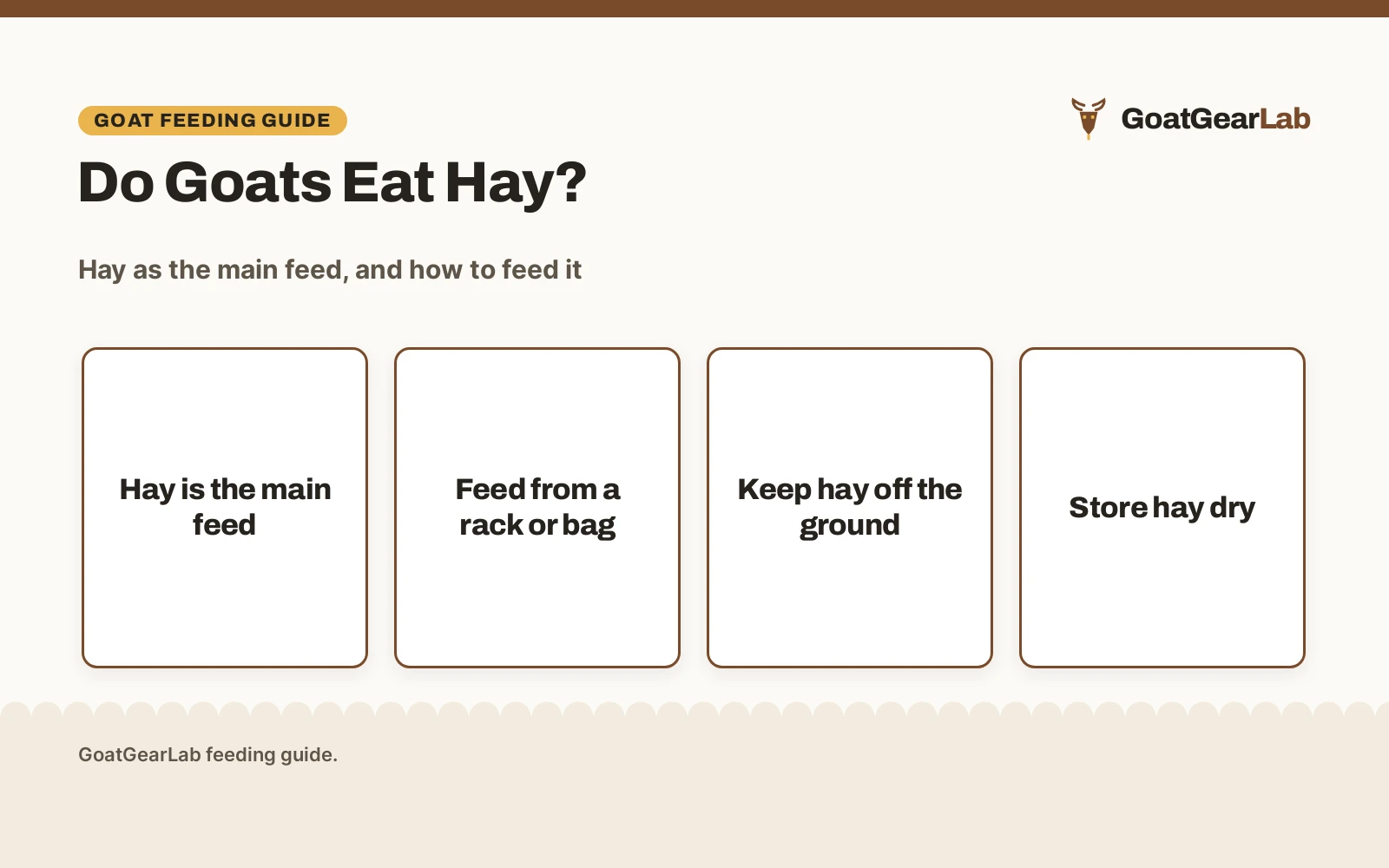
Yes. Hay is the main feed for most goats, and goats eat it every day. Hay gives goats the long fiber they need, and it keeps them busy between meals of grain or browse. Feed hay from a rack, a bag or a freestanding feeder, not from the ground, and store the bales dry and off the ground.
See the best hay feeder for goats roundup, which compares feeders on these points.
How goats eat hay
Goats are browsers by nature, and they pick at hay with their lips, pull a mouthful free and chew it slowly. A goat will eat the leafy parts of a flake first and leave the coarse stems, so a feeder that holds the hay in place wastes less than hay tossed on the ground. Goats eat through the day in short meals, and they drink water with their hay, so keep a water bucket near the feeder.
Hay suits goats because it is dry forage, and dry forage keeps well in a barn. Fresh grass and browse are welcome when they are in season, but hay is the feed that carries a herd through the cold months when pasture is gone.
Feed hay by the flake, not by the armful. A flake is a slice of the bale that comes apart along the twine, and it fits a rack or a bag without spilling. Pull a flake free, set it in the feeder, and let the goats eat it down before adding more.
Feeding hay: rack, bag or freestanding feeder
| Style | Best for | Mounting |
|---|---|---|
| Wall rack | Barn or shed with a solid wall | Wall mount |
| Freestanding feeder | Pasture or open pen with no wall | Stands on the ground |
| Hay bag | Trailer, show pen or a goat that needs its own ration | Hangs from a strap |
Wall racks
Wall racks are the most common goat hay feeder. They keep hay off the floor and leave the pen clear for cleaning. A wall rack needs a solid wall, post or fence board to anchor into, so check what the barn offers before buying. Fill a wall rack from the top, and place it where the goats can reach it without crowding the gate.
Freestanding feeders
A freestanding feeder sits on the ground with no wall. This style suits a pasture, a run-in shed with no solid wall or a larger group of goats. Freestanding feeders need level ground and enough room for goats to reach from every side.
Hay bags
Fabric hay bags hang from a fence, gate or trailer tie. Bags are light and portable, which makes them handy for shows and travel. Fabric is easier for a determined goat to chew than steel, so a bag is better for short-term use than for a permanent barn feeder.
How to tell good hay
Good hay smells sweet and looks green or pale gold, with leafy flakes and little dust. Bad hay smells musty or sour, feels damp or dusty, and may carry mold. Moldy hay belongs on the compost heap, not in the feeder, so check each bale as it is opened and set aside any bale that smells off or shows mold.
Buy hay from a grower the barn trusts, and ask what the hay is cut from and when it was baled. Hay cut late in the season runs coarse and stemmy, while hay cut early runs soft and leafy. Either kind feeds goats, but soft, leafy hay wastes less in the feeder.
Storing hay
Store hay dry, off the ground and under cover. Bales on a pallet or a rack stay dry, while bales on bare earth draw damp and spoil from the bottom up. Cover the stack with a tarp or keep it in a barn, and leave a gap for air to move around the stack.
Use the oldest bales before the new bales, and keep the hay for goats apart from the hay for other animals if the barn feeds other kinds of stock.
Buy hay in bales that fit the storage and the feeder. A bale that is too big for the barn door or the feeder opening wastes time and hay, so measure the door and the feeder before the hay arrives.
When goats will not eat hay
Goats turn away from hay that is wet, dusty or stale, and they will pick at a bale and leave the rest. A bale that sat in the rain, a feeder full of trampled hay, or hay that smells off will all go uneaten. If the goats will not eat the hay, check the bale before changing the feeder: open a fresh bale, smell it, and look for mold or damp. Goats also refuse hay when they have better forage on offer, such as fresh browse in the summer, so a full feeder in the summer does not always mean the goats are hungry.
Clean the feeder, offer a fresh flake from a new bale, and watch whether the goat eats. If a goat will not eat at all, ask a veterinarian.
Hay and water
Goats drink water with their hay, so keep a water bucket near the feeder and keep it full and clean. Hay is dry feed, and goats that eat dry hay need water within easy reach. In cold weather, a heated water bucket keeps the water from freezing near the feeder.
Young goats and hay
Young goats learn to eat hay by watching the herd, and they start with small mouthfuls beside the older goats. Offer hay in a low rack or a small feeder where the young goats can reach it, and keep the hay clean and dry. Young goats eat less hay than grown goats, and they grow into full hay eaters as they grow.
What this guide does not cover
This guide covers feeding hay to goats only. It does not cover how much hay a goat needs, hay types or any health question. Ask your veterinarian or local extension office about rations and goat health.
FAQs from goat keepers
Do goats eat hay every day?
Yes, goats eat hay every day. Hay is the main feed for most goats, and it stays in front of them through the day and the night.
Can goats eat hay off the ground?
They can, and they will pick through it, but hay on the ground gets dirty and trampled. A feeder keeps the hay clean and wastes less, so feed from a rack, a bag or a freestanding feeder.
What kind of feeder should I use for hay?
A wall rack suits a barn with a solid wall, a freestanding feeder suits a pasture, and a hay bag suits travel and shows.
How do I store hay for goats?
Keep hay dry, off the ground and under cover, on a pallet or a rack, and use the oldest bales before the new bales.
More from the barn
See every hay feeder guide and all feeding and water guides.
More picks: best hay feeders for goats, goat mineral feeders, heated water buckets and goat shelters.