

On this page
Top picks at a glance
As an Amazon Associate I earn from qualifying purchases.
- 1
 MOKIKUBA 8 ft Copper-Clad Ground Rod Kit with Clamps9.6/10View on Amazon
- 2
 CYANTEKOMS 3-Pack 4 ft Copper-Clad Ground Rod with Clamps9.6/10View on Amazon
- 3
 Minidodoca Portable Ground Rod with 5.1 ft UL Listed Wire9.5/10View on Amazon
A fence that clicks without a shock usually points to the ground side, and electric fence ground rod installation is the job that fixes it: drive a steel rod into damp soil, clamp the ground wire to it and connect the charger. A charger can only push a pulse through the fence when the ground side has a solid path back, and that path is the rod. This guide walks through the job step by step, using the figures from a grounding rod kit for every number below.
GoatGearLab earns a commission when you buy through links on this page, at no extra cost to you. As an Amazon Associate I earn from qualifying purchases. Affiliate disclosure.
Electric fence ground rod installation: the short answer
Pick damp soil near the charger, drive the rod in until only the clamp end shows, fasten the ground wire to the clamp and connect the wire to the charger. The rod carries the pulse back from the soil to the charger, which is what makes the fence bite. The sections below cover the rod, the spot, the driving and the clamp in order.
What a ground rod does
An electric fence is a loop: the charger sends a pulse out along the fence wire, the pulse passes through anything touching the wire and the soil, and the ground rod carries it back to the charger. A fence with a poor ground gives a weak shock or none at all, even when the charger itself works. The rod gives the pulse a low-resistance path home through damp soil, which is why the spot matters as much as the rod. A rod driven into dry, rocky ground gives the pulse little to work with, while the same rod in damp soil grounds the fence well.
The rod, the clamp and the wire
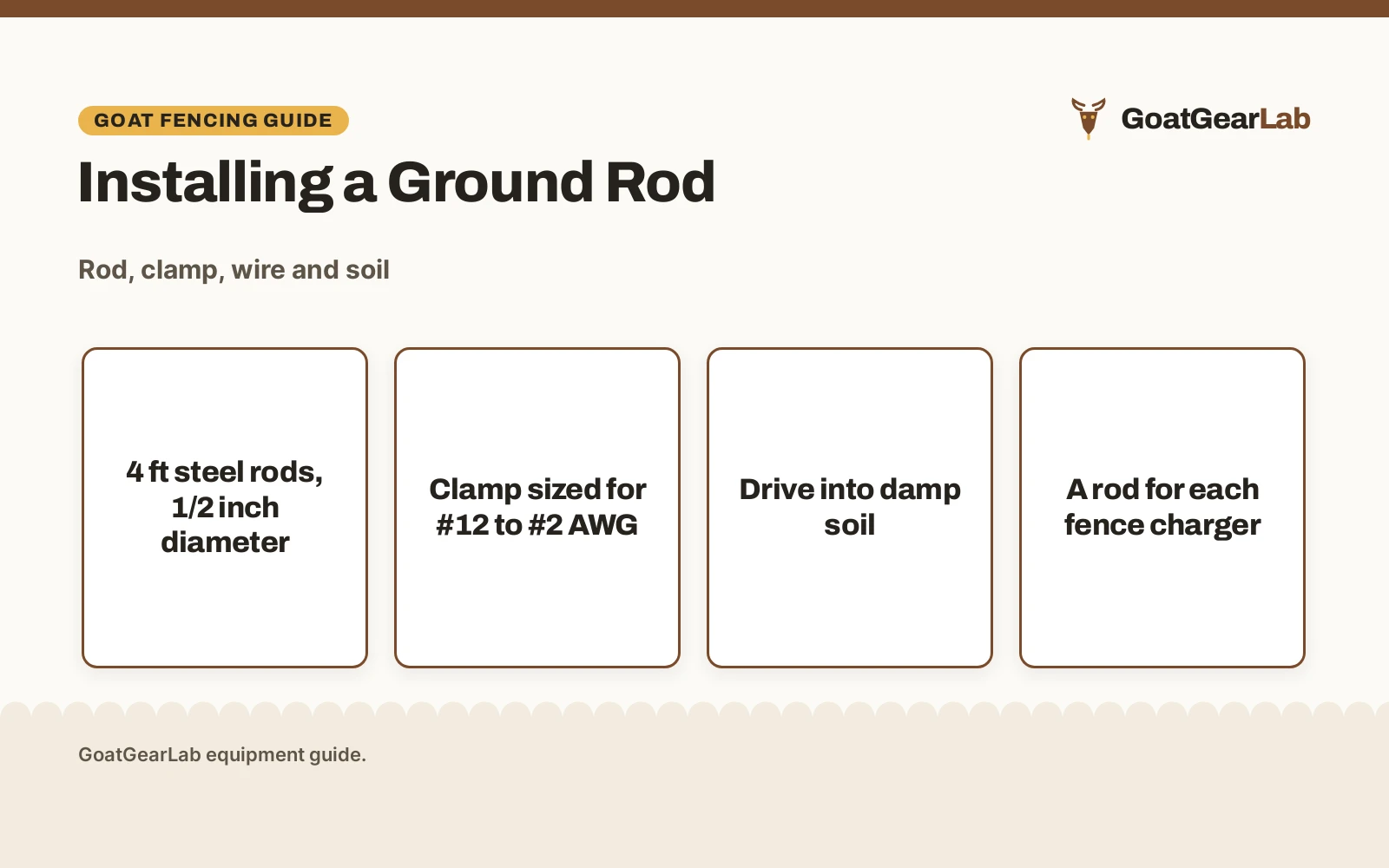
The kit in this guide is the Bitiontry grounding rod (on Amazon) kit: 3 pieces of 4 feet long and 1/2 inch diameter rod, made from high carbon steel with a zinc finish. The ground clamp fits a #12 sol to #2 AWG conductor, and each rod carries a pre-installed screw bolt wire clamp with a rolled driving spike at the point. The listing suits the kit for electric fences, antennas, satellite dishes and generator grounding, and for grounding under different soil moisture, temperature, pH and resistivity changes.
Rod length and diameter
Length and diameter decide how much steel meets the soil. The Bitiontry rods run 4 feet long at 1/2 inch diameter, which the listing also gives as 12mm. A longer rod reaches deeper, damper soil, and a thicker rod bends less on the way down. The listing calls the shaft solid steel with high tensile strength, built for steady driving.
Steel and finish
The rods are high carbon steel with a zinc finish for corrosion resistance, and the listing rates the steel as higher hardness and less prone to bending. Bending, tensile strength and coating checks per ASTM cover the kit for grounding use in highly corrosive soils, which is the maker’s claim for the finish. A rod that rusts through at the clamp loses its ground, so the finish matters where the soil stays wet.
The clamp
The clamp is where the wire meets the rod, and a loose clamp is a common cause of a weak fence. The Bitiontry kit fits its ground clamp for a #12 sol to #2 AWG conductor, and each rod carries a pre-installed screw bolt wire clamp, so the wire fastens straight to the rod without extra parts. Match the ground wire to the clamp range before driving the rod, because a wire outside the range will not sit tight in the clamp.
Pick a spot for the rod
Put the rod in damp soil close to the charger, where the ground wire runs short and straight. Low ground that holds moisture after rain beats a high, dry ridge, and soil near a downspout or a water trough stays damp longer through a dry spell. Keep the rod clear of the goat pen gate and the daily foot traffic, so the wire and the clamp stay out of the way of boots and buckets. The listing suits the kit for grounding under different soil moisture, temperature, pH and resistivity changes, so the rod itself tolerates varied ground, but damp soil still grounds better than dry.
Drive the rod
Drive the rod straight down with steady blows, letting the rolled driving spike lead the way. The listing calls the rod strong enough to pound into the ground, and the solid steel shaft with high tensile strength is built for that work. Stop when the clamp end sits just above the soil, where the wire can reach it without lying on the ground. If the rod hits rock and stops short, pull it and try a nearby spot rather than forcing it, because a bent rod grounds poorly and a broken spike leaves a stub that is hard to pull.
Clamp the wire and connect the charger
Fasten the ground wire to the pre-installed screw bolt wire clamp on the rod, then run the wire to the ground terminal on the charger. Keep the run short and clear of the fence wire itself, so the ground wire never touches the live wire. Tighten the clamp until the wire sits firm, then give the wire a tug to check the grip before the charger goes on. See the electric fence chargers for charger styles and the best electric fence charger for goats for chargers sized for goat pens.
Read the listing twice
Ground rod listings often contradict themselves, and the numbers that conflict are usually the ones needed to plan the install:
- Bitiontry kit: 4 feet long rods in the title and the bullets, against 5.0 x 2.0 x 0.6 inches in the spec table. The spec table figures describe the package, not the rods, so trust the title and the bullets for the rod size.
- Weight: 0.01 pounds in the spec table for a kit of 3 steel rods. That figure cannot cover 3 steel rods at 4 feet long, so read it as a listing error and plan the carry by the rod size, not the listed weight.
- Color: the spec table says Colorful while the bullets describe a zinc finish. Trust the bullets for the finish.
Measure the spot before ordering and allow for the larger figure where the listing disagrees with itself.
What this guide does not cover
This guide covers ground rod hardware only: rods, clamps, wire and layout. It does not cover charger sizing, fence layout or any health question. Ask a veterinarian or the local extension office about goat health, and ask a licensed electrician about mains-powered charger wiring.
FAQs from goat keepers
How long should a ground rod be?
The Bitiontry listing gives 4 feet long rods at 1/2 inch diameter. A longer rod reaches deeper, damper soil, so match the rod to the soil where the fence stands.
What diameter ground rod works for a goat fence?
The listing gives 1/2 inch diameter, also stated as 12mm, in high carbon steel with a zinc finish. Thicker steel bends less on the way down.
What wire fits the ground clamp?
The ground clamp fits a #12 sol to #2 AWG conductor. Match the ground wire to that range before driving the rod.
How many ground rods does a fence need?
The Bitiontry listing sells a kit of 3 pieces, so a fence can carry spare rods or extra rods where the soil runs dry. Start with the rod by the charger and add rods only where the ground stays dry.
Does a ground rod work in dry soil?
The listing suits the kit for grounding under different soil moisture, temperature, pH and resistivity changes. Damp soil still grounds better than dry, so pick the dampest spot near the charger.
More from the barn
See every goat fencing guide and all fencing and shelter guides.
More picks: best electric fence for goats, best fence charger for large goat pastures, best electric fence charger for goats and electric fence chargers.