

On this page
Top picks at a glance
As an Amazon Associate I earn from qualifying purchases.
- 1
 Sadnyy 3-Pack Rubber Feeder Pan9.4/10View on Amazon
- 2
 Little Giant Plastic Utility Pan9.5/10View on Amazon
- 3
 Sadnyy 4-Pack Rubber Feed Pan9.4/10View on Amazon
- 4
 Little Giant® Heavy Duty Rubber TubView on Amazon
- 5
 Sadnyy 8 Pcs 12 Quart/ 3 Gallon Rubber Feeder Pan Horse FeedView on Amazon
- 6Sadnyy 3 Pcs 12 Quart/ 3 Gallon Rubber Feeder Pan Horse FeedView on Amazon
- 7
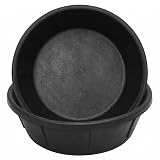 Sadnyy 3 Pcs 8 Quart/ 2 Gallon Rubber Feeder Pan Horse FeedView on Amazon
- 8
 4pcs Rubber Feeder PanView on Amazon
Rubber vs plastic feed pan comes down to flexibility against rigidity. A rubber pan bends, bounces back and keeps working in the cold, and a plastic pan is lighter, holds its shape and usually costs less. The short answer: rubber wins for winter and for rough treatment by horned animals, while plastic wins for lightweight daily chores and tight budgets. Which one fits depends on your weather, your goats and how many pans you need.
Also worth comparing
 Little Giant® Heavy Duty Rubber TubCheck price on Amazon
 Sadnyy 8 Pcs 12 Quart/ 3 Gallon Rubber Feeder Pan Horse FeedCheck price on Amazon
- Sadnyy 3 Pcs 12 Quart/ 3 Gallon Rubber Feeder Pan Horse FeedCheck price on Amazon
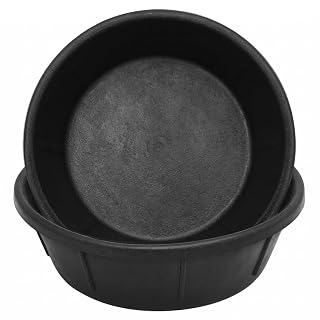 Sadnyy 3 Pcs 8 Quart/ 2 Gallon Rubber Feeder Pan Horse FeedCheck price on Amazon
 4pcs Rubber Feeder PanCheck price on Amazon
 3 Pcs 10.56 Qt/ 2.5 Gallon Rubber Feeder PanCheck price on Amazon
GoatGearLab earns a commission when you buy through links on this page, at no extra cost to you. As an Amazon Associate I earn from qualifying purchases. Affiliate disclosure.
Rubber vs plastic feed pan: what rubber does well
Rubber feed pans are built to be abused. The Little Giant listing describes its tub as crush and crack proof with a freeze proof rubber body, in a 2 quart size at 9 by 9 by 4 inches and 10.08 ounces. The Fortex listing calls its 3 gallon pan crack and crush resistant, flexible to low temperatures, and able to bounce back to shape immediately. That flexibility is the whole argument: a rubber pan stepped on, knocked over or frozen pops back instead of splitting.
Rubber is also heavier and steadier. The Sadnyy listings describe their pans as heavy and thick, less likely to tip over or be kicked over, in sizes from 12 quarts (3 gallons) at 17.32 by 17.32 by 9.25 inches up to 3 gallon pans at 17.1 by 17.1 by 4.3 inches. Smaller rubber pans exist too: the GINDOOR listing gives a 2 quart pan at 8.2 by 4.8 inches, and the Rainmae listing gives a 4 quart pan. The weight that keeps a pan upright is the same weight you carry, so size the pan to the animal and the chore.
| Pan | Dropped or stepped on | Cold weather | Weight | Cleaning |
|---|---|---|---|---|
| Rubber | Bends and bounces back | Stays flexible; frozen feed pops out | Heavier, steadier | Spray and wash; flexible walls release stuck feed |
| Plastic | Can crack or split | Turns brittle; ice locks in | Lighter to carry | Smooth rigid walls wipe clean |
What plastic feed pans do well
Plastic pans win on weight and price. A plastic pan of the same size is noticeably lighter to carry from the feed room to the pen, which matters when you are hauling several pans twice a day. The rigid walls hold their shape under a scoop, pour cleanly and wipe out easily, and the smooth surface shows at a glance whether the pan is clean. Plastic pans also come in more shapes and colors, which helps if you color-code feed by group: one color for the milkers, another for the kids.
The tradeoff is brittleness. Plastic that is fine in summer turns stiff and crack-prone in winter, and a pan dropped on frozen ground can split on the spot. Goats are also harder on equipment than the listings assume: horns hook rims, hooves stomp edges, and a rigid pan takes every hit as a rigid pan. If your goats are rough and your winters are real, plastic becomes a replaceable item rather than a buy-once one.
Cold weather is the decider
If your winters freeze, rubber earns its keep. The Fortex listing’s claim of flexibility to low temperatures is exactly what you want when the morning feed is a frozen brick: flex the rubber pan and the feed pops out in one piece, no chipping required. The Little Giant listing makes the same point with its freeze proof rubber body. A plastic pan in the same situation holds the ice locked in its rigid walls, and forcing it risks the crack that ends the pan.
In warm climates the cold argument disappears, and the choice narrows to weight, price and habit. Many keepers in mild regions run plastic pans year-round without issue, replacing one now and then. Where winters bite, rubber pans live outside all winter while the plastic ones come inside or get replaced each spring. Our best heated water bucket for goats guide covers the water side of winter chores.
Sizes and matching the pan to the herd
Size matters more than material for daily use. The listings here run from 2 quart pans, the Little Giant at 9 by 9 by 4 inches and the GINDOOR at 8.2 by 4.8 inches, through the 4 quart Rainmae, up to 12 quart and 3 gallon pans from Sadnyy and Fortex. A 2 quart pan suits a single goat’s grain ration or a kid pen; a 3 gallon pan suits a group pen where several animals eat at once, or water in a pinch.
Match the pan to the eater, not the deal. A pan too large for one goat invites waste and tipping; a pan too small for a group invites fighting. And note the Sadnyy listings’ warm tip: rubber pans can stick together when stacked, so squeeze both sides and pull to separate them. Compare sized options in our best feed pan for goats guide and every feed pans guide.
Which one fits your barn
Choose rubber if your winters freeze, your goats are hard on equipment, or you want pans that survive being stepped on and knocked around. The crush and crack resistance in the Little Giant and Fortex listings is the reason rubber pans become barn fixtures that last for years. Choose plastic if you carry many pans daily and want the lightest load, if your climate is mild, or if you need a stack of pans on a budget and accept replacing them.
Most barns end up with both: rubber pans for winter and for the rough pens, plastic pans for lightweight summer chores and for color-coding groups. Buy for the worst conditions the pan will see, not the average day, and the pan will still be there next season. See all feeding and water guides for the rest of the setup.
FAQs from goat keepers
Do rubber feed pans crack in winter?
That is their main selling point: the Little Giant listing describes a crush and crack proof freeze proof rubber body, and the Fortex listing calls its pan flexible to low temperatures. Flexing the pan pops frozen feed out instead of cracking the pan.
Are rubber pans heavier than plastic?
Yes. The Sadnyy listings describe their rubber pans as heavy and thick, which keeps them from tipping but makes them heavier to carry than a plastic pan of the same size.
What sizes do feed pans come in?
The listings here run from 2 quarts through 4 quarts and 12 quarts up to 3 gallons. Match the size to the eater: small pans for individuals, large pans for groups.
Can I use a feed pan for water?
A 3 gallon rubber pan works as a water pan in a pinch, and many keepers do exactly that. For daily water, a dedicated waterer or bucket is easier to keep clean; see our water guides.
Why do my rubber pans stick together?
The Sadnyy listings note that rubber pans can adhere when stacked. Squeeze both sides and pull hard to separate them.
More from the barn
See every feed pans guide and all feeding and water guides.
More picks: feed pans for goats, heated water buckets for goats, automatic waterers for goats and goat mineral feeders.