

On this page
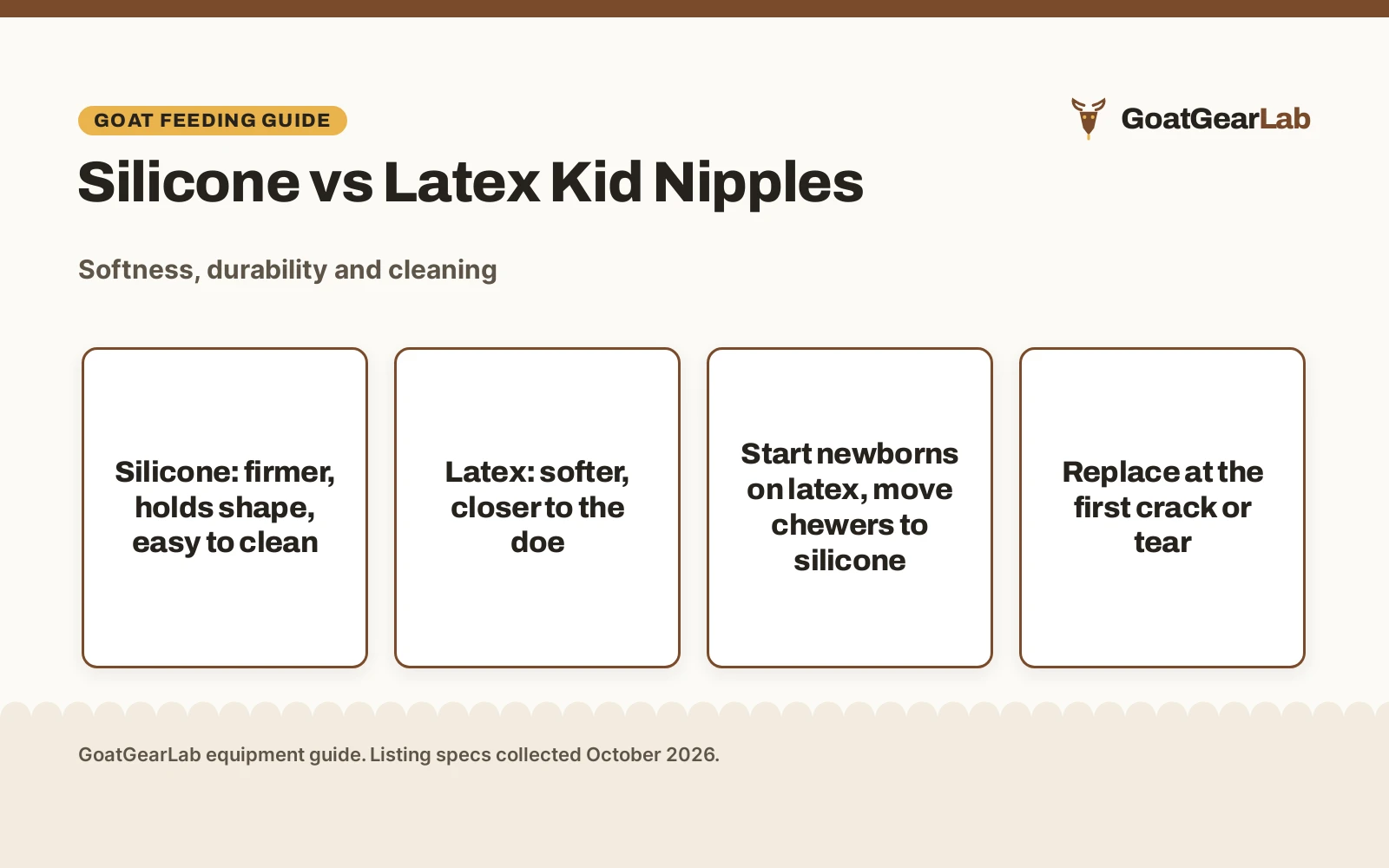
The silicone vs latex kid nipples question comes up the first time a newborn kid pushes the bottle away. Silicone nipples are firmer, hold their shape and stand up to washing; latex nipples are softer and feel closer to the doe. Both feed a kid just fine, so the choice comes down to the kid’s age, how hard it chews and how often you are willing to replace nipples.
GoatGearLab earns a commission when you buy through links on this page, at no extra cost to you. As an Amazon Associate I earn from qualifying purchases. Affiliate disclosure.
Silicone vs latex kid nipples: the short answer
Start a newborn on latex if it refuses the bottle: the softer material is closer to what the kid knows, and a reluctant nurser takes to it faster. Move to silicone once the kid is nursing well, especially for older kids that chew: silicone holds its shape, cleans easily and lasts through more washings. Keep both on hand during kidding season, because some kids switch preferences overnight and the right nipple is the one the kid will actually take.
What silicone nipples offer
Silicone is the firmer material. It keeps its shape under chewing, which means the flow stays consistent from one feeding to the next instead of collapsing or stretching out. Silicone is also the easier material to keep clean: it is commonly described as dishwasher safe and free of BPA, and it stands up to repeated washing without getting gummy. For a kid that chews hard or for a keeper who runs several bottles a day through the wash, silicone is the lower-maintenance choice. The trade is feel: a newborn that is used to the doe may push a firm silicone nipple away at first, and some kids never take to it.
What latex nipples offer
Latex, the natural rubber material, is the softer nipple. It feels closer to the doe’s teat, which is why reluctant newborns and weak kids often accept it when they refuse silicone. That softness is also its weakness: latex wears faster, especially with a kid that chews, and it degrades with heat and sunlight, so nipples left on a sunny fence rail do not last. Latex can also carry a slight rubber taste at first, and it needs replacing more often than silicone. Think of latex as the starter nipple and silicone as the everyday nipple, though plenty of keepers run one material start to finish.
Cleaning and care for both materials
Wash nipples after every feeding, whichever material you use, and rinse before washing so milk does not dry in the hole. Check the nipple each time you pick it up: replace it when it cracks, tears, thins at the tip or the flow changes, because a torn nipple can let too much milk through. Store spare nipples out of the sun, since sunlight ages latex fast and is not kind to silicone either. Keep at least one spare of each material during kidding season, because a chewed-through nipple at midnight is not the time to discover the drawer is empty. For the bottles themselves, see nipple bucket vs kid bottle.
What this guide does not cover
This guide covers nipple materials only: softness, durability and cleaning. It does not cover feeding amounts, milk replacer choices or any health question. Ask your veterinarian or local extension office about feeding schedules and kid health.
FAQs from goat keepers
Which nipple is better for a newborn kid?
Latex, for most newborns. The softer material feels closer to the doe, so a reluctant nurser usually accepts it faster than silicone.
How do I know when to replace a nipple?
Replace it when it cracks, tears, thins at the tip or the flow changes. A torn nipple can let too much milk through.
Can silicone nipples go in the dishwasher?
Silicone is commonly described as dishwasher safe, which is one of its advantages over latex. Rinse milk out first so it does not dry in the hole.
Do older kids chew through nipples?
Yes, which is why many keepers move older kids to silicone once they nurse well. Silicone holds its shape under chewing better than latex.
Can I switch materials mid-season?
Yes. Some kids switch preferences on their own, so keep both materials on hand during kidding season.
More from the barn
See every kid bottles and nipples guide and all feeding and water guides. Also see our best kid bottle for first time owners. Also see our glass vs plastic kid bottles. Also see our glass vs silicone kid bottles. Also see our stainless steel vs plastic kid bottles. Also see our calf bottle carrier.
More related guides (14)
- kid bottle vs lamb bottle
- brush to clean bottles
- kid bottle vs calf bottle
- green kid stainless steel bottle
- kid nipple covers
- screw top kids bottle
- kid bottles leak proof
- calf bottle funnel
- kid bottle easy open
- kid bottle clear
- calf bottle feeding schedule
- bottle lamb feeding chart by age
- bottle goat feeding chart
- best brush on rust converter
More picks: nipple bucket vs kid bottle, bottle feeding vs lamb bar and kid bottles and nipples.