

On this page
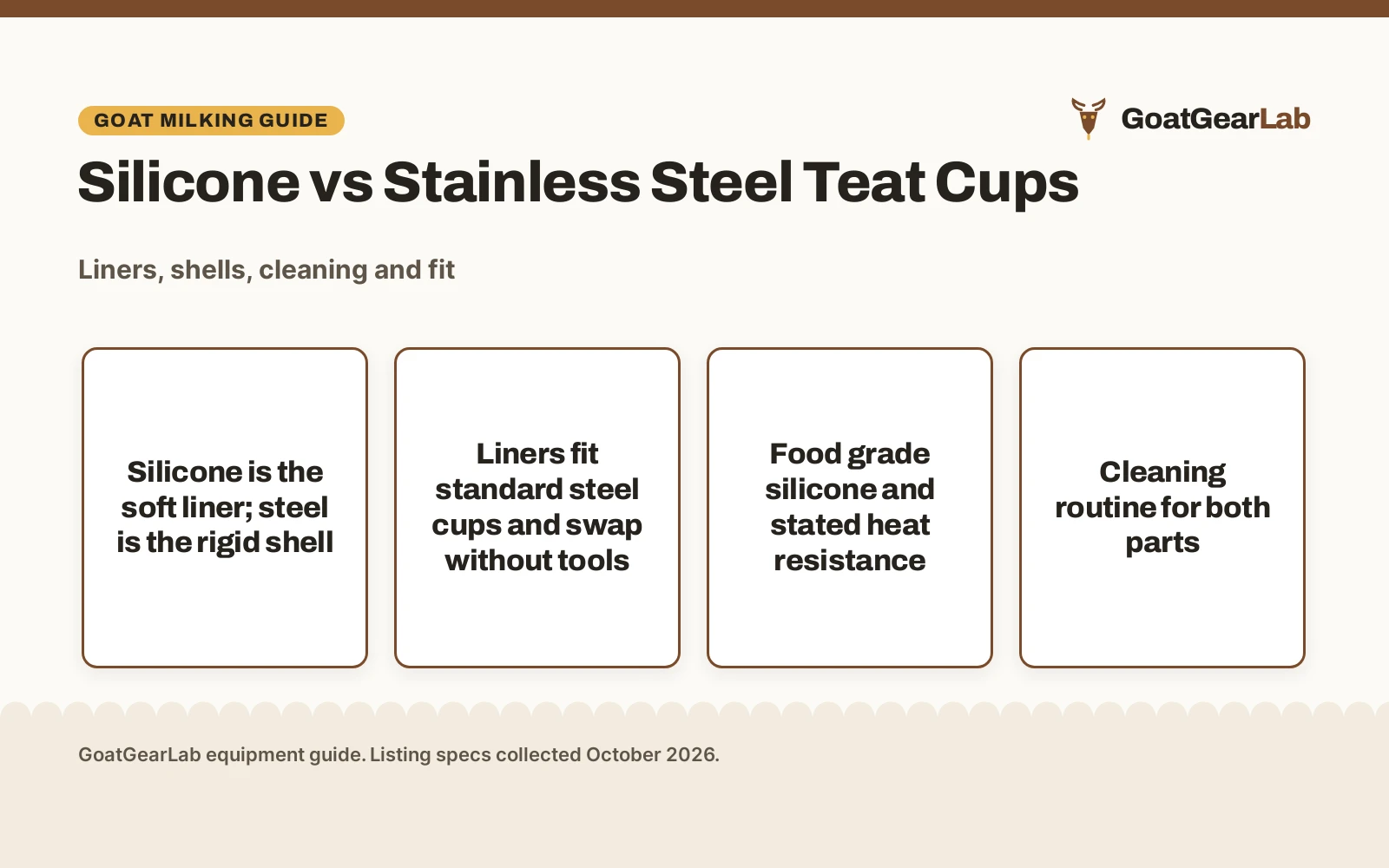
After morning milking, when the pail is strained and the stand is hosed down, the silicone vs stainless steel teat cups question usually comes up at replacement time. The two are not always rivals: silicone is the soft liner that sits inside the cup, while stainless steel is the rigid shell that holds it. If you want a softer touch on the teat and a part you can swap in minutes, silicone liners suit the job; if you want the hard shell that lasts for years, stainless steel is the structure. This guide compares both materials using only what current listings state, so you can choose with the facts in front of you.
GoatGearLab earns a commission when you buy through links on this page, at no extra cost to you. As an Amazon Associate I earn from qualifying purchases. Affiliate disclosure.
What a teat cup is and how both materials fit together
A teat cup on a milking machine is a two-part assembly: a rigid outer shell and a soft inner liner that actually touches the teat. The liner flexes with the pulsation and carries the milk, while the shell holds everything in place. The Booshow listing describes this pairing directly: its silicone liners are made to fit standard steel milking cups, which are sold separately. So the real choice for most goat keepers is not silicone or steel, but how much of the assembly should be soft silicone and when to replace it.
Silicone liners: soft and replaceable
Silicone liners are the wearable part of the assembly. The Booshow listing describes a 2-pack of food grade silicone teat cup liners, sold as direct replacement parts for old milking liners, installable without special tools. The package lists 7.09 x 2.36 x 2.36 inches and 5.9 ounces for the pair. The listing states the silicone is free from harmful chemicals and does not affect milk quality or flavor, and that the liners fit standard steel cups with a secure, non-leak connection.
Silicone as a material is easy to clean and stands up to repeated washing. A silicone listing in the data states heat resistance between -40 F and 446 F and BPA-free material, which matches how liners are washed and sterilized between milkings. Because liners are the part that flexes every cycle, they are also the part that wears out first, so a replaceable 2-pack keeps the machine running without buying new shells. A separate silicone vs rubber teat cups comparison covers the other liner material.
Stainless steel cups: the rigid shell
Stainless steel cups are the outer shells of the assembly. They do not flex, they do not wear from pulsation the way liners do, and they give the liner its shape. Steel shells are the long-life part of the system: you buy them once and replace the liners inside them as needed. The Booshow listing treats steel cups as the standard the liners fit, which reflects how the two parts are sold separately.
Steel needs the same cleaning routine as any milking equipment, and it pairs with whichever liner material you prefer. If a shell ever cracks or its connection stops sealing, the whole cup gets replaced, but that is the exception rather than the routine. See our how to clean milking equipment guide for the wash routine that keeps both parts in service.
Silicone vs stainless steel teat cups: the differences
| Feature | Silicone liners | Stainless steel cups |
|---|---|---|
| Role in the assembly | Soft inner liner that touches the teat | Rigid outer shell that holds the liner |
| Flexibility | Flexes with pulsation | Rigid, holds its shape |
| Replacement | Wear part, swapped without special tools per the Booshow listing | Long-life part, replaced only if damaged |
| Stated figures | 2-pack, 5.9 ounces, food grade silicone | Sold separately; liners fit standard steel cups |
| Cleaning | Silicone listed as heat resistant from -40 F to 446 F | Cleaned with the standard equipment routine |
Cleaning and daily care
Both materials need washing after every milking, and the routine is the same one you use for pails and strainers. Silicone tolerates hot water and repeated cleaning: the Moukiween silicone listing states heat resistance between -40 F and 446 F, and the Booshow listing describes its liners as maintaining a hygienic milk collection process. Rinse, wash, and let every part dry fully before the next milking, and check the liner fit each time you assemble the cups.
Watch the liners for the signs that they are due for replacement: the Booshow listing calls them direct replacement parts, and a fresh 2-pack restores the seal without new shells. Keep a spare set on the shelf so a worn liner never delays milking. Our best goat milking machine picks cover complete machines if you are setting up from scratch.
FAQs from goat keepers
Will silicone liners fit my steel cups?
The Booshow listing states its silicone liners fit standard steel milking cups, which are sold separately. Check your cup size against the listing before ordering.
Do silicone liners need tools to install?
No. The Booshow listing describes the liners as direct replacement parts that install without special tools.
Are silicone liners food safe?
The Booshow listing states its liners are made from food grade silicone that does not affect milk quality or flavor. A silicone listing in the data also states BPA-free material.
Should I replace the whole cup or just the liner?
Replace the liner first: the Booshow listing sells liners as replacement parts for the wearable half of the assembly. Replace the steel shell only if it is cracked or no longer seals.
More from the barn
See every milk pails and strainers guide and all goat milking guides. Also see our silicone vs rubber teat cups comparison. Also see our hand milking vs machine milking comparison.
More picks: silicone vs rubber teat cups, hand vs machine milking and goat milking machines.