

On this page
Top picks at a glance
As an Amazon Associate I earn from qualifying purchases.
- 1
 TORCHSTAR LED Barn Light9.7/10View on Amazon
- 2
 Lithonia Lighting BarnGuard LED Barn Light with Adjustable9.7/10View on Amazon
- 3
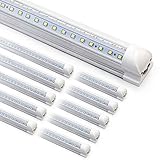 Phiwicsh 10-Pack 8ft LED Shop Light9.5/10View on Amazon
- 4
 Tuffenough Solar Outdoor Lights 2500LM 210 LED SecurityView on Amazon
- 5
 HMCITY 120 LED Outdoor Solar Lights with Motion Sensor and 3View on Amazon
- 6
 XCQMHF Solar Lights Outdoor WaterproofView on Amazon
- 7
 Diyel Solar Barn Light for OutsideView on Amazon
- 8
 Diyel Solar Barn Lights for OutsideView on Amazon
- 9
 Latband Solar Shed Light Outdoor Indoor Upgrade 1200LM 174LEDView on Amazon
Evening chores run past sunset in a barn, and the walk from the feed room to the stalls turns into a careful shuffle in the dark, with a bucket in each hand and goats shifting in the pens. A light over the door or above the stalls changes that walk, and the choice comes down to power: a solar vs plug in barn light. This guide answers that question directly, compares solar power with plug-in power for barn use, and looks at the solar lights in detail, with brightness, motion sensors, mounting and warranties stated as the makers list them.
Also worth comparing
 Tuffenough Solar Outdoor Lights 2500LM 210 LED SecurityCheck price on Amazon
 HMCITY 120 LED Outdoor Solar Lights with Motion Sensor and 3Check price on Amazon
 XCQMHF Solar Lights Outdoor WaterproofCheck price on Amazon
 Diyel Solar Barn Light for OutsideCheck price on Amazon
 Diyel Solar Barn Lights for OutsideCheck price on Amazon
 Latband Solar Shed Light Outdoor Indoor Upgrade 1200LM 174LEDCheck price on Amazon
GoatGearLab earns a commission when you buy through links on this page, at no extra cost to you. As an Amazon Associate I earn from qualifying purchases. Affiliate disclosure.
Solar vs plug in barn light: the short answer
A solar light suits a barn with no outlet nearby and a wall or roof that catches direct sun, because the panel charges the battery during the day and the light runs at night with no wiring. A plug-in light suits a barn with an outlet close to the mounting spot and a need for light that stays on through long nights regardless of cloud cover. The 4 lights in this guide are all solar, so the solar side gets the detailed treatment below, while the plug-in side is judged on wiring, outlet access and steady power. Pick solar when the mounting spot sees sun; pick plug-in when an outlet sits within reach.
Solar and plug-in power compared
The table below puts the 4 solar lights side by side in ranking order, with the stated brightness, coverage and warranty for each. Each of them runs on solar power, so the plug-in side is covered in the sections that follow.
| Light | Power source | Stated brightness | Coverage and sensor | Warranty |
|---|---|---|---|---|
| Tuffenough Solar Outdoor Lights | Solar | 2500 lumens | 270° angle, 26 feet sensing | 1 year |
| CLAONER Solar Motion Lights | Solar | 800 lumens | 270° angle | 24-month warranty |
| SUPERDANNY Solar Outside Lights | Solar | Not stated | 676 square feet, 120° sensor, 23 feet sensing | 1 year |
| HMCITY Outdoor Solar Lights | Solar | Not stated | 3 lighting modes | 18 months |
Solar lights
Solar lights carry a panel, a battery and a motion sensor, and the 4 lights in this guide all follow that pattern. The Tuffenough light lists 210 LEDs, 2500 lumens at 6500K, 3 adjustable heads, a 270° angle and a 26 feet sensing distance, with a built-in 1800mAh battery and a remote control that switches between 3 lighting modes. The CLAONER light lists 126 LEDs, 800 lumens at 6500K, a 270° angle, a built-in 1200mAh battery and 3 lighting modes. The SUPERDANNY light lists 113 LEDs at 7000K, a 180° angle and coverage of 676 square feet, with the panel mounted apart from the light on a 16.4ft cable. The HMCITY light lists 120 LEDs, 3 lighting modes and a 30% conversion rate from its panel. All 4 list IP65 waterproof protection, and all 4 mount with screws and no wiring.
Plug-in lights
A plug-in light draws steady power from an outlet, so it needs no panel, no battery and no daily charge, and it keeps shining through cloudy stretches when a solar battery would run low. The trade is wiring: the light has to sit near an outlet, or a cable has to run from the outlet to the mounting spot, and that cable has to stay clear of stalls, gates and traffic. Plug-in power suits a barn where the stalls, the feed room and the outlets already sit close together. Solar power suits the far wall, the gate and the shed with no outlet at all.
Reading brightness and coverage
Brightness on these listings is given in lumens, in LED counts and in square feet of coverage, and the makers do not all use the same measure. The Tuffenough light lists 2500 lumens from 210 LEDs, and the CLAONER light lists 800 lumens from 126 LEDs. The SUPERDANNY light lists 113 LEDs and coverage of 676 square feet with no lumen figure, and the HMCITY light lists 120 LEDs with no lumen figure at all. Color temperature is stated for 3 of the lights: 6500K on the Tuffenough and CLAONER lights, and 7000K on the SUPERDANNY light. Compare lumens with lumens and coverage with coverage.
Modes and motion sensors
Each of the 4 lights offers 3 lighting modes, and the differences sit in how the modes handle motion. The Tuffenough remote control switches between a strong light sensor mode, a dim light sensor mode and a strong long light mode. The CLAONER light runs a medium long light mode at 30% brightness, a dim light sensor mode that rises to 100% brightness on motion and falls to 10% brightness after 20s, and a strong light sensor mode that rises to 100% brightness on motion and turns off after 20s. The HMCITY light works in motion-activated full brightness in Mode 1 and dim light with a motion boost in Mode 3, while constant medium light in Mode 2 does not activate the sensor. The SUPERDANNY light offers OFF-to-ON motion sensor lighting, dusk-to-dawn lighting at 10% brightness and dim-to-bright lighting on motion. Sensing distance is stated for 2 of the lights: 26 feet on the Tuffenough and 23 feet on the SUPERDANNY, with a 120° motion sensor on the SUPERDANNY and a 270° angle on the Tuffenough and CLAONER lights.
Mounting and where the light goes
Mounting decides whether the panel sees sun and whether the light covers the ground that needs it. The Tuffenough listing gives an install height of 6.5 to 8 feet, with the solar panel facing direct sunlight and free from obstructions, and warns that installing too high or too low may affect the motion sensor. The SUPERDANNY light ships with a 16.4ft cable between the panel and the light, so the panel can sit in sun on a roof or gutter eave while the light sits under cover. The HMCITY and CLAONER lights mount on a wall with the included screws, and the CLAONER light can also fasten with double-sided tape or a rope. A plug-in light needs an outlet within reach of its cable, so check the outlet spot before choosing between solar and plug-in power. Place lights over doors and above stalls, and keep the panel clear of dust and debris.
Build and weather protection
All 4 lights list IP65 waterproof protection, which the makers state as cover against rain, snow and sleet. The HMCITY, CLAONER and SUPERDANNY lights list ABS material, with the HMCITY listing describing high-strength ABS with high-temperature resistance and corrosion resistance. The Tuffenough light lists durable material with no material name stated. Warranty terms differ: the CLAONER light carries a 60-day return and a 24-month warranty, the HMCITY light carries an 18 months warranty, and the Tuffenough and SUPERDANNY lights each carry a 1 year warranty.
Charging and run time
The Tuffenough light lists a built-in 1800mAh battery and advises setting the button to OFF on cloudy and rainy days and charging facing the sun for 2-3 days before switching the light on again. The HMCITY light states that it can absorb solar energy for 8 hours during the day and provide lighting at night, and its usage tips call for charging in direct sunlight for 6-8 hours before use. The CLAONER light lists a built-in 1200mAh battery and a 22% conversion rate, and states that absorbing sunlight for 6-8 hours provides illumination. The SUPERDANNY light lists an 18.5% conversion rate, charging in 4-5 hours and illumination for 10-15 hours. A plug-in light has no charging time at all, which is the main reason to choose plug-in power for a light that has to run every night regardless of weather.
Read the listing twice
Barn light listings sometimes disagree with themselves, and the numbers that conflict are usually the ones that decide what arrives in the box:
- HMCITY: the maker gives pack counts of 6 and 1; check before ordering.
- SUPERDANNY: the maker gives cable lengths of 16 and 16.4 feet; check before ordering.
- SUPERDANNY: the maker gives lighting times of 12 and 10-15 hours; check before ordering.
Measure the mounting spot and the distance to the nearest outlet before ordering, and allow for the larger figure where a length is in doubt.
What this guide does not cover
This guide covers light hardware and the choice of power source only. It does not cover barn wiring, outlet installation or any electrical work, and it does not cover how much light a barn needs. Ask a licensed electrician about wiring and outlets.
FAQs from goat keepers
Which is better for a barn, solar or plug-in power?
It depends on sun and outlets. Solar suits a mounting spot with direct sun and no outlet nearby, while plug-in suits a barn with an outlet close to the mounting spot and a light that has to run every night regardless of weather.
How bright are the solar lights in this guide?
The Tuffenough light lists 2500 lumens from 210 LEDs and the CLAONER light lists 800 lumens from 126 LEDs. The SUPERDANNY and HMCITY lights state no lumen figure, though the SUPERDANNY light states coverage of 676 square feet.
How long do these solar lights take to charge?
The HMCITY light calls for 8 hours of sun during the day, the CLAONER light states 6-8 hours of sunlight, and the SUPERDANNY light states charging in 4-5 hours. The Tuffenough light advises charging facing the sun for 2-3 days on cloudy and rainy days with the button set to OFF.
What warranty do these lights carry?
The CLAONER light carries a 60-day return and a 24-month warranty, the HMCITY light carries an 18 months warranty, and the Tuffenough and SUPERDANNY lights each carry a 1 year warranty.
More from the barn
See every LED vs solar barn light guide and all LED barn light vs heat lamp guides.
More picks: solar vs plug-in fence charger, solar vs plug-in electric netting, heat lamp vs barn heater and barn fan vs ceiling fan.