

On this page
Top picks at a glance
As an Amazon Associate I earn from qualifying purchases.
- 1
 EFencSolv Step-In Electric Fence Posts9.7/10View on Amazon
- 2
 Goovilla Fence Post Repair Kit9.6/10View on Amazon
- 3
 QMARK Electric Fence Wood Post Anchors9.4/10View on Amazon
- 4
 Insaga Enhance T-Post DriverView on Amazon
- 5
 BISupply T Post Puller Fence Post PullerView on Amazon
- 6
 Zareba Pin-Lock Wood and T-Post InsulatorsView on Amazon
- 7
 Zareba Black Plastic Roller Insulator for Wood PostsView on Amazon
- 8
 Zareba Large Ceramic Corner Post InsulatorView on Amazon
- 9
 25-Pack Electric Fence Wood Post Poly Tape InsulatorsView on Amazon
T post vs wood post is the steel-versus-wood choice for a goat fence. T-posts are steel posts driven into the ground with a post driver: fast to install, strong, and consistent. Wood posts are set in dug holes: slower to install, but they look better and take staples and nails that steel cannot. If you want the fence up this weekend, choose steel. If you want a fence that looks like it belongs on the farm, choose wood.
Also worth comparing
 Insaga Enhance T-Post DriverCheck price on Amazon
 BISupply T Post Puller Fence Post PullerCheck price on Amazon
 Zareba Pin-Lock Wood and T-Post InsulatorsCheck price on Amazon
 Zareba Black Plastic Roller Insulator for Wood PostsCheck price on Amazon
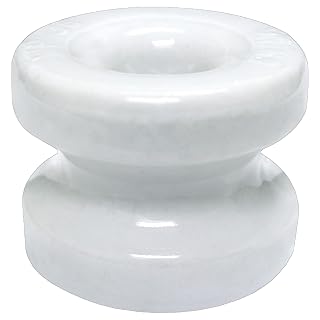 Zareba Large Ceramic Corner Post InsulatorCheck price on Amazon
 25-Pack Electric Fence Wood Post Poly Tape InsulatorsCheck price on Amazon
GoatGearLab earns a commission when you buy through links on this page, at no extra cost to you. As an Amazon Associate I earn from qualifying purchases. Affiliate disclosure.
T-posts: what they are
A T-post is a steel post with a T-shaped cross section, studs along the face for holding wire, and an anchor plate near the base. The listings we compared sell steel posts in 4, 4.8, 5, 6 and 7 foot lengths, mostly in 10-packs, with the FOREHOGAR T-posts in a 15-pack. VEVOR bundles its U-channel posts with zip ties and metal clips: 40 zip ties and 20 clips with the 6-foot pack, 20 of each with the 4-foot pack.
How T-posts go in
T-posts are driven, not dug. A fence post driver, like the 12-pound FOREHOGAR driver with a 2.7-inch inner diameter, drops over the post and drives it in with repeated lifts. No hole, no concrete, no waiting. See our fence post drivers guide for the tool.
Where T-posts win
T-posts win on speed and consistency. Every post is the same steel shape, so the fence line goes up straight and fast. They suit electric wire, woven wire and long runs where the posts just need to hold tension. For a big perimeter on a budget of weekends, steel is hard to beat.
Wood posts: what they are
A wood post is a timber post, usually pressure-treated, set in a dug or augered hole and often tamped or concreted in. No wood post listings were in the reference set, so the sizes below are general practice, not listing figures.
How wood posts go in
Wood posts need holes. You dig or auger, set the post, and tamp the soil or pour concrete around it. It is slower than driving steel, and the holes must be straight or the fence line wanders. But a set wood post is rock solid, and it stays put for decades.
Where wood posts win
Wood wins on looks and versatility. A wood post fence looks like a farm fence should. Wood takes staples, nails and screws, so you can hang woven wire, boards, gates and feeders on it. Corners, gates and ends want wood: the loads there are highest, and a concreted wood post takes them.
T post vs wood post: the differences
Installation
T-posts drive in minutes with a post driver. Wood posts need dug holes and setting time. A long steel line goes up in a day; the same line in wood takes several.
Strength and longevity
Steel does not rot. Wood rots at the ground line unless it is pressure-treated and set well. A driven T-post holds wire tension for years with no maintenance. A set wood corner post holds gates and high-tension wire that would pull a T-post over.
Wire attachment
T-posts hold wire with clips and studs; electric wire needs insulators on steel. Wood posts take staples directly, and electric wire needs insulators on wood too. For attaching boards or gates, wood wins outright: you cannot screw into a T-post.
Looks and cost
Wood looks better and costs more in labor. Steel looks industrial and costs less in labor. Material costs vary by region, but the labor difference is the real story: driving is fast, digging is slow.
Which one should you buy?
Buy T-posts if you want the fence up fast: long runs, electric wire, temporary or semi-permanent lines. The 4 to 7 foot steel posts in the listings cover most goat fences, and the bundled clips and zip ties speed the job.
Buy wood posts if you want the classic farm look, if you are hanging gates or boards, or if the corner and end posts must take real loads. Set the corners and gates in wood and run T-posts between them: that is the standard farm compromise.
Many keepers mix: wood for corners, gates and ends, steel T-posts for the line posts in between. You get the strength where it counts and the speed everywhere else.
Around the Barn
- Set corner and gate posts in wood; run steel between them.
- Drive T-posts before hanging wire, and cap the tops.
- Use insulators on steel posts for electric wire.
- Check the fence line after storms; posts shift.
FAQs from goat keepers
How far apart should T-posts be?
Spacing depends on the wire and the terrain, but line posts on a goat fence typically sit close enough that the wire does not sag between them.
Do T-posts need concrete?
No. T-posts are driven into the ground with a post driver; the anchor plate holds them. Wood posts are the ones that get concrete.
Can goats push over T-posts?
A well-driven T-post holds against rubbing, but corners and gates want wood posts set in concrete for the higher loads.
Which lasts longer, steel or wood?
Steel does not rot, so T-posts last longer with less care. Pressure-treated wood lasts decades if set well, but it eventually rots at the ground line.
Can I mix T-posts and wood posts?
Yes. The standard farm fence uses wood for corners, gates and ends, and steel T-posts for the line posts between them.
More from the barn
See every fencing guide, including fence post drivers and T-posts for wood fences.
More picks: T-posts for wood fences and fencing.