

On this page
Top picks at a glance
As an Amazon Associate I earn from qualifying purchases.
- 1
 Mighty Max Battery ML7-69.6/10View on Amazon
- 2
 Extreme Dog Fence Collar Battery 6V9.4/10View on Amazon
- 3
 ExpertPower EXP33 12V 33Ah SLA AGM Battery9.6/10View on Amazon
- 4
 Renogy 12 Volt 100Ah Deep Cycle AGM BatteryView on Amazon
- 5
 Renogy 12 Volt 200Ah Deep Cycle AGM BatteryView on Amazon
- 6
 Interstate Batteries 12V 35Ah SLA AGM Deep Cycle BatteryView on Amazon
- 7
 Interstate Batteries SLA Battery 12V 12Ah AGM VRLAView on Amazon
- 8
 Casil CA1250 12V 5Ah AGM BatteryView on Amazon
- 9
 Interstate Batteries SLA Battery 6V 7Ah AGM VRLAView on Amazon
A goat standing on the fence line is the moment you find out whether your charger battery is doing its job, so the battery behind the fence matters as much as the wire. Here is the direct answer to agm vs lead acid fence battery: AGM is not a different chemistry from lead-acid, it is a sealed form of it. For a fence charger, sealed AGM usually wins because it is spill-proof, maintenance-free and can mount in any position, while flooded lead-acid is the older open-vented type that needs water top-ups and must stay upright.
Also worth comparing
 Renogy 12 Volt 100Ah Deep Cycle AGM BatteryCheck price on Amazon
 Renogy 12 Volt 200Ah Deep Cycle AGM BatteryCheck price on Amazon
 Interstate Batteries 12V 35Ah SLA AGM Deep Cycle BatteryCheck price on Amazon
 Interstate Batteries SLA Battery 12V 12Ah AGM VRLACheck price on Amazon
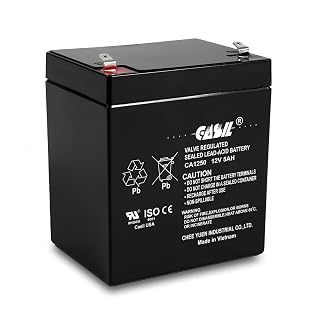 Casil CA1250 12V 5Ah AGM BatteryCheck price on Amazon
 Interstate Batteries SLA Battery 6V 7Ah AGM VRLACheck price on Amazon
GoatGearLab earns a commission when you buy through links on this page, at no extra cost to you. As an Amazon Associate I earn from qualifying purchases. Affiliate disclosure.
Agm vs lead acid fence battery: the short answer
Buy a sealed AGM battery that matches your charger’s voltage. It needs no water, cannot spill acid in the battery box, and the listings we checked mount in any position and resist shock and vibration. Choose flooded lead-acid only if you already own one and are willing to check the water level and keep it upright. If you are still deciding on the charger itself, our plug in vs battery fence charger guide covers that choice, and lithium vs lead acid fence battery covers the third option.
What AGM actually is
AGM stands for Absorbent Glass Mat. The acid is held in fiberglass mats between the plates instead of sloshing around as liquid, which is why these batteries are sold as sealed lead-acid (SLA) and described as spill-proof. They are valve-regulated, so they vent only under excess pressure and need no water added over their life. The Mighty Max listings call this out directly: maintenance-free, spill-proof, mounts in any position, and resists shocks and vibration. Several Mighty Max listings also carry a UL Certified mark.
The sealed build is what makes AGM practical for fence work. A charger battery lives in a plastic box on a post or on the ground where it gets knocked, tipped and rained on. A sealed battery shrugs off the tip-over that would spill a flooded cell across the box. The ExpertPower listings describe the same construction as maintenance-free and valve-regulated with a rugged ABS case that resists vibration and environmental conditions.
What “lead acid” usually means in this question
When someone asks about AGM vs lead acid, the “lead acid” side almost always means the flooded or wet-cell type: the classic battery with liquid electrolyte under removable caps. Flooded batteries work fine, but they ask for maintenance. The water level drops as the battery charges and discharges, so you top it up, and the battery must stay upright or acid leaks out of the vents. They also vent hydrogen during charging, so they want ventilation around the battery box.
None of the listings we checked is a flooded battery; every one is sealed AGM. That matches the market for small fence-charger batteries, where the sealed type has largely taken over. If you already run a flooded battery and it holds a charge, there is no need to replace a working battery. But when it dies, the sealed replacement removes the watering chore.
Sizing the battery: voltage first, then amp-hours
Voltage is not a choice: it must match the charger. Fence chargers are built for 6V or 12V batteries, and the listings cover both. Mighty Max lists 6V 4.5Ah and 6V 7Ah batteries for 6V chargers, and the rest of the listings are 12V. Our 6v vs 12v fence charger guide explains the charger side of that decision.
Amp-hours (Ah) measure capacity: how much charge the battery holds. The listings run from small to very large:
| Example listing | Voltage | Capacity | Weight |
|---|---|---|---|
| Mighty Max ML4-6 | 6V | 4.5Ah | 2 lb |
| Mighty Max ML7-6 | 6V | 7Ah | Not stated |
| ExpertPower EXP1250 | 12V | 5Ah | 3.3 lb |
| ExpertPower EXP1270 2-pack | 12V | 7Ah each | 8 lb for two |
| Mighty Max ML9-12 | 12V | 9Ah | 5.5 lb |
| Mighty Max ML18-12 | 12V | 18Ah | 6.7 lb |
| Renogy 100Ah | 12V | 100Ah | 63.9 lb |
| Renogy 200Ah | 12V | 200Ah | 127.9 lb |
Bigger is not automatically better. A 12V 5Ah or 7Ah battery suits a small charger on a short fence, while the 18Ah and larger sizes suit bigger chargers or longer stretches between charges. The 100Ah and 200Ah Renogy batteries are deep-cycle solar batteries for RV and off-grid use; they would run a fence charger for a very long time, but at 63.9 and 127.9 lb they are not what most people haul to a fence post. Check the charger’s manual for its recommended capacity rather than guessing.
Terminals and what the listing leaves out
Terminals come in three styles across these listings: F1, F2 and nut-and-bolt. The Mighty Max ML9-12 uses F2 terminals, the ExpertPower batteries and the smaller Mighty Max batteries use F1, and the ML18-12 and the 320 CCA ML-U1-CCAHR use nut-and-bolt terminals. Match the terminal to your charger’s connector, or plan on an adapter.
Read the included-components line before you order. The Mighty Max listings state plainly that the listing is for the battery only, with no wire harness or mounting accessories included. If your charger’s leads are corroded or missing, order those separately. Dimensions matter too: the ML9-12 measures 5.94 by 2.56 by 4.02 inches while the ML18-12 measures 7.12 by 3 by 6.5 inches, so check that the battery fits the charger box.
Cold, heat and sitting unused
Fence batteries live outdoors, so temperature behavior matters. The Mighty Max listings claim long-lasting high performance in high and low temperatures and wide operating temperatures. Renogy gives a concrete range for its AGM batteries: -4 to 140°F (-20 to 60°C) with outstanding discharge performance, and a maximum discharge current of 1100A for 5 seconds on the 100Ah model.
Self-discharge decides how often a stored battery needs topping up. Renogy states a monthly self-discharge rate below 3% at 77°F, which it says is 5 times lower than its flooded counterparts. In plain terms, a sealed AGM battery sitting in the barn over winter holds its charge far longer than a flooded battery would. That is one more reason the sealed type suits seasonal fence use.
Charging, warranties and deep discharge
These are all rechargeable batteries, and the warranty terms are short. Mighty Max states a full one-year warranty on its listings, ExpertPower states a 1-year limited warranty, and Renogy states a 2-year prorated material and workmanship warranty. Keep the receipt; a battery that fails in the first season is a warranty claim, not a repurchase.
Deep discharge is the main killer of lead-acid batteries: running one flat shortens its life. The Mighty Max ML18-12 listing specifically claims deep discharge recovery. The practical rule is to recharge before the battery goes flat rather than after, and to keep a spare charged battery ready during the grazing season so a dead battery never leaves the fence unpowered overnight.
Mounting is flexible on the small sealed batteries: the Mighty Max listings say they can be mounted in any position and resist shocks and vibration. Renogy is more specific for its large batteries: install upright, allow side mounting only for special reasons, and never install upside down.
Read the listing twice
Battery listings contradict themselves on the numbers you need for fit and planning:
- Mighty Max ML5-12: 3.5 lb in the bullets against 3.1 lb in the spec table.
- Mighty Max ML4-6: the spec table says 45 amp_hours while the title says 4.5AH, and the weight is 2 lb in one line against 16 ounces in another.
- Renogy 100Ah: 63.9 lb in one spec line against 8.8 lb in another; trust 63.9 lb for a 100Ah battery.
- ExpertPower EXP1270: 5.94 by 2.56 by 3.70 inches in the bullets against 5.98 by 2.5 by 3.6 inches in the spec table.
Measure the battery box before ordering and allow for the larger figure. When a listing gives two weights or two sizes, the title and bullets are usually the more carefully written part.
What this guide does not cover
This guide covers battery hardware only. It does not cover charger sizing in joules or miles of fence; see our what size fence charger do I need guide for that. It also does not cover solar panels or charge controllers for solar chargers.
FAQs from goat keepers
Is AGM the same as lead-acid?
AGM is a sealed form of lead-acid, not a different chemistry. When people say “lead acid” in this question they usually mean the flooded type with liquid electrolyte and vented caps.
What size battery does my fence charger need?
Match the charger’s voltage first: the listings cover 6V batteries at 4.5Ah and 7Ah and 12V batteries from 5Ah up to 200Ah. Check the charger’s manual for its recommended capacity rather than guessing.
Can I mount an AGM battery on its side?
The small Mighty Max sealed batteries state they can be mounted in any position. Renogy recommends installing its large AGM batteries upright, allowing side mounting only for special reasons and never upside down.
How long will a battery hold its charge in storage?
Renogy states a monthly self-discharge rate below 3% at 77°F for its AGM batteries, which it says is 5 times lower than flooded batteries. Recharge a stored battery before the grazing season rather than after it goes flat.
Do these battery listings include cables?
No. The Mighty Max listings state the listing is for the battery only, with no wire harness or mounting accessories included. Order leads separately if yours are corroded or missing.
More from the barn
See every fence charger guide and all fencing and shelter guides.
More picks: lithium vs lead acid fence battery, 6v vs 12v fence charger, best fence charger for the money and fence charger vs energizer.