

On this page
Top picks at a glance
As an Amazon Associate I earn from qualifying purchases.
- 1
 Stalwart Steel Loading Ramp Set9.5/10View on Amazon
- 2
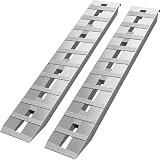 VEVOR Aluminum RampsView on Amazon
- 3
 Loading Ramps for Pickup TrucksView on Amazon
- 4
 76''L × 53''W Tri-Fold Aluminum Loading Ramp for PickupView on Amazon
- 5
 LIEKUMM 4FT Aluminum Truck RampsView on Amazon
Loading day is when the ramp question stops being theoretical: goats to the trailer, the trailer to the vet or the sale barn, and one ramp between the ground and the deck. Aluminum vs steel livestock loading ramp comes down to handling weight against hard wear. The short answer: aluminum is the lighter carry, steel is the heavier yard fixture, and the listings below show exactly what the aluminum side states so you can judge a steel ramp the same way.
Also worth comparing
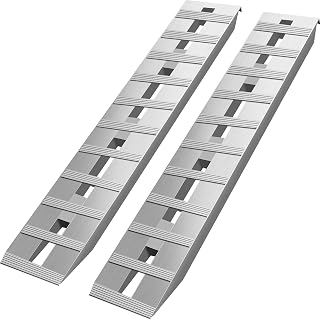 VEVOR Aluminum RampsCheck price on Amazon
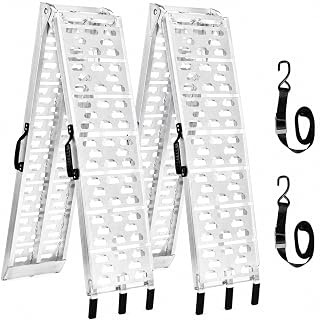 Loading Ramps for Pickup TrucksCheck price on Amazon
 76''L × 53''W Tri-Fold Aluminum Loading Ramp for PickupCheck price on Amazon
 LIEKUMM 4FT Aluminum Truck RampsCheck price on Amazon
GoatGearLab earns a commission when you buy through links on this page, at no extra cost to you. As an Amazon Associate I earn from qualifying purchases. Affiliate disclosure.
Aluminum vs steel livestock loading ramp: the short answer
Pick aluminum when you will carry the ramp to the trailer, set it up alone and store it in the barn between uses. The four aluminum ramps in this guide state weights from 19.4 to 46 pounds, and the VNN listing states rustproof aluminum that stands up to rain and snow. Pick steel when the ramp will live in one place, get used hard and never needs carrying; then shop a steel listing the same way, by its stated weight, capacity and finish. One honest note up front: all four products in this guide are aluminum, and all four are sold as ATV and equipment ramps rather than livestock ramps. No steel ramp is in this listing set, so the steel side below is a shopping checklist, not a product pick.
The four aluminum ramps, ranked for loading work
1. VNN tri-fold, 77 in long by 54 in wide. The widest ramp here by a long way, and width is what matters when animals walk up instead of machines rolling up. The listing states a 1600 lb capacity, a 46 lb weight, a punch-plate surface for traction, rubber-coated fingers for the tailgate and a tri-fold design that folds to 1/3 of its expanded width. It states a 1 year manufacturer warranty, the clearest warranty term in the group. If the job is goats to a trailer, width first, and this is the width pick.
2. VEVOR 60 in by 12 in, 6000 lb stated capacity. The highest stated capacity here, on a 2.36 inch thick main beam with a stair-step design, top hooks and adjustable safety straps. The listing contradicts itself on weight: the bullets say 26 lbs while the spec table says 30 pounds, so go by the bullets. The warranty description reads None, so no warranty term is stated. This is the capacity pick for heavy loads, with the caveat that 12 in of width is a machine ramp, not a comfortable animal walkway.
3. Ruedamann 4 ft pair, 19.4 lb per ramp. The lightest stated weight here, with hook-like claws on top, punched holes for traction and a stated recommendation to keep the working height under 13.8 in with tyres less than 11 in wide. The listing contradicts itself on capacity: the title and spec table say 4400 lbs per pair while the bullets say a single ramp supports 1760 lbs and two together 3520 lbs, so go by the bullets. The listing asks buyers to report problems within one year, which is the closest thing to a warranty term here after the VNN.
4. TUFFIOM 7 ft folding pair. The longest ramp here at 7 ft, folding, with an arched profile, a safety strap and rubber-coated fingers. The listing contradicts itself twice: the title and bullets state 1500 lbs capacity while the spec table says 750 lbs, and the weight reads 15 lbs in one spec field against 30 pounds in another. Trust the title and bullets on capacity, and treat the weight as uncertain. No warranty term is stated. Length is its virtue; the contradictions are its cost.
For the full livestock-specific roundup, see our best livestock loading ramp for small farms guide.
Reading the listing like a buyer
Ramp listings contradict themselves more than most, and this set proves it: the Ruedamann states 4400 lbs in the title against 3520 lbs for the pair in the bullets, the TUFFIOM states 1500 lbs in the title against 750 lbs in the spec table, and the VEVOR states 26 lbs in the bullets against 30 pounds in the spec table. The rule that holds across sites is to trust the title and bullets over the spec table, and where two figures disagree, plan for the lower one. Check three stated figures before anything else: capacity per ramp and per pair, the width (12 in here at the narrow end, 54 in at the wide end), and the weight you will actually carry. Then check the attachment: hook claws, top hooks, safety straps and rubber-coated fingers are all stated across these four, and a ramp that cannot be tied to the trailer is a ramp that walks out from under the load.
The steel side of the question
Since no steel ramp is in this listing set, here is how to judge one with the same yardstick. Read its stated weight first: steel ramps run heavier than the 19.4 to 46 lb aluminum range above, which matters if you load alone. Read the stated capacity the same way, per ramp and per pair, and watch for the same title-versus-spec-table disagreements. Read the finish line for outdoor storage; the VNN aluminum listing states rustproof, so a steel listing should state its own coating or finish with equal clarity. If the steel ramp will live at the loading chute permanently, weight stops mattering and the decision turns on capacity, width and finish. If it will ride in the truck bed, aluminum’s stated light weight is hard to argue with.
What this guide does not cover
This guide covers ramp hardware only: materials, stated weights, widths, capacities and the contradictions inside the listings. It does not cover trailer setup, animal handling or training animals to load. For loading technique, ask an experienced livestock handler; for the ramp, go by the stated figures.
FAQs from goat keepers
Is aluminum strong enough for a livestock ramp?
The listings state capacities from 1500 to 6000 lbs, which covers goats many times over. Match the ramp’s stated capacity, per ramp and per pair, against the heaviest animal and the trailer deck height, and plan for the lower figure where a listing contradicts itself.
How wide should a livestock loading ramp be?
The four ramps here run from 12 in to 54 in wide. The 54 in VNN is the only one shaped like an animal walkway; the 12 and 13.4 in ramps are machine widths. Wider is calmer for animals, so width belongs near the top of the checklist.
Are these ramps made for livestock?
Not specifically. All four listings describe ATV, UTV, motorcycle and lawn mower use; none is sold as a livestock ramp. They work as the aluminum examples for the material question, and the livestock loading ramp guide covers ramps picked for farm animals.
What should I check before the first load?
Fasten the ramp to the trailer with the stated attachment: hook claws, top hooks, a safety strap or rubber-coated fingers, depending on the listing. Stay under the stated capacity, keep the working height at or under the stated figure such as the Ruedamann’s 13.8 in, and never ride equipment up or down the ramp, as the Ruedamann listing warns.
Aluminum or steel for a ramp that lives outside?
The VNN aluminum listing states rustproof construction for rain and snow. No steel ramp is in this set, so check a steel listing’s stated finish with the same care you would give its capacity, and store any ramp under cover when it is not working.
More from the barn
See every goat fencing guide and all fencing and shelter guides.
More picks: best livestock loading ramp for small farms and welded wire vs no climb fence.