

On this page
Top picks at a glance
As an Amazon Associate I earn from qualifying purchases.
- 1
 Hay Bag Hanging Goat Feeder Tote with Adjustable Strap9.3/10View on Amazon
- 2
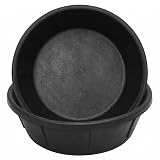 Sadnyy 8 Quart Rubber Feed Pan9.7/10View on Amazon
- 3
 Little Giant® Plastic Utility PanView on Amazon
- 4
 Gelacie Pasture Hay Feeder 2 in 1 77 Gallon 59 in LivestockView on Amazon
- 5
 Gelacie 2 in 1 Livestock Hay Feeder with Feed Pan 70 GallonView on Amazon
- 6
 Goat Hay FeederView on Amazon
- 7
 Pasture Hay Feeder 45 Gallon for Farms Hay Grain LivestockView on Amazon
- 8
 T TEKE Classic Slow Hay Feeder Hay NetsView on Amazon
Hay scattered across the bedding by morning and a pan tipped over by the gate is the usual sign that the feeding setup needs a rethink, and hay feeder vs feed pan is the choice that decides which job each piece of gear does. A hay feeder holds hay up off the ground so goats pull it through a rack instead of standing in it, while a feed pan sits at ground level for grain, pellets or minerals. This guide compares the styles on waste, capacity, mounting, material and cleaning, using feeders we compared from their listings, and it points out where those listings contradict themselves.
Also worth comparing
 Little Giant® Plastic Utility PanCheck price on Amazon
 Gelacie Pasture Hay Feeder 2 in 1 77 Gallon 59 in LivestockCheck price on Amazon
 Gelacie 2 in 1 Livestock Hay Feeder with Feed Pan 70 GallonCheck price on Amazon
 Goat Hay FeederCheck price on Amazon
 Pasture Hay Feeder 45 Gallon for Farms Hay Grain LivestockCheck price on Amazon
 T TEKE Classic Slow Hay Feeder Hay NetsCheck price on Amazon
GoatGearLab earns a commission when you buy through links on this page, at no extra cost to you. As an Amazon Associate I earn from qualifying purchases. Affiliate disclosure.
Hay feeder vs feed pan: the short answer
Start with what goes in each one, then pick the style, then check capacity and build. A hay feeder suits hay: the rack holds the bale up off the ground and the goats pull it through the bars. A feed pan suits grain, pellets or minerals at ground level, where goats eat with their heads down. If you feed both hay and grain, a feeder with a grain trough does both jobs from one spot: the Goatzy pairs a 50 gallon hay rack with a 20 gallon grain trough, and the Lilvduybz pairs an angled hay rack with a lower trough. A plain rack suits a barn with a solid wall or a pasture with no wall at all, and the ETELI and UNCOJOY racks show both options.
If you would rather go straight to the products, our best hay feeder for goats roundup scores feeders on these points.
Hay racks and grain troughs compared
| Feeder | Stated capacity | Mounting | Grain tray |
|---|---|---|---|
| Goatzy Large Hay Feeder | 50 gallon rack, 20 gallon trough | Freestanding, wheels | 20 gallon trough |
| ETELI Hay Feeder | 38 gallons | Freestanding, adjustable feet | Not stated |
| UNCOJOY Goat Hay Feeder | 18 gallons | Wall mount | Not stated |
| Lilvduybz Hay Feeder | 35 gallons | Freestanding | Lower trough |
Feeders with a grain trough
The Goatzy pairs a 50 gallon hay rack above a 20 gallon trough, a hinged metal roof that lifts from the front for loading, and two solid wheels with two handles so one person can lift one end and roll it between pens, paddocks and pasture. The trough holds grain, pellets or minerals and catches the hay goats pull out, so more of each bale gets eaten. The Lilvduybz takes the same idea in a smaller frame: a 35 gallon angled hay rack above a lower trough, with the sloped rack keeping the main hay supply elevated and directing loose feed toward the trough. Both feeders let animals eat from both sides, and both are freestanding, so neither needs a wall.
Feeders without a grain trough
The ETELI is a hay rack only, with a 38 gallon capacity and an open frame that lets several goats, sheep or alpacas eat at once without crowding. Adjustable feet pads let you level the feeder on uneven pasture ground or barn floors, and the listing says the feeder feeds 6 to 8 goats at once. The UNCOJOY is a wall rack only, with an 18 gallon capacity and a large opening at the top for filling. Its bracket mounts on wooden grids, red brick walls and concrete walls, indoors or outdoors, and the rack is assembled from four components with an instruction manual in the box. Neither feeder adds a grain tray, so grain needs a separate pan or trough.
Reading capacity against your herd
Capacity on these listings is given in gallons of space, not in pounds of hay, and makers measure it differently. The Goatzy lists a 50 gallon rack with a 20 gallon trough, the ETELI lists 38 gallons, the Lilvduybz lists 35 gallons and the UNCOJOY lists 18 gallons. None of these listings converts gallons into a weight of hay, so treat gallons as a way to rank feeders against each other, not as a daily ration.
Some listings also state how many animals can eat at once. The ETELI listing says it feeds 6 to 8 goats at the same time, and the Goatzy listing says the rack and trough feed the whole herd from one spot, with animals eating from both long sides. The Lilvduybz and UNCOJOY listings state no head count. A practical approach is to count your goats and pick a feeder that leaves room at the rack, and if you keep more than one group, two smaller racks in separate pens often work better than one large rack shared by everyone.
Mounting and where the feeder goes
Mounting decides how stable the feeder is and how easy it is to fill. Wall racks need a solid wall or fence to anchor into; the UNCOJOY bracket mounts on wooden grids, red brick walls and concrete walls. Freestanding feeders need level ground and enough room for goats to reach from more than one side: the ETELI has adjustable feet pads for uneven ground, and the Lilvduybz listing says to place the feeder on firm, level ground before use.
Think about filling too. A rack with a hinged roof, like the Goatzy, lifts from the front for loading, and a wide top opening, which the UNCOJOY listing mentions, makes it easier to drop hay in from above. The Goatzy rolls on two wheels, so it can move to fresh ground, out of the mud, or closer to the barn when winter comes. Place hay feeders away from water buckets so dropped hay stays dry, and keep a separate goat mineral feeder nearby rather than mixing minerals into the hay rack.
Materials: steel, galvanized steel or iron
Material sets how long a feeder lasts outdoors. The listings we compared use these materials:
- Hot dipped galvanized steel: the Goatzy, with welded panels for daily outdoor farm use.
- Premium metal with a black powder-coated finish: the ETELI, described as weather-resistant in rain, snow or sun.
- Steel: the Lilvduybz, with a reinforced steel frame, and the UNCOJOY, with solid round steel, firmly welded and coated with black paint.
Steel racks hold up to chewing and climbing better than a pan left on the ground. Galvanized and powder-coated finishes are the better choice for feeders that live outdoors or in a damp barn. The UNCOJOY listing states its black paint keeps the steel from rusting or deforming even after long-term use.
Grain trays and 2-in-1 designs
Some feeders add a tray under the hay rack. The Goatzy pairs a 50 gallon rack with a 20 gallon feed pan and says the trough holds grain, pellets or minerals while catching the hay goats pull out. The Lilvduybz pairs its angled rack with a lower trough that loose feed falls toward. A tray also catches some of the hay goats pull out, though none of these listings measures how much. If you feed grain at a separate time and place, a plain rack without a tray is simpler to clean.
Read the listing twice
Hay feeder listings often contradict themselves, and the numbers that conflict are usually the ones you need to plan the install:
- Lilvduybz: 31.3 x 21.7 x 28.9 inches in the title against 31.1 x 21.7 x 28.7 inches in the bullets, with a spec table size of 79 x 55 x 73 cm.
- UNCOJOY: 9.03 pounds in the bullets against 9.04 pounds in the spec table.
Measure your wall or pen before ordering and allow for the larger figure. The UNCOJOY listing also says the bracket can store blankets and clothes in a laundry room or garage, which has nothing to do with feeding goats, so read past the extra uses and check the feeding numbers instead.
What this guide does not cover
This guide covers feeder hardware only. It does not cover how much hay a goat needs, hay types or any health question. Ask your veterinarian or local extension office about rations and goat health.
FAQs from goat keepers
What is the difference between a hay feeder and a feed pan?
A hay feeder holds hay up off the ground in a rack, while a feed pan sits at ground level for grain, pellets or minerals. The Goatzy and Lilvduybz feeders combine both: a hay rack above and a grain trough below.
How big should a goat hay feeder be?
Listings state capacity in gallons, from 18 gallons on the UNCOJOY rack to a 50 gallon rack with a 20 gallon trough on the Goatzy. The ETELI lists 38 gallons and says it feeds 6 to 8 goats at once, so compare gallons between feeders and leave room at the rack for every goat in the pen.
Do goat hay feeders come with mounting hardware?
Some do. The Goatzy listing says hardware comes in counted bags, and the UNCOJOY rack is assembled from four components with an instruction manual in the box. Freestanding feeders such as the ETELI and Lilvduybz need no wall mount, and the ETELI levels with adjustable feet pads.
Can a hay feeder stay outside all year?
The Goatzy roof covers the hay against rain and snow, and the listing says the covered feeder can stay out in the pasture all year. The ETELI is made of weather-resistant metal with a black powder-coated finish for rain, snow or sun.
More from the barn
See every hay feeder guide and all feeding and water guides.
More picks: best hay feeders for goats, goat mineral feeders, heated water buckets and goat shelters.