

On this page
Top picks at a glance
As an Amazon Associate I earn from qualifying purchases.
- 1
 briidea Solar Fence Alarm9.7/10View on Amazon
- 2
 M MINGYA Voltage Checker9.6/10View on Amazon
- 3
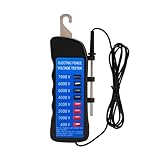 L-FENCE 7KV Tester9.5/10View on Amazon
- 4
 M MINGYA Fence Indicator 2pc9.4/10View on Amazon
A goat leans on the fence line at morning milking time and the wire gives a little too easily, so the question is whether the fence still carries a charge. This guide covers how to check a electric fence with a digital voltage checker and with indicator lights, and it compares the four picks below on range, power and fit. Every number below comes from a listing for one of the picks we compared.
GoatGearLab earns a commission when you buy through links on this page, at no extra cost to you. As an Amazon Associate I earn from qualifying purchases. Affiliate disclosure.
| # | Product | GoatGear Score | Buy |
|---|---|---|---|
| 1 | briidea Solar Fence Alarm | 9.7/10 | Buy on Amazon |
| 2 | M MINGYA Voltage Checker | 9.6/10 | Buy on Amazon |
| 3 | L-FENCE 7KV Tester | 9.5/10 | Buy on Amazon |
| 4 | M MINGYA Fence Indicator 2pc | 9.4/10 | Buy on Amazon |

briidea Solar Fence Alarm
A solar-powered fence alarm with light transmission to 1/2 mile that blinks while the fence runs normally and stops when a fault appears.
Pros
- Solar powered, so it draws no power from the fence
- Light transmission to 1/2 mile for long-distance viewing
- Detects a range exceeding 2 miles with the alligator clip
- IP67 housing that withstands high and low temperatures
Cons
- No voltage reading is stated, so it cannot show volts
- Light covers 1/2 mile while detection exceeds 2 miles, so the two figures need care
- No battery capacity is stated for the solar reserve
- Blinks while the fence runs normally, the opposite of the M MINGYA indicator

M MINGYA Voltage Checker
A digital fence voltage checker that reads 300 to 9900 volts on an LCD with a back light.
Pros
- Reads 300 to 9900 volts on a large LCD screen
- Back light shows the reading day and night
- Copper probe with a 51.2 inch wire
- Replaceable 9V battery included
Cons
- No warranty term is stated
- Runs on a 9V battery, so it needs a fresh cell to read
- The 51.2 inch wire sets how far the probe sits from the fence
- No indicator light is stated, so it shows a number, not a glanceable signal

L-FENCE 7KV Tester
A neon-light fence voltage tester with a 600v to 7000v range, 8 indicator lights and no batteries required.
Pros
- 600v to 7000v range with 8 neon lights
- No batteries required
- Rugged ABS shell withstands cold climates
- Wave-pattern grip with a smooth frosted shell
Cons
- Not waterproof, as the listing states
- No warranty term is stated
- 7kV top range, lower than the 12kV and 20,000V picks
- No digital display, neon lights only

M MINGYA Fence Indicator 2pc
A clip-on indicator light, sold as a 2 pack, that stays dark while the fence runs normally and flashes when a fault appears.
Pros
- Clips onto the fence and flips on with a switch
- CR2032 battery included and replaceable
- Flashes when the fence faults, dark when it runs normally
- Works with steel wire, poly wire rope or tape
Cons
- No warranty term is stated
- Gives no voltage number, so it cannot show volts
- Needs a CR2032 cell, so a dead cell stops the light
- The listing gives no range or distance for the light
As an Amazon Associate I earn from qualifying purchases.
Also worth comparing
 Gallagher SmartFix Fence Volt & Current MeterCheck price on Amazon
 ALLOSUN GK503B NEON Electric Fence Voltage Tester FaultCheck price on Amazon
 Gallagher Digital Electric Fence TesterCheck price on Amazon
 Electric Fence Tester & Voltage Detector 2000V-12Check price on Amazon
 Wireless Electric Fence Voltage TesterCheck price on Amazon
 Patriot PE2 Electric Fence EnergizerCheck price on Amazon
How to check a electric fence: the short answer
Clip a digital checker to the fence wire, drive its probe into the soil, and read the volts on the screen. That number is the direct answer: a live fence shows a reading, and a dead stretch shows little or nothing. If you want a daily watch instead of a number, clip an indicator light to the wire and look at it when you pass: the M MINGYA light stays dark while the fence runs normally and flashes when a fault appears, while the briidea alarm (on Amazon) blinks while the fence runs normally and goes dark on a fault. The two lights use opposite signals, so learn the one you own before you trust it.
For the full fence setup, see every fencing and shelter guide before you walk the line, and keep the checker and the indicator light on the same round so the number and the signal agree.
The gear for the job
The voltage reading needs a digital checker, and the daily watch needs an indicator light, so the four picks below cover both jobs.
Reading voltage step by step
Drive the probe of the M MINGYA checker into the soil, clip its alligator clip to the fence wire, and read the volts on the LCD screen. The checker reads 300 to 9900 volts, and its back light shows the number day and night. The display switches on and off by itself, and a replaceable 9V battery is included, so the checker is ready when you pick it up. The L-FENCE checker shows its reading a different way: 8 neon lights cover 600V to 7kV, so the lit band is the reading. Read the volts at more than one spot, and a low reading points to the stretch that needs a closer look.
The M MINGYA checker grips steel wire, aluminum wire, polyethylene wire, rope, tape and braid with the same alligator clip, so one checker covers the wire types on most goat fences. Its copper probe rides a 51.2 inch wire, which sets how far the probe sits from the fence while you read. If the wire on your fence is not in that list, the clip may not hold, so check the wire type before you buy.
Indicator lights and what they mean
An indicator light watches the fence while you do other chores, but the two lights in this guide use opposite signals, so read the one you own. The M MINGYA indicator stays dark while the fence runs normally and flashes when a fault appears, and it clips onto steel wire, poly wire rope or tape. The briidea alarm blinks while the fence runs normally and stops blinking when a fault appears, and its light travels 1/2 mile. Put the light where you pass every day, such as a driveway, so a change in the signal catches your eye.
The M MINGYA indicator (on Amazon) comes as a 2 pack with a replaceable CR2032 cell in each, and a switch turns each one on. The briidea alarm runs on a solar panel with a stored reserve for cloudy days, and it draws no power from the fence, so the fence keeps its voltage. A light that needs no daily attention is the one that gets checked, so pick the power source that fits how much you walk the fence line.
Power: solar, battery and the 9V cell
Each pick powers itself a different way, and the power source decides how often you touch it. The briidea alarm runs on a solar panel with a stored reserve for cloudy days, and it draws no power from the fence, so the fence keeps its voltage. The M MINGYA indicator runs on a replaceable CR2032 cell, which is included. The M MINGYA checker runs on a replaceable 9V battery, which is also included. The L-FENCE checker gives no battery or power detail in its listing, so its power source is not stated.
A solar alarm suits a fence line that gets sun, while a battery cell suits a light or a checker that you carry in a pocket and use now and then. The briidea alarm includes a magnetic base and a right-angle bracket, so it mounts where the sun hits it. The M MINGYA indicator clips straight onto the wire, and the M MINGYA checker carries its probe and clip in your hand. Match the power source to the spot: sun for a fixed alarm, a cell for a tool you carry.
Range and fit: volts, miles and wire types
Match the checker to the fence you own. The M MINGYA checker reads 300 to 9900 volts, while the L-FENCE checker covers 600V to 7kV with 8 neon lights. The briidea alarm sends its light 1/2 mile and detects past 2 miles with its alligator clip, so the two mile figures cover different jobs. Wire fit matters too: the M MINGYA indicator clamps steel wire, poly wire rope or tape, and the M MINGYA checker grips steel wire, aluminum wire, polyethylene wire, rope, tape and braid. Check the wire on your fence against those lists before you buy.
The briidea alarm is built for distance: a large lens spreads the light, and the alligator clip detects a range past 2 miles. The M MINGYA checker is built for the number: a large LCD screen with a back light shows the volts, and the range runs 300 to 9900 volts. The M MINGYA indicator is built for the gate: a small clip-on light that flashes on a fault. The L-FENCE checker is built for a glance: 8 neon lights show the band. Pick the tool that matches the question you ask every day: a number, a light or a band.
Read the listing twice
Fence checker listings often carry two figures that look alike but measure different things, and the numbers that confuse are usually the ones you need. The briidea listing gives 1/2 mile for the light and past 2 miles for detection, so the two mile figures are not the same measurement. The M MINGYA indicator and the briidea alarm also use opposite light signals: one stays dark while the fence runs normally, the other blinks while it runs normally. The L-FENCE listing gives only a title, with no bullets, spec table or warranty term, so its 600V to 7kV range and its 8 neon lights are the only figures to compare. Read the listing twice before you order, and allow for the figure that matters most to your fence.
What this guide does not cover
This guide covers checker hardware only. It does not cover fence installation, charger sizing, grounding or any health question. Ask your local extension office about fence layout and goat care.
FAQs from goat keepers
How do I know if my electric fence is working?
Clip a digital checker to the wire and read the volts, or watch an indicator light. The M MINGYA checker reads 300 to 9900 volts on its LCD, the M MINGYA indicator stays dark while the fence runs normally, and the briidea alarm blinks while the fence runs normally.
What voltage range do these checkers read?
The M MINGYA checker reads 300 to 9900 volts, and the L-FENCE checker covers 600V to 7kV with 8 neon lights. The briidea alarm and the M MINGYA indicator give no voltage number.
Do indicator lights flash when the fence is working?
It depends on the pick. The M MINGYA indicator stays dark while the fence runs normally and flashes on a fault, while the briidea alarm blinks while the fence runs normally and goes dark on a fault. Learn the signal of the light you own.
Can one checker work on wire, tape and rope?
The M MINGYA checker grips steel wire, aluminum wire, polyethylene wire, rope, tape and braid, and the M MINGYA indicator clamps steel wire, poly wire rope or tape. Match the wire on your fence to the list before you buy.
More from the barn
See every fence charger guide and all fencing and shelter guides.
More picks: solar fence chargers, fence insulators and goat fencing wire.