

On this page
Top picks at a glance
As an Amazon Associate I earn from qualifying purchases.
- 1
 SolKang Electric Fence Tester9.6/10View on Amazon
- 2
 QWORK Electric Fence Voltage Tester9.5/10View on Amazon
- 3
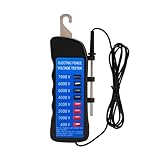 L-FENCE Electric Fence Voltage Tester9.5/10View on Amazon
- 4
 ALLOSUN GK503B NEON Electric Fence Voltage Tester FaultView on Amazon
- 5
 Gallagher Digital Electric Fence Tester Digital Fence TesterView on Amazon
- 6
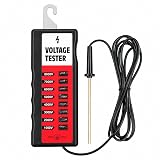 Electric Fence Voltage Tester Neon Lights Farming EquipmentView on Amazon
- 7
 7000V Electric Fence Tester ABS Eight Light Indicator VoltageView on Amazon
- 8
 AstroAI Digital Multimeter Tester 2000 Counts with DC ACView on Amazon
- 9
 ALLOSUN GK503C NEON Electric Fence Voltage Tester FaultView on Amazon
A goat that finds the one dead section of fence teaches the rest of the herd by evening, so the multimeter vs fence tester question usually arrives on a dark morning with a cold wind. The short answer: a multimeter is a general electrical tool for circuits and batteries, while a fence tester is built to read the high-voltage pulses of an electric fence and point you at faults. They overlap on paper, but on a fence line they do different jobs. This guide walks through the difference step by step, with every number drawn from the fence tester listings we compared.
Also worth comparing
 ALLOSUN GK503B NEON Electric Fence Voltage Tester FaultCheck price on Amazon
 Gallagher Digital Electric Fence Tester Digital Fence TesterCheck price on Amazon
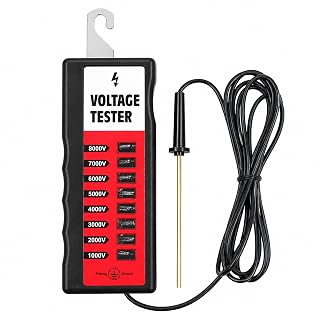 Electric Fence Voltage Tester Neon Lights Farming EquipmentCheck price on Amazon
 7000V Electric Fence Tester ABS Eight Light Indicator VoltageCheck price on Amazon
 AstroAI Digital Multimeter Tester 2000 Counts with DC ACCheck price on Amazon
 ALLOSUN GK503C NEON Electric Fence Voltage Tester FaultCheck price on Amazon
GoatGearLab earns a commission when you buy through links on this page, at no extra cost to you. As an Amazon Associate I earn from qualifying purchases. Affiliate disclosure.
Multimeter vs fence tester: the short answer
Reach for a multimeter when you need to check a charger battery, a solar panel output or a household circuit. Reach for a fence tester when you need to read the voltage on the fence wire itself and find where a fault is draining it. Fence testers are built for pulses in the thousands of volts: the listings here state ranges from 0.6 to 7kV on the ALLOSUN GK503B neon model up to 15,000 volts on the FenceMate FT5501 digital model. A standard multimeter is not built with that pulse job in mind, so for fence work the dedicated tester is the right tool.
What a fence tester does
A fence tester reads the voltage on a live fence wire and helps you walk the line to a fault. The digital models give you a number: the allsun digital tester reads 300V to 9.9kV on an LCD with automatic wake and 4-second shutoff, the FenceMate FT5501 reads up to 15,000 volts on a large LCD with a 9V battery included, and the Gallagher G503014 digital tester reads 0 to 12,000 volts with 100V precision under 10kV. The neon models use glow bulbs instead: the ALLOSUN GK503B shows 0.6 to 7kV through neon lamps with no batteries needed, running off the fence voltage itself, and the L-FENCE model shows 2 to 12kV through 8 neon indicator lights, also with no batteries. If you would rather compare finished testers, our digital vs analog electric fence tester guide lines them up.
What a multimeter does
A multimeter measures low-voltage DC and AC, resistance and continuity, which is exactly what a charger battery or a solar panel needs. The ANDMON fence tester even blurs the line by adding a stated 0 to 19.9V battery voltage reading alongside its 0 to 13kV fence range, which is the one multimeter-style job you can do at the fence line. But a multimeter has no pulse counting, no directional fault arrows and no fence-range scale, so it cannot tell you that the far corner of the paddock is 2kV lower than the charger end. The listings here are all fence testers, so there are no multimeter figures to compare; for fence voltages, use the tester.
| Tester listing | Stated range | Display | Battery | Stated warranty |
|---|---|---|---|---|
| ALLOSUN GK503B neon | 0.6 to 7kV | Neon lamps | None, runs off fence | 12 months |
| allsun digital | 300V to 9.9kV | LCD | Not included | 1 year |
| FenceMate FT5501 | Up to 15,000V | LCD | 9V included | Not stated |
| Gallagher G503014 | 0 to 12,000V | Digital | 9V, 6 to 12 month life | Not stated |
| L-FENCE neon | 2 to 12kV | 8 neon lights | None required | Not stated |
Fault finding: where fence testers pull ahead
Finding a short is the job multimeters cannot do well, because they cannot read the fence pulse. The Gallagher SmartFix G50905 reads both voltage and current and uses directional arrows to point toward the short, which is the fastest way to walk a long line to the fault. The Speedrite ST100 shows current, voltage and current direction at the same time with an audible current indicator. The M MINGYA digital tester shows volts, amps and direction on a backlit screen over a 0.2 to 15kV range. Our fault finder vs fence tester comparison covers this split in more detail.
Power, size and what comes in the box
Neon testers need no batteries at all: the ALLOSUN GK503B and the L-FENCE model both run off the fence pulse, and the L-FENCE adds an ABS shell that the maker calls cold-resistant while noting it is not waterproof. Digital testers run on batteries: the FenceMate includes a 9V, the Gallagher G503014 includes a 9V stated for 6 to 12 months, the allsun digital needs one but does not include it, and the M MINGYA includes a replaceable 9V. Sizes stay pocketable: the ALLOSUN lists 5 by 2 by 1 inches, the allsun digital lists 6.85 by 2.76 by 1.3 inches and the Gallagher models list 3 by 5 by 9 inches. The M MINGYA clip-on indicator takes a different approach entirely: a waterproof LED that clamps to the wire and flashes when the fence malfunctions, running on an included CR2032.
Read the listing twice
Fence tester listings contradict themselves more often than you would expect, and the conflicts sit in the numbers you need:
- Speedrite ST100: the bullets say a replaceable 9 volt battery, while the spec table says 4 AA batteries are required.
- ALLOSUN GK503B: the bullets say neon lamps, not LEDs, while the item type name calls it an LED tester.
- ALLOSUN GK503B: stated for 0.6 to 7kV, so confirm your charger’s output falls inside before you buy.
- Gallagher G503014: measures with 100V precision under 10kV and 1,000V steps above, so readings get coarser at the top of its 12,000 volt range.
Measure nothing yourself; trust the range figures, then ask the seller when two fields disagree.
FAQs from goat keepers
Can I use a multimeter to check an electric fence?
Not for the fence wire itself. Fence testers are built for pulses in the thousands of volts, with stated ranges like 300V to 9.9kV on the allsun digital tester; a multimeter is the right tool for the charger’s battery or a solar panel instead.
Which fence tester shows the exact voltage?
The digital models do. The FenceMate FT5501 reads up to 15,000 volts on an LCD, the allsun digital reads 300V to 9.9kV, and the Gallagher G503014 reads 0 to 12,000 volts.
Do fence testers need batteries?
Neon testers do not: the ALLOSUN GK503B and the L-FENCE model run off the fence pulse. Digital models do: the FenceMate and Gallagher include a 9V, the allsun digital needs one that is not included, and the M MINGYA includes a replaceable 9V.
Which tester helps find a short fastest?
The Gallagher SmartFix G50905 reads voltage and current with directional arrows that point toward the short, and the Speedrite ST100 shows current direction with an audible indicator.
Is there a warranty on these testers?
Some listings state one: 12 months on the ALLOSUN GK503B, 1 year on the allsun digital and the Gallagher SmartFix, and a 1-year warranty on the ANDMON. The FenceMate, Speedrite and M MINGYA listings state no warranty term.
More from the barn
See every fence tester guide and all fencing and shelter guides.
More picks: fence testers for troubleshooting, digital vs analog testers, fault finders vs testers and testers for livestock containment.