

On this page
Top picks at a glance
As an Amazon Associate I earn from qualifying purchases.
- 1
 SolKang Electric Fence Tester9.6/10View on Amazon
- 2
 QWORK Electric Fence Voltage Tester9.5/10View on Amazon
- 3
 L-FENCE Electric Fence Voltage Tester9.5/10View on Amazon
- 4
 Speedrite Digital Fault FinderView on Amazon
- 5
 ALLOSUN Electric Fence Tester Fault Finder Digital ElectricView on Amazon
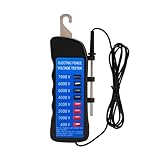
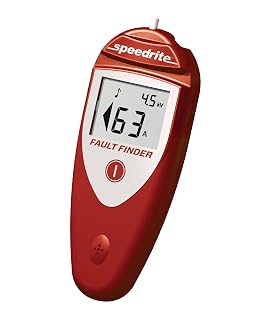
A fault finder measures fence voltage and current and points toward the fault; a fence tester measures voltage only. That is the whole of fault finder vs fence tester: the tester tells you the fence is weak, the fault finder tells you where the weakness is. For a short goat fence you can walk in minutes, a tester is enough; for long runs or multi-zone pasture, a fault finder saves the walk.
Also worth comparing
 Speedrite Digital Fault FinderCheck price on Amazon
 ALLOSUN Electric Fence Tester Fault Finder Digital ElectricCheck price on Amazon
GoatGearLab earns a commission when you buy through links on this page, at no extra cost to you. As an Amazon Associate I earn from qualifying purchases. Affiliate disclosure.
Fault finder vs fence tester: the short answer
Buy a fence tester if your fence is short and simple: it reads voltage at any point, and a low reading tells you something is wrong. Buy a fault finder if your fence is long or split into zones: it reads voltage and current together, and directional arrows point toward the short, so you walk straight to the problem instead of hunting for it. The reference listing for this guide, the Gallagher SmartFix, is a fault finder: it measures voltage and current on a digital screen with directional arrows, works with high-tensile wire, braid, tape, polywire and netting, and runs on a replaceable 9V battery.
What a fence tester does
A fence tester clips onto the fence wire and shows the voltage at that point. You start at the energizer, where the reading should be strong, then walk the line and check again at intervals. Where the voltage drops sharply, the fault lies between your last two readings. It is simple and reliable, and for a small paddock it is all you need. The limitation is method: every check covers one point, so a long fence means many stops, and each stop means unclipping, reading, and moving on.
Testers also teach you the fence. After a few walks you learn what strong voltage feels like at the charger and what a healthy line reads halfway round. That baseline makes the day the reading drops suddenly easy to notice, even before the goats do.
What a fault finder does
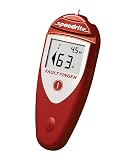
A fault finder adds a current reading to the voltage reading, and that changes everything. Current flows toward a short, so the tool can show you which direction the fault lies. The Gallagher SmartFix listing describes directional arrows that help track down shorts and faults, plus a built-in current meter and voltmeter that detect shorts and show the exact direction of the problem. Instead of checking point by point, you follow the arrows: when they flip direction or the current reading falls away, you are standing at the fault.
The SmartFix measures 3 x 5 x 9 inches, a pocket-size tool with a backlit LCD for low light and a weather-resistant casing for ranch work. It runs on a replaceable 9V battery, and the listing states a 1 year warranty. It is made for large-scale systems: rotational grazing, multi-zone pastures and long fence runs, where it helps find drop zones, power drains and incomplete loops. For a big operation, the time saved on the first hidden short pays for the tool.
How to track down a short, step by step
Whichever tool you carry, the method is the same:
- Check at the energizer first. A strong reading there means the charger is fine and the problem is on the line. A weak reading at the source means the charger or its ground needs attention before you walk.
- Walk the fence line. With a tester, check the voltage at intervals and note where it falls. With a fault finder, follow the directional arrows toward the current drain.
- Look at the usual suspects. Vegetation touching the wire is the most common short. Then check cracked or broken insulators, loose wire connections, and gates where the wire may be pinched or grounded.
- Fix one thing at a time. Clear the vegetation or replace the insulator, then recheck. If the reading recovers, you found it; if not, keep walking.
- Recheck the whole fence when done. A fence can have more than one fault, and the second one hides behind the first until the first is fixed.
Do not buy a circuit breaker finder for your fence
The reference listings for this guide include several circuit breaker finders, such as the Klein ET310, which operates on 90-120V AC circuits. Those tools are for house wiring: they locate the right breaker in a panel. They do not measure fence voltage or current and will not help with a goat fence. When you shop, make sure the tool you buy is made for electric fences, like the Gallagher SmartFix, not for AC mains circuits. The names sound similar, but the jobs are entirely different.
Which one should you buy
Match the tool to the fence. A single small paddock with one energizer: a fence tester. Long perimeter runs, several paddocks, or rotational grazing with multiple zones: a fault finder, because the directional arrows turn a long hunt into a short walk. If you already own a tester and your fence is growing, a fault finder is the upgrade that earns its keep the first time a short hides at the far corner of the pasture.
| Tool | Measures | How it finds a short | Best for |
|---|---|---|---|
| Fence tester | Voltage | Voltage drop between check points | Short, simple fences |
| Fault finder | Voltage and current | Directional arrows toward the drain | Long or multi-zone fences |
FAQs from goat keepers
Can a fence tester find a short?
Yes. Walk the line and watch for the voltage drop; the fault sits between your last strong reading and the weak one. On a long fence this takes many stops, which is where a fault finder pulls ahead.
What do the directional arrows on a fault finder do?
They point toward the current drain, which is the short. Follow them along the line; when they flip direction or the current reading falls away, you are at the fault.
Will a fault finder work on my fence type?
The Gallagher SmartFix listing names high-tensile wire, braid, tape, polywire and netting, and says it works with any energizer brand in portable and permanent setups.
How big is the Gallagher SmartFix?
The listing gives 3 x 5 x 9 inches and calls it pocket size, with a backlit LCD and a weather-resistant casing. It runs on a replaceable 9V battery.
What warranty does the Gallagher SmartFix have?
The listing states a 1 year warranty.
More from the barn
See every fence tester guide and all fencing and shelter guides.
More picks: fence testers for troubleshooting and fence testers for livestock containment.