

On this page
Top picks at a glance
As an Amazon Associate I earn from qualifying purchases.
- 1
 Parmak DF-SP-LI Solar9.5/10View on Amazon
- 2
 Zareba EDC5M-Z Battery9.4/10View on Amazon
The solar vs battery fence charger question comes up as soon as a goat paddock sits beyond the reach of an outlet. Both kinds run on a battery; the difference is whether a panel on the unit keeps that battery charged, as on the Parmak DF-SP-LI, or whether you carry the battery home to charge it, as with the Zareba EDC5M-Z. We compared these two listings on output, rated range, runtime without sun, what comes in the box, weight and the gaps each page leaves, using only what each Amazon listing publishes.
GoatGearLab earns a commission when you buy through links on this page, at no extra cost to you. As an Amazon Associate I earn from qualifying purchases. Affiliate disclosure.
Quick verdict: choose the solar side if the fence stays out on pasture for weeks at a time and nobody wants to haul a battery, as the Parmak example shows with its built-in panel, included 6 volt battery and 21 days of stated operation in darkness. Choose the battery side if the fence is short, temporary or moved often and you already own a 6 volt battery and charger, as the Zareba example shows at 3.1 pounds. The two units also sit in different output classes, so read this as a comparison of power sources first and of models second.
Two examples

Parmak DF-SP-LI Solar
A weatherproof solar fence charger with a sealed rechargeable 6 volt battery, a 1.6 joule output and a rated range of up to 25 miles of fence.
Pros
- 1.6 joule output with a rated range of up to 25 miles of fence
- Sealed rechargeable 6 volt battery comes in the box and charges from the built-in panel
- Listing states it will operate for 21 days in total darkness
- Weatherproof outdoor model, so it can sit on a post at the fence
Cons
- Recommended use names cattle, horses, pigs and dogs, not goats
- Warranty field says only Warranty, with no term stated
- No weed rating is stated for the 25 mile figure

Zareba EDC5M-Z Battery
A solid state battery operated fence charger rated for up to 5 miles of fence in moderate, dry weed conditions, run from a 6 volt battery that is not included.
Pros
- Rated for up to 5 miles of fence in moderate, dry weed conditions
- Pulsed DC output at 1 second intervals, the standard pulse for livestock fence
- 3.1 pounds and 4.9 by 9.4 by 11.7 inches, light enough to carry between paddocks
- Bullets name horses, pigs and cows, and list rabbits, skunks, woodchucks and raccoons as animals it helps keep out
Cons
- 6 volt battery is not included, so budget for one before the first use
- No joule output is stated anywhere in the listing
- Rated only for moderate, dry weed conditions, so it needs a clean fence line
- No warranty term is stated
As an Amazon Associate I earn from qualifying purchases.
Also worth comparing
 Parmak Magnum Solar-Pak 12 Low Impedance 12 Volt BatteryCheck price on Amazon
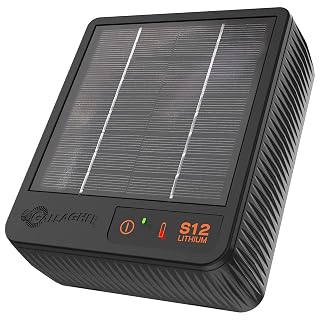 Gallagher S12 0.12J Solar Electric Fence ChargerCheck price on Amazon
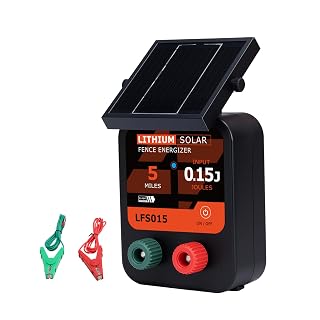 Solar Electric Fence Charger 5 Miles Range 20 Acres 0.15Check price on Amazon
 Solar Electric Fence ChargerCheck price on Amazon
 Gallagher S20 0.2J Solar Electric Fence ChargerCheck price on Amazon
 SigmasTek Parmak DF-SP-LI 6V Solar-Pak Fence ChargerCheck price on Amazon
Solar vs battery fence charger: side by side
| Charger | GoatGear Score | Power | Output | Rated range | Battery | Weight |
|---|---|---|---|---|---|---|
| Parmak DF-SP-LI Solar | 9.5/10 | Solar panel, 6 volt sealed battery | 1.6 joules | 25 miles | Included, rechargeable | Not stated clearly |
| Zareba EDC5M-Z Battery | 9.4/10 | 6 volt battery | Not stated | 5 miles | Not included | 3.1 pounds |
These are maker ratings taken from the goat gear listings on 17 October 2026, not our own measurements.
How each one keeps the fence live
A solar charger is a battery charger with a panel bolted on. The Parmak listing describes a sealed rechargeable 6 volt battery in the box and a weatherproof outdoor housing, so the unit mounts on a post at the fence and the panel tops up the battery through the day. The listing claims 21 days of operation in total darkness, which covers a long stretch of cloud or a unit that spends part of the day in shade.
A battery charger has no panel. The Zareba listing describes a 6 volt battery kit, with the battery not included, so the owner buys a battery, charges it at home and swaps it when the fence weakens. That is a chore on a back pasture, but it keeps the unit light and simple. For solar units sized for paddocks away from the barn, see our best solar fence charger for remote pastures picks.
Output joules and rated range
Output joules describe how much energy each pulse carries. The Parmak DF-SP-LI lists 1.6 joules and a rating of up to 25 miles of fence for small to medium pastures. The Zareba EDC5M-Z lists a 5 mile range in moderate, dry weed conditions and a pulsed DC output at 1 second intervals, but it states no joule figure at all, so the two cannot be compared pulse for pulse from the listings alone.
Rated miles are a maker figure, and neither listing explains how its mileage was worked out. Most small goat setups run far less fence than either rating. Treat the miles as a ceiling, and where a listing gives joules, use that number to compare power between units. Our best electric fence charger for goats roundup lists more units by stated output.
Weeds, animals and what each listing names
Weeds touching the wire pull energy out of every pulse. The Zareba listing is candid here: the 5 mile rating is for moderate, dry weed conditions, so the bottom wire needs to stay clear. The Parmak listing gives no weed rating for its 25 mile figure. Neither page describes containment as anything more than a maker claim, and we report it the same way.
Neither listing names goats. Parmak recommends the DF-SP-LI for cattle, horses, pigs and dogs. Zareba names horses, pigs, cows and exotic animals, and adds rabbits, skunks, woodchucks and raccoons as animals the fence helps keep out of a garden. Both are general livestock chargers, and a goat keeper should size the fence line and the wire or electric netting for goats around the output the listing states.
Size, weight and the box
The Zareba spec table gives 4.9 by 9.4 by 11.7 inches and 3.1 pounds, which is easy to carry to a temporary paddock. The Parmak spec table gives 17 by 8 by 13 inches, a bigger footprint because the panel sits on top, but its weight line reads 27.22 grams, and the same table lists an 18 inch blade length and an alloy steel blade material. Those entries belong to a different product and should be ignored; the listing gives no usable weight. On contents, Parmak ships the sealed 6 volt battery; Zareba ships without a battery, and its spec table says two product specific batteries are required while the bullets describe a single 6 volt battery, a contradiction to settle with the seller.
Warranty and listing gaps to check
The Parmak warranty field reads only Warranty, with no term in years or months, and the Zareba listing states no warranty at all, so neither unit earns warranty points in our score. The gaps go further: Parmak gives no weed rating and no reliable weight, and Zareba gives no joule output and no runtime per battery charge. If any of those points decides your purchase, ask the seller before you order.
Which should you choose?
Choose a solar fence charger if the unit will live on a post for the season, the pasture is far from the barn, and nobody wants to carry a battery back and forth, as the Parmak DF-SP-LI shows with its panel, included battery and stated 21 days in darkness. Keepers who rotate paddocks can also compare our best electric fence charger for rotational grazing picks.
Choose a battery fence charger if the fence is short and clean, the paddock is temporary, and you already own a 6 volt battery and a charger for it, as the Zareba EDC5M-Z shows at 3.1 pounds. If there is an outlet within reach of the fence, read our solar vs plug in fence charger comparison first, because a plug-in unit removes the battery question entirely.
Whichever you pick, the listings describe containment as a maker claim. Walk the fence after storms and keep the bottom wire clear of weeds.
Around the Barn
- Face a solar panel toward open sky and wipe dust, pollen and snow off it.
- Keep a spare charged 6 volt battery for a battery unit so the fence never goes dead on swap day.
- Check the fence each morning before turning goats out.
- Clear weeds from the lowest wire, where goats graze first.
FAQs from goat keepers
Is a solar or battery fence charger better for goats?
It depends on how far the fence sits from the barn and how often you can visit it. The solar Parmak DF-SP-LI lists 1.6 joules, a 25 mile rating and 21 days of operation in darkness. The battery Zareba EDC5M-Z lists a 5 mile rating for moderate, dry weeds and needs a 6 volt battery you buy and charge yourself.
Does a solar fence charger need a battery?
Yes. A solar charger stores the panel’s energy in a battery and pulses the fence from it. The Parmak listing states a sealed rechargeable 6 volt battery in the box, so nothing extra is needed on day one. A battery unit such as the Zareba EDC5M-Z uses the same 6 volt class of battery but ships without one.
How long does a solar fence charger run without sun?
Only the listing can say. Parmak states the DF-SP-LI will operate for 21 days in total darkness. The Zareba listing states no runtime per charge for its battery unit, so plan a swap schedule by checking the fence rather than by the calendar.
How many joules does a battery fence charger have?
Output varies by model and some listings leave it out. The Zareba EDC5M-Z in this comparison states a pulsed DC output at 1 second intervals but no joule figure, while the solar Parmak DF-SP-LI states 1.6 joules. Our goat fence charger roundup lists more units with their stated output.
Behind the Farm Score
| Product | GoatGear Score | Perf. /35 | Build /25 | Value /25 | Safety /10 | Warranty /5 |
|---|---|---|---|---|---|---|
| Parmak DF-SP-LI Solar | 9.5 | 30 | 21 | 19 | 0 | 0 |
| Zareba EDC5M-Z Battery | 9.4 | 26 | 19 | 21 | 0 | 0 |
A score of 9.2 marks the weakest point total on our scale and 9.8 the strongest; totals in between are placed proportionally.
The GoatGear Score weighs performance, build, value, safety and warranty. For fence chargers, safety points need a stated certification such as a UL listing; neither of these two listings states one, so both score zero there, and neither states a warranty term, so both score zero on warranty. The Parmak leads on stated output, its included sealed battery and its 21 day darkness claim, and loses points for the spec table errors. The Zareba scores well on value for a short, clean fence and loses points for the missing joule figure and the battery sold separately. How we pick explains the weights.
More from the barn
See every fence charger guide and all fencing and shelter guides.
More picks: fence chargers for goats, chargers for Nigerian Dwarf goats, solar chargers for homesteads and goat shelters.