

On this page
Top picks at a glance
As an Amazon Associate I earn from qualifying purchases.
- 1
 Titan PGD3875 Gas-Powered Post Driver9.5/10View on Amazon
- 2
 Titan PGD2875 Gas-Powered Post Driver9.4/10View on Amazon
- 3
 LADECH 12 Lb Hand Post Driver for T Posts and U Posts9.4/10View on Amazon
- 4
 2200W Electric T Post Driver with 2 SleevesView on Amazon
- 5
 PGD1032 Titan Gas Powered Post DriverView on Amazon
- 6
 32.6CC 2 Stroke Gas Powered T-Post DriverView on Amazon
- 7
 52CC Gas Powered T Post DriverView on Amazon
- 8
 Upgrade T-Post DriverView on Amazon
A fence line of fifty posts on a Saturday is when the hydraulic vs gas post driver question usually lands. A hydraulic post driver runs off a tractor or skid-steer hydraulic system, giving steady hammering power with no engine of its own. A gas post driver carries a small engine on the tool, so you walk the fence line with fuel instead of hoses. This guide explains how each driver powers its hammer, which fencing jobs each suits and the listed BPM, watts and weights to compare. Every number below comes from a product listing; where a listing gives no figure, we say so.
Also worth comparing
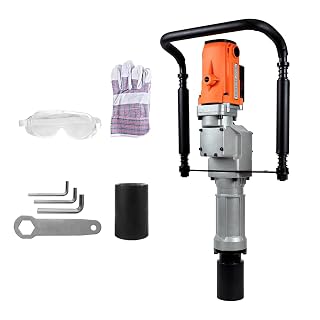 2200W Electric T Post Driver with 2 SleevesCheck price on Amazon
 PGD1032 Titan Gas Powered Post DriverCheck price on Amazon
 32.6CC 2 Stroke Gas Powered T-Post DriverCheck price on Amazon
 52CC Gas Powered T Post DriverCheck price on Amazon
 Upgrade T-Post DriverCheck price on Amazon
 PGD2875 Titan Gas Powered Post Driver Fence Post PounderCheck price on Amazon
GoatGearLab earns a commission when you buy through links on this page, at no extra cost to you. As an Amazon Associate I earn from qualifying purchases. Affiliate disclosure.
Hydraulic vs gas post driver: the short answer
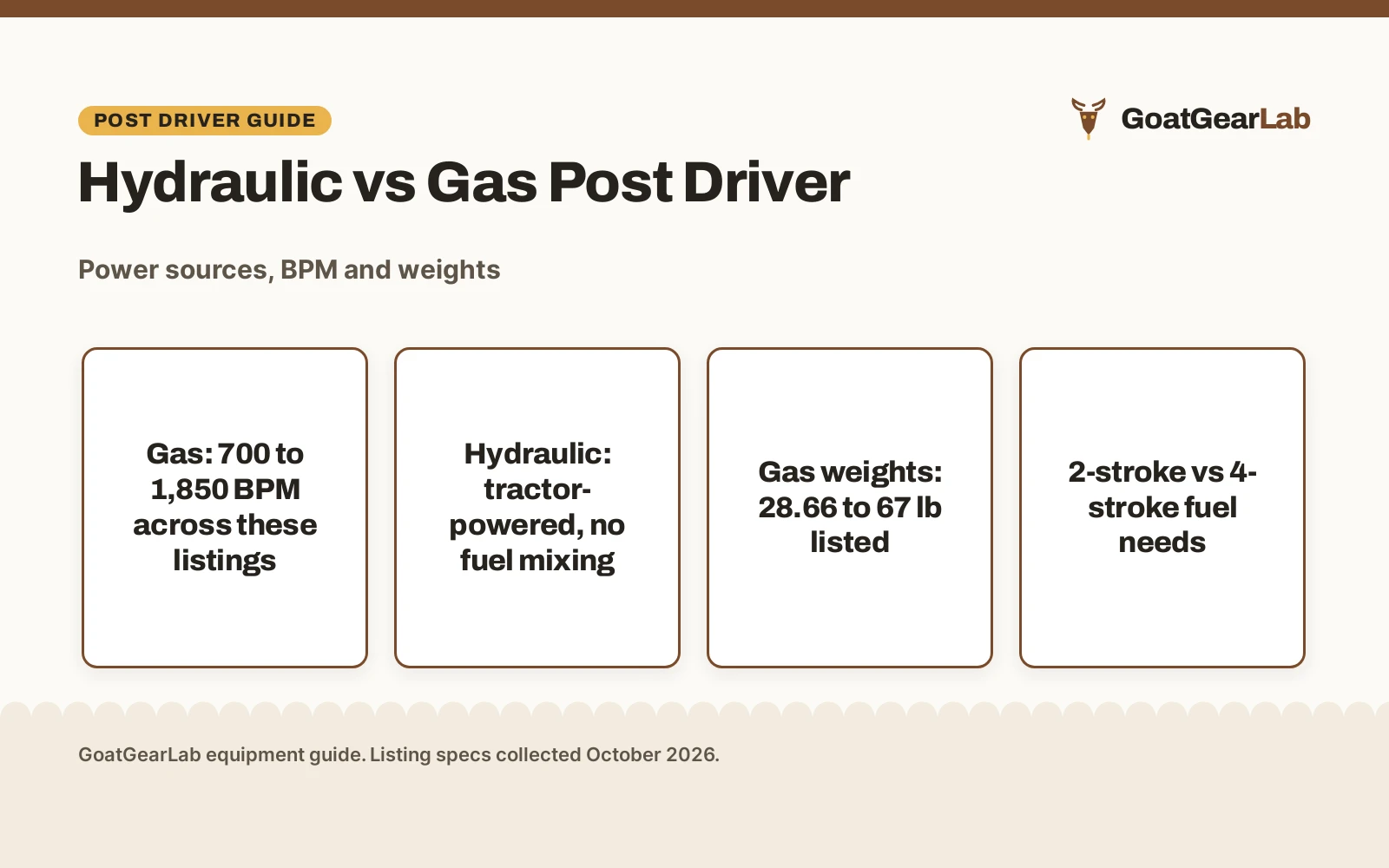
Pick gas when you drive posts by hand away from the tractor: these listings run from 700 to 1,850 BPM, weigh 28.66 to 67 lb and need only fuel, from the HENHAIY 32.6cc 2-stroke to the Titan PGD3200X with its Honda GX35 engine. Pick hydraulic when the tractor is already on the job and you have many posts: no fuel mixing, no pull starting and steadier blows, but you are tied to the machine and its hoses. These listings contain only gas drivers, so every figure below describes gas models. See gas vs pneumatic post driver for a third option.
How gas post drivers work
A gas driver is a small engine bolted to a hammer: pull the cord, set the sleeve over the post and the hammer pounds it in. The listings show the range: the XtremepowerUS 52cc 2-stroke states 1500W with 700 to 1350 BPM at 9000 rpm, a 25:1 fuel mix and a 60 days manufacturer warranty at 40.8 lb. The Titan PGD3875 states a 1.3 HP 4-stroke engine with 700 to 1,350 BPM at 50 lb, driving posts up to 3 7/8 inches with 1, 2, 3 and 4 inch adapter collars.
Four-stroke models skip the fuel mixing: the XtremepowerUS 38cc 4-stroke states 1.3HP at 6500 rpm with 1.2 ft-lb of torque and sleeves from 20mm to 100mm at 67 lb, and the Titan PGD1032 states 1,200 to 1,600 BPM at 34.5 lb with 1, 1.75 and 2.5 inch sleeves. Impact energy runs from 20 to 45J on the HENHAIY at 1200 to 2200 r/min and 8500 rpm, to 50J on the VEVOR 52cc at 1300 to 1700 BPM and 7000 RPM, to 35J on the VEVOR 37.77cc 4-stroke at 1500 to 2000 BPM.
How hydraulic post drivers work
A hydraulic driver has no engine: it plugs into the tractor or skid-steer hydraulics and turns oil pressure into hammer blows. The blows come steadier than a small gas engine, the tool is quieter than a 2-stroke, and there is no fuel to mix or carburetor to flood. The trade-off is the tether: you need a machine with enough hydraulic flow on site, plus hoses long enough to reach the line, and moving the setup between distant posts takes longer than walking a gas driver over.
These listings contain no hydraulic drivers, so this guide gives no hydraulic BPM or weight figure; every number below describes gas listings. Hydraulic suits big jobs where the tractor is working the field anyway, not a dozen posts at the far paddock.
Hydraulic vs gas at a glance
| Driver | Power source | Listed sizes | Suits | Watch for |
|---|---|---|---|---|
| Gas | Small engine on the tool | 700 to 1,850 BPM, 28.66 to 67 lb on these listings | Remote lines, small jobs, one person | Fuel mixing on 2-stroke models |
| Hydraulic | Tractor or skid-steer hydraulics | No figures in these listings | Many posts with the machine on site | Tied to the tractor and hoses |
Which should you buy?
Match the driver to the job size and the equipment on hand. For a goat fence built by hand, gas is the natural pick: the Rhino GPD40 with its Honda GX35 4-stroke states 30 percent more hitting power than the smaller GPD-30 at 38 lb with a 2 inch chuck sleeve, and the HENHAIY 32.6cc states a 0.23 gal tank at 28.66 lb for walking long lines. The Titan PGD3200X states up to 1,850 BPM with a 3-1/8 inch capacity at 62.8 lb for heavier posts.
Then weigh 2-stroke against 4-stroke: the XtremepowerUS 52cc 2-stroke needs a 25:1 mix, while 4-stroke models like the VEVOR 37.77cc run on straight fuel at 1000W and 45.6 lb. Read T post vs wood post before sizing the sleeves, and T post vs U post for post shapes.
Read the listing twice
Post driver listings mix impact ratings, and the engine size is the usual place it happens:
- XtremepowerUS 38cc: the bullets state a 38cc engine while the spec table states 1.3HP at 6500 rpm with 1.2 ft-lb of torque.
- HENHAIY: the title states 32.6CC while the bullets state 32.7cc and 20 to 45J of impact energy.
Trust the title and bullets over the spec table, and confirm the BPM and the sleeve sizes before you buy: every figure in these listings is named there, not buried in the specs.
What this guide does not cover
This guide covers driver power sources only. It does not cover post spacing, soil types or any animal handling question. Ask your local extension office about fence building advice.
FAQs from goat keepers
What is the difference between hydraulic and gas post drivers?
Gas drivers carry a small engine on the tool and run on fuel, while hydraulic drivers plug into a tractor or skid-steer hydraulic system. Gas suits remote lines and small jobs; hydraulic suits many posts with the machine already on site.
What BPM do gas post drivers list?
These listings state 700 to 1350 BPM (XtremepowerUS 52cc), 700 to 1,350 BPM (Titan PGD3875), 1,200 to 1,600 BPM (Titan PGD1032), 1300 to 1700 BPM (VEVOR 52cc), 1500 to 2000 BPM (VEVOR 37.77cc), 1200 to 2200 r/min (HENHAIY) and up to 1,850 BPM (Titan PGD3200X).
How heavy are gas post drivers?
These listings state 28.66 lb (HENHAIY), 34.5 lb (Titan PGD1032), 38 lb (Rhino GPD40), 40.8 lb (XtremepowerUS 52cc), 45.6 lb (VEVOR 37.77cc), 50 lb (Titan PGD3875), 62.8 lb (Titan PGD3200X) and 67 lb (XtremepowerUS 38cc, VEVOR 52cc).
Do 2-stroke post drivers need mixed fuel?
Yes. The XtremepowerUS 52cc states a 25:1 mix ratio, and the HENHAIY includes a proportioning pot. Four-stroke models like the Titan PGD3875 and the VEVOR 37.77cc run on straight fuel.
Can a gas post driver handle big posts?
Within limits. The Titan PGD3875 states posts up to 3 7/8 inches, the Titan PGD3200X states a 3-1/8 inch capacity, and the VEVOR 52cc includes 49, 69 and 100mm sleeves. Match the sleeve to the post before buying.
More from the barn
See every fence post drivers guide and all goat fencing guides.
More picks: gas vs pneumatic post driver, T post vs U post and T post vs wood post.