

On this page
Top picks at a glance
As an Amazon Associate I earn from qualifying purchases.
- 1
 FOREHOGAR Fence Post Driver with Handle 12LB9.7/10View on Amazon
- 2
 Stanley F996 Fence Post MixView on Amazon
- 3
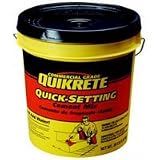 Quikrete Fast Setting Concrete Mix 20 lb.View on Amazon
The goats were leaning on the pen fence again this morning, and the corner post rocked in its hole, which is exactly when fence post driving vs concrete stops being a theory and starts being a chore. Drive a post when the soil grips it and the load is light; set it in concrete when the post carries a gate, turns a corner or sits in ground that will not hold.
Also worth comparing
 Stanley F996 Fence Post MixCheck price on Amazon
 Quikrete Fast Setting Concrete Mix 20 lb.Check price on Amazon
GoatGearLab earns a commission when you buy through links on this page, at no extra cost to you. As an Amazon Associate I earn from qualifying purchases. Affiliate disclosure.
Fence post driving vs concrete: the short answer
A driven post holds by soil pressure along its buried length, so it suits line posts, T-posts and U-posts in firm ground. A post set in concrete gets a heavy footing that resists the sideways pull of gates and the tension of a fence corner, which is why gate posts, end posts and corner posts usually get concrete. The catch is commitment: a driven post can be pulled and moved, while a concrete footing stays where it is. Match the method to the post’s job, then match the driver to the post.
If you would rather go straight to the tools, our best fence post driver for wood posts roundup compares drivers on their stated specs.
Driving and concrete side by side
| Method | How it holds | Where it suits a goat fence | The tradeoff |
|---|---|---|---|
| Driving | Soil pressure along the buried post | Line posts, T-posts and U-posts in firm ground | Needs the right driver; weak in loose or wet soil |
| Concrete footing | A heavy block that resists sideways pull | Gate posts, corner posts and end posts | Permanent; more work and more materials |
Driving means pounding the post straight into undisturbed soil, so the ground around it stays packed; a concrete footing means digging, pouring and bracing the post plumb while it sets, and it does not move later.
When concrete earns its keep
Concrete gives the post a wide, heavy footing that soil alone cannot match, and that matters where the load is not straight down: a gate hangs its whole weight off the hinge side, and a corner turns the pull of the wire. Give concrete to the posts that do the heavy work: gate posts, corner posts and end posts, plus any post in ground that stays soft or wet. A line post between solid corners carries little sideways load, so the extra work of a footing is best spent on the working posts while most of the fence gets driven.
When driving is the smarter move
Drive the line posts. T-posts and U-posts are made for it, and a manual driver with a 2.7 inch inner diameter sets them fast in firm ground. Driving skips the digging, the mixing and the wait, and because no hole is dug the post can come back out when you rotate pasture or rebuild the line.
Know where driving stops working. One electric driver listing warns it is not suitable for rocky soils, and a gas driver listing says to avoid sandy, rocky soils and areas with tree roots. In ground like that, a post that will not drive cleanly is a candidate for a dug hole and concrete instead of a bent post.
Match the driver to the post
A driver that does not fit the post is dead weight. Check the inner diameter or the sleeve size against the post before anything else, then pick the power source that matches the length of the job.
| Driver type | Stated size or power in the listings | Fitting the post |
|---|---|---|
| Manual pounder | 2.7 inch inner diameter; 8, 10, 12 and 15 lb options | Standard T-posts and U-posts |
| Manual pounder, large | 17 lb; 3.7 inch inner diameter; posts up to 3.5 inches | Wider wood and steel posts |
| Gas powered | 1300 watts; 50 joules; 49, 69 and 100mm sleeves | Swap sleeves to match the post |
| Electric | 2200 watts; 85 joules; 55 and 70mm sleeves | 110 volt supply at the work site |
Manual pounders
Manual drivers are steel tubes you lift and drop, and the listings sell them by weight and inner diameter. One listing offers 8, 10, 12 and 15 lb options around a 2.7 inch inner diameter and says the lighter versions give control while the heavier ones hit harder in hard or rocky soil. Another 17 lb driver lists a 2.7 inch interior that runs 11 inches deep, and a third 17 lb driver lists a 3.7 inch inner diameter that takes posts up to 3.5 inches.
Heavier is not automatically better: the extra weight hits harder, but you lift it all day. Pick the weight that matches the soil and the length of the fence line.
Gas-powered drivers
Gas drivers trade arm work for engine work, and the listings sell them by engine size and impact energy. One lists a 52cc 2-stroke engine at 1300 watts and 50 joules, and another lists a 37.7cc 4-stroke at 1000 watts and 35 joules. A 38cc 4-stroke listing gives piling heads covering 20 to 100mm, and a 32.6cc 2-stroke listing gives 20 to 45 joules and a 0.23 gallon fuel tank. Sleeves swap to fit the post, so check the sleeve sizes against your post before ordering.
Electric drivers
The corded option in the listings states 2200 watts, 110 volts, up to 2100 blows per minute and 85 joules of impact energy, with 55 and 70mm sleeves in the box. It needs a 110 volt supply at the fence line, which suits barn-adjacent paddocks more than back pasture.
Check the post size first
Measure the post before ordering and allow for the larger figure, since the inner diameter or sleeve size decides whether the driver slides over it.
What this guide does not cover
This guide covers setting methods and driver hardware only. It does not cover fence layout, wire choice or goat health. Check local rules for fencing near roads and property lines, and ask your veterinarian about anything health related.
FAQs from goat keepers
How do I fix a loose fence post?
Start by working out why it loosened. A driven post in firm ground can often be re-driven with a manual pounder until it stands solid again. A post in ground that stays soft or wet will keep working loose, and that is a candidate for a dug hole and a concrete footing instead.
How do I use a manual fence post driver?
Set the post where you want it, slide the driver over the top, and lift and drop it with a firm grip on the handles, keeping the driver straight so the post goes in plumb. One listing describes the same motion: place the driver over the post, lift and release until the post runs into the ground. Stop and check that the post is still straight as you go.
Can I drive posts in rocky or sandy soil?
Often not. One electric driver listing says it is not suitable for rocky soils, and a gas driver listing says to avoid sandy, rocky soils and areas with tree roots. In ground like that, dig the hole and set the post in concrete rather than fighting the driver.
How do I pick a driver that fits my posts?
Match the driver’s inner diameter or sleeve size to the post. Manual listings give a 2.7 inch inner diameter for standard T-posts and U-posts, or a 3.7 inch inner diameter for posts up to 3.5 inches, and the powered drivers ship sleeves you swap to fit: 55 and 70mm on the electric model, and 49, 69 and 100mm on a 52cc gas model.
More from the barn
See every post driver and puller guide and all fencing and shelter guides.
More picks: driver vs auger, T-post drivers for clay soil, T-post vs wood post and fence post drivers for wood posts.