

On this page
Top picks at a glance
As an Amazon Associate I earn from qualifying purchases.
- 1
 Dansydaisy 1-1/2 Inch Square Post Female Gate Hinge9.7/10View on Amazon
- 2
 Insaga Chain Link Gate Hinges for 2-3/8 Inch Posts9.6/10View on Amazon
- 3
 Homydom T-Post Gate Hinge Pins for Farm and Garden Gates9.6/10View on Amazon
- 4
 XtremepowerUS 1500W Electric Post Hole Digger Earth Auger DigView on Amazon
- 5
 Black Steel Anti-Rust Fence PanelView on Amazon
- 6
 Stanley F996 Fence Post MixView on Amazon
- 7
 8 Pack 31" Fence Post ExtenderView on Amazon
- 8
 8 Pack Fence Post ExtenderView on Amazon
- 9
 Metal Garden Fence PostsView on Amazon
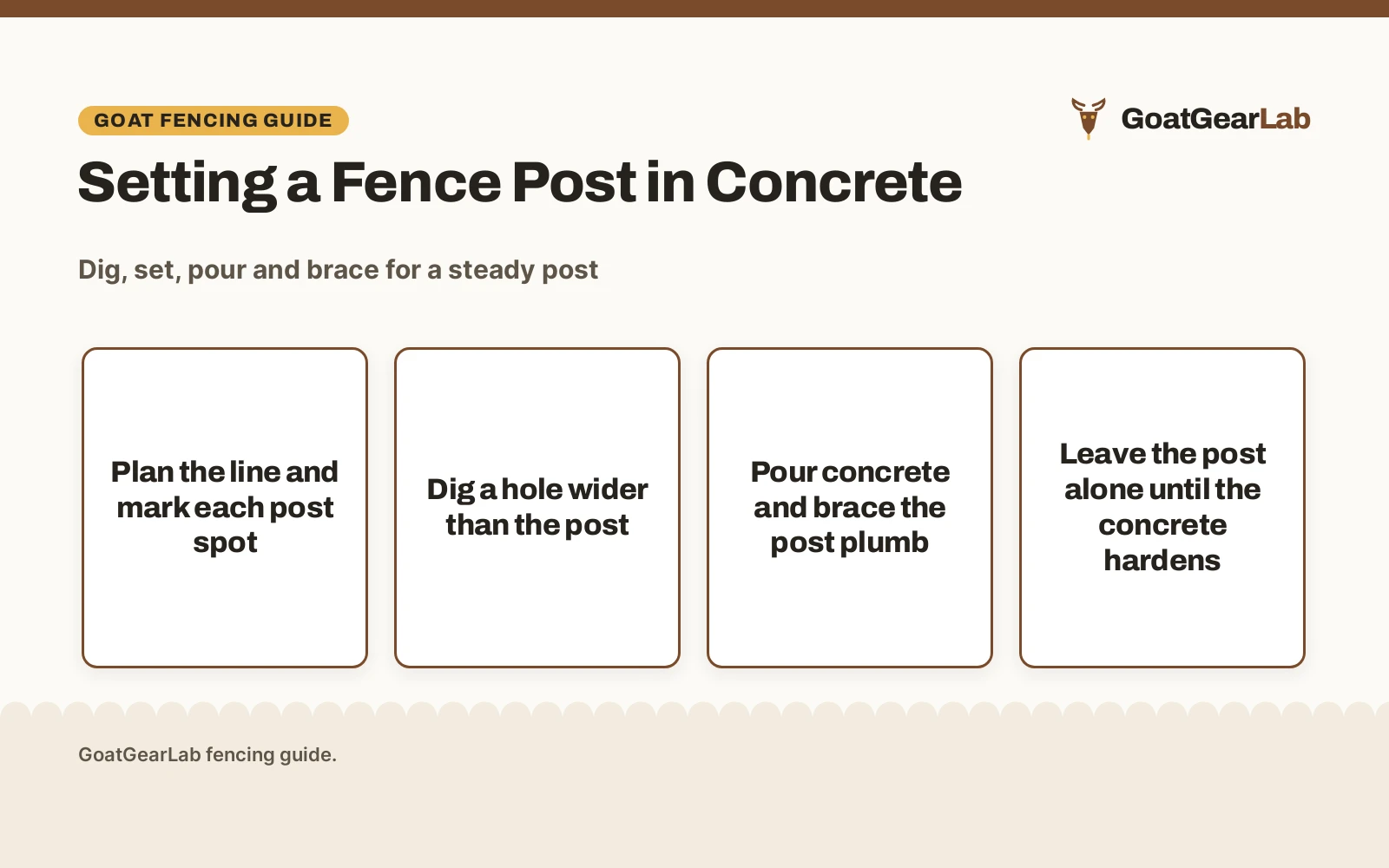
Morning chores start with a fence check, because a goat that finds a loose post will lean on it until the whole run sags, and a sagging run means hay scattered across the pen and a morning spent chasing goats instead of milking. Learning how to set fence post in concrete gives a fence post a solid footing that holds its line through wet seasons and hard leaning. The work is simple: dig a hole wider than the post, set the post straight, pour concrete around the base, brace the post while the concrete hardens, and leave it alone until it firms up. This guide walks through each step in order, with the mistakes that leave a post leaning and the fixes that keep it straight.
Also worth comparing
 XtremepowerUS 1500W Electric Post Hole Digger Earth Auger DigCheck price on Amazon
 Black Steel Anti-Rust Fence PanelCheck price on Amazon
 Stanley F996 Fence Post MixCheck price on Amazon
 8 Pack 31" Fence Post ExtenderCheck price on Amazon
 8 Pack Fence Post ExtenderCheck price on Amazon
 Metal Garden Fence PostsCheck price on Amazon
GoatGearLab earns a commission when you buy through links on this page, at no extra cost to you. As an Amazon Associate I earn from qualifying purchases. Affiliate disclosure.
How to set fence post in concrete: the short answer
Dig the hole, set the post plumb, pour concrete around the base, brace the post, and leave it alone until the concrete hardens. That is the whole job, and each step below explains the part that trips people up. Gate posts and corner posts gain the most from concrete, because gates hang their weight on a post and corner posts take the pull of wire from several directions. Line posts in firm ground can sit in packed soil or gravel, but a post that carries a gate or turns a corner earns a concrete footing. The companion guide on how to put in a fence post covers the wider job, from choosing post spots to hanging wire.
Plan the line before digging
Walk the fence line before digging any hole. Sight along the run from each end and mark where each post will stand, keeping the run straight and the spacing even by eye and by string. A string line stretched between end posts shows where the ground rises and falls, and it keeps the row from wandering. Mark gate openings and corners early, because those posts take the most strain and need the firmest footing.
Check what lies under the ground before the shovel goes in. Call the local utility locator and ask for a mark-out, and leave buried lines alone. Walk the line again after rain if possible, and note where water stands, because a post that sits in standing water will work loose sooner than a post on high ground. Move the line around wet spots where the fence plan allows it.
Dig the hole
A post hole digger suits a small job and a straight hole, while an auger suits a long run with many holes. The post hole digger manual covers the hand tool, and the comparison of post hole digger vs auger lays out when each tool earns its keep. For a long run, the best gas powered auger for post holes roundup compares machines that dig hole after hole without wearing out the digger.
Dig the hole wider than the post, with straight sides and a flat bottom. A narrow hole leaves no room for concrete around the post, and a hole that narrows at the bottom leaves the post sitting on a point instead of a base. Clear loose soil from the hole as digging goes on, and pile the spoil where it stays out of the way of the string line. A shallow bed of gravel at the bottom helps water drain away from the post end instead of pooling around it.
Set the post straight
Lower the post into the hole and turn it so its best face points along the fence line. Wood posts vary, so pick the face that looks most even and keep any bow facing along the run rather than out toward the goats. The choice of wood matters too: the cedar vs cypress fence posts comparison covers how each wood holds up outdoors.
Check the post for plumb from several angles, using a level held against the post face. A post that looks straight from the front can lean to the side, so look from the side as well and adjust before any concrete goes in. Brace the post with scrap lumber staked to the ground, with braces on several sides so the post cannot drift while the concrete is poured.
Mix and pour the concrete
Concrete can be mixed in a wheelbarrow or poured dry into the hole and wetted there. Mixing in a barrow gives a uniform mix and lets the digger see the consistency before pouring, while dry pouring suits a hole that is hard to reach with a barrow. Either way, follow the directions printed on the bag for water, and add water a little at a time until the mix holds together without slumping apart.
Pour the concrete around the post in layers, working it in with a stick or a shovel to push out air pockets. Fill to just above ground level and shape the top so it slopes away from the post, letting rain run off instead of pooling against the wood. Keep concrete off the post above ground level where it would trap moisture, and wipe away splashes before they harden.
Brace the post and leave it alone
Leave the braces in place until the concrete feels solid and the post stays put when pushed gently by hand. Pushing hard or hanging a gate early can shift a post that looks set but has not firmed up through its full depth. Plan the work so gate posts go in early in the day and gates hang on a later day, after the concrete has had time to firm up.
Keep goats away from fresh posts until the braces come off. A curious goat will rub on a braced post and lean on it, and a post that moves while the concrete is still soft will never sit straight again. A temporary panel or a strand of wire keeps the herd on the far side while the work hardens.
Concrete, gravel or driven posts
| Method | When it suits | What to watch |
|---|---|---|
| Concrete footing | Gate posts, corner posts and any post that takes strain | Needs bracing and time to harden before loading |
| Gravel backfill | Line posts in firm, well-drained ground | Needs firm packing and a post that sits plumb |
| Driven post | Straight runs where the ground takes a driven post | Needs a driver and a post that can take the blows |
Concrete suits the posts that carry weight and pull, gravel suits line posts where drainage matters more than holding power, and driven posts suit a quick run where the soil allows it. The manual fence post driver guide covers driving posts without concrete, for runs where the ground is kind and the post count is low.
Mistakes that leave a post leaning
- A hole too narrow for concrete: concrete needs room around the post to grip, so a hole barely wider than the post leaves a thin shell that cracks and lets the post wobble.
- A post set out of plumb: a lean at the base grows worse with height, and a gate hung on a leaning post will sag and drag.
- Concrete poured dry and left dry: dry mix in a dry hole may never firm up through its full depth, so water it as the bag directs or mix it wet.
- Braces pulled early: a post loaded before the concrete hardens can drift and set crooked, and straightening it after means starting over.
- Backfilling with loose soil: loose soil settles and leaves a gap where water collects against the post.
- Setting a post in standing water: water in the hole weakens the mix and softens the ground under the post, so bail the hole out or wait for a dry spell.
Most leaning posts trace back to a rushed step rather than a bad post. Slow down at the hole, the plumb check and the bracing, and the post will hold its line long after the work is done.
FAQs from goat keepers
What is the best way to set a fence post?
For gate and corner posts, concrete gives the firmest footing. For line posts in firm ground, packed gravel or a driven post can serve well. Match the method to the load the post will carry, and brace every post until its footing has firmed up.
How do you cement a fence post?
Dig a hole wider than the post, set the post plumb, brace it, pour concrete around the base, slope the top away from the post, and leave it alone until the concrete hardens.
Do you need to cement fence posts?
Not every post needs concrete. Gate posts and corner posts benefit most, because gates hang weight on them and corners take the pull of wire. Line posts in firm, well-drained ground can sit in packed soil or gravel.
Can you set a fence post without concrete?
Yes. A driven post works where the ground allows it, and a line post can sit in packed gravel that drains water away from the post end. The manual fence post driver guide covers driving posts without digging.
Why does a fence post lean after a wet season?
Water softens the ground around the footing and lets the post drift under the pull of wire or the weight of a gate. A concrete footing, a hole that drains, and a post set plumb all help a post hold its line through wet weather.
More from the barn
See every goat fencing guide and all fencing and shelter guides.
More picks: how to put in a fence post, post hole digger manual, best gas powered auger for post holes and how to remove a fence post.