Best Ground Rod for Electric Fence: 5 Rods Compared
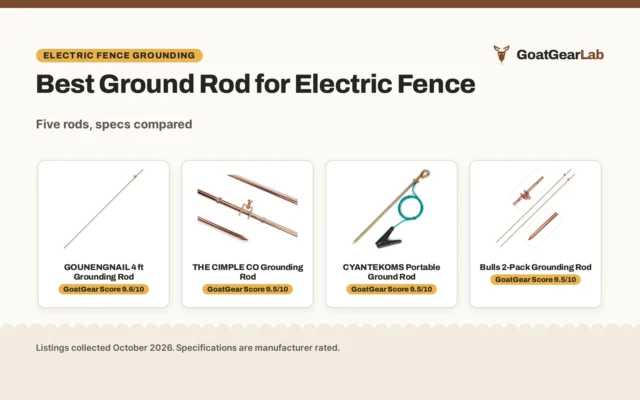
Five ground rods compared by length, diameter, material and warranty for electric fence grounding, using only what each listing publishes.

Electric fence chargers compared by stated range, output joules, solar or plug-in power and electrical listing, for goat paddocks and rotational grazing.
Five ground rods compared by length, diameter, material and warranty for electric fence grounding, using only what each listing publishes.
Solar vs plug in electric netting, explained with listing figures: solar kits, netting sizes, energizer ranges and which setup each suits.
Mount the charger, drive a ground rod 31.5 to 39.37 inches deep in moist soil, connect the ground and fence terminals, then power up and check…
AGM is sealed lead-acid: spill-proof, maintenance-free and mountable in any position, which is why it usually suits fence chargers better than flooded lead-acid.
An electric fence charger and an energizer are the same device: compare joules, range and power source instead, with figures from current listings.
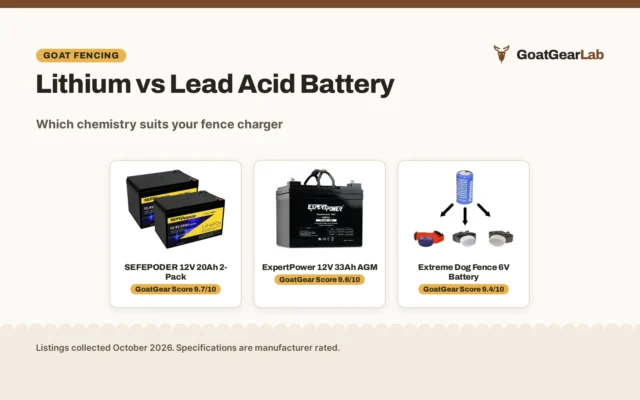
Lithium or lead acid for a fence charger battery? How the chemistries compare on weight, cycles, charging and warranty, with examples scored.
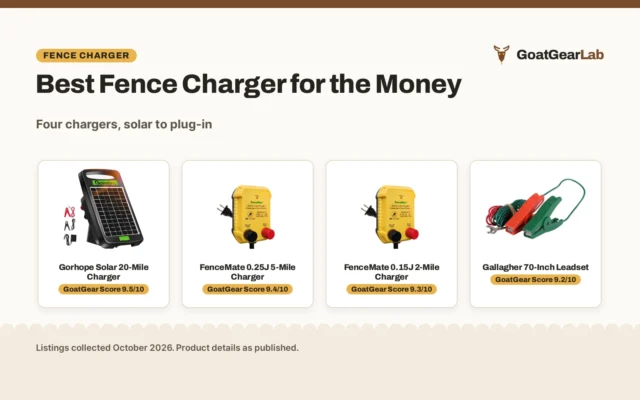
Four fence chargers compared for the money, from a 20-mile solar unit to plug-in models, with joules, range and warranties from the listings.
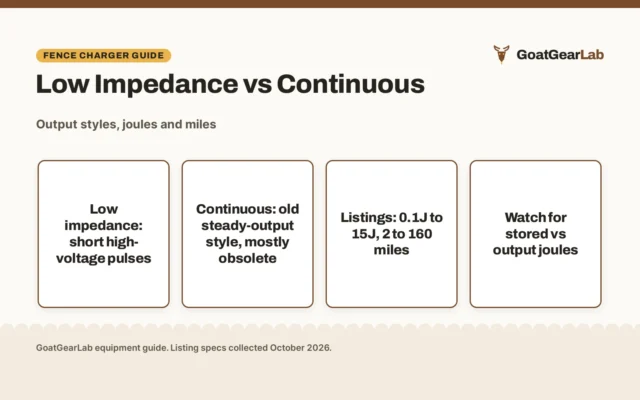
Low impedance vs continuous fence charger: how pulsed and continuous outputs differ, which fence setups each suits, and the listed joules and miles to compare.
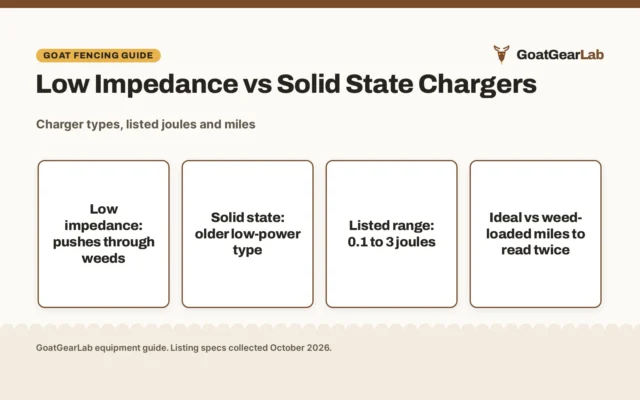
Low impedance vs solid state fence charger: how the two charger types differ, which fences each suits, and the listed joules to compare before you buy.
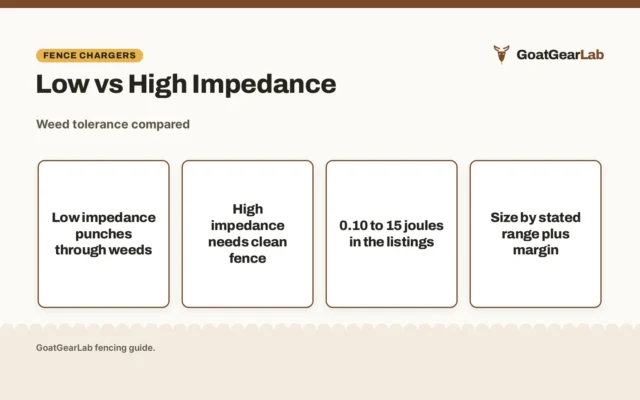
Low impedance chargers push through weeds; high impedance only suits clean fence. Compare the designs with listing figures.