

On this page
Top picks at a glance
As an Amazon Associate I earn from qualifying purchases.
- 1
 Dolibest 36 in Fence Post Puller with Round Handle9.6/10View on Amazon
- 2
 VEVOR 32 in T Post Puller with 43 in Lifting Chain9.7/10View on Amazon
- 3
 Insaga 36 in T Post Puller with Anti-Slip Handle9.5/10View on Amazon
- 4
 BISupply T Post Puller Fence Post PullerView on Amazon
- 5
 36" T-Post Puller Fence Post PullerView on Amazon
- 6
 T-Post PullerView on Amazon
- 7
 T-Post Puller Fence Post PullerView on Amazon
- 8
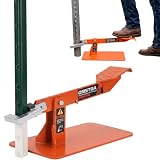 Osistga Fence Post PullerView on Amazon
- 9
 T‑Post PullerView on Amazon
A fence post that will not budge turns a simple fence repair into an afternoon of digging, and a post set in dry summer ground holds tighter than the same post in spring mud. A manual fence post puller lifts the post with leverage instead of digging, using a claw, a hook and a handle that pivots on a base. This guide explains how a manual fence post puller works, what each part does, which posts it fits and what to check in a listing, using only the figures the listing states.
Also worth comparing
 BISupply T Post Puller Fence Post PullerCheck price on Amazon
 36" T-Post Puller Fence Post PullerCheck price on Amazon
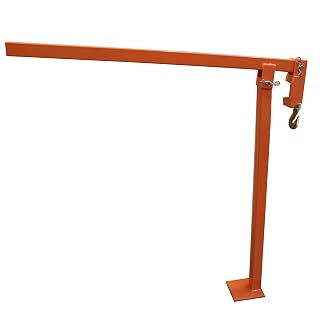 T-Post PullerCheck price on Amazon
 T-Post Puller Fence Post PullerCheck price on Amazon
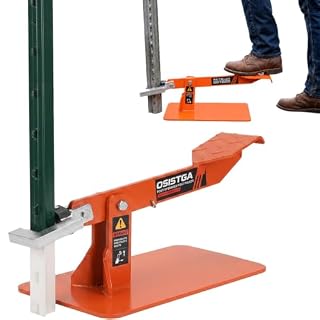 Osistga Fence Post PullerCheck price on Amazon
 T‑Post PullerCheck price on Amazon
GoatGearLab earns a commission when you buy through links on this page, at no extra cost to you. As an Amazon Associate I earn from qualifying purchases. Affiliate disclosure.
Manual fence post puller: the short answer
A manual fence post puller grips the post near the ground and levers it upward, so the post comes out without digging around it. The listing in this guide, the Dolibest heavy-duty puller (on Amazon), states a telescoping handle that adjusts from 36 to 49 inches, a 5 mm thickened base, an 18 mm one-piece claw and a hardened alloy steel hook. It fits T-posts, round fence posts, U-channel sign posts, tree stumps and ground posts. Match the handle length to the person pulling, the claw to the post shape, and the base to the ground where the post stands, then check the listing twice for figures that disagree with each other.
If you want the removal steps as well, the how to remove a fence post guide walks through the job with the right tools. The rest of this guide walks through each part of the puller in turn, with the listing figures behind it.
How a manual puller lifts a post
A manual puller works as a lever. The base sits on the ground beside the post, the claw grips the post, and the handle pivots on the base so that pulling the handle down drives the claw upward. The post rises a little with each pull, and the grip is reset lower on the post until the post comes free. No digging around the post is needed, and no power source is needed either, which is why a manual puller suits fence lines far from the barn.
The Dolibest listing describes the same working parts: a claw head that grips the post, a hook that holds a chain or rope, a handle for leverage and a base that channels the pulling force downward into the ground. The listing states that the chain is not included, so a chain or rope must be supplied separately when the hook is used to grip the post.
Handle length: 36 to 49 inches
Handle length sets how much leverage the puller gives and how comfortable the stance is. The Dolibest listing states a telescoping handle that adjusts from 36 to 49 inches. Taller users can extend the handle for a more comfortable stance, while shorter users can shorten it for better leverage control, according to the listing. A longer handle gives more leverage for a stuck post, and a shorter handle gives more control when the post starts to move.
The grip matters as much as the length. The Dolibest listing describes a round rubberized grip that fits the hand, with a non-slip rubber sheath at the end for extra traction. A round grip turns in the hand less than a flat bar during a hard pull, and a rubber sheath keeps the grip from slipping when hands are damp from morning dew or rain.
The joint where the handle meets the bracket takes the most stress during a pull. The Dolibest listing describes a reinforced square sleeve joint, an external square steel sleeve over the handle-to-bracket connection that spreads stress evenly and keeps the joint from twisting or bending under heavy loads. A sleeved joint holds up better than a plain weld at the same spot, because the sleeve carries part of the load that would otherwise sit on the weld alone.
Base, claw and hook
The base is the part that stays on the ground while the post rises, so its size and thickness decide whether the puller stays put. The Dolibest listing describes a widened 5 mm base that locks firmly to the ground and channels the pulling force vertically into the post. A thin base sinks and shifts on soft ground, while a widened base spreads the load and keeps the puller upright through the pull.
The claw is the part that grips the post. The Dolibest listing describes an 18 mm thick one-piece claw head, forged as a single unit with no weld at the claw head, paired with a hardened alloy steel hook that grips chains or ropes. A one-piece claw has no weld to crack at the point where the grip meets the post, and a thick claw holds its shape when the post resists.
The hook connects the claw to the chain or rope around the post. The Dolibest listing pairs the claw with a hardened alloy steel hook, and notes that the chain is not included. Before ordering, check what chain or rope the hook needs and whether one is already in the barn, because the puller cannot grip a post through the hook alone.
Which posts it fits
A puller is only useful if its claw fits the posts on the fence line. The Dolibest listing states that the puller works on T-posts, round fence posts, U-channel sign posts, tree stumps and ground posts, on farms, ranches, gardens and job sites. That range covers the common posts on a goat fence: T-posts for woven wire, round wood posts for corners and gates, and U-channel posts for signs.
Post shape changes how the claw grips. A T-post gives the claw a flat flange to bite, a round post gives a curved surface that the claw and hook must wrap, and a U-channel post gives a channel the claw can seat into. Tree stumps and ground posts are the hardest fit, because their shapes vary, so check the claw opening against the widest post on the fence line before ordering. The listing states no claw opening figure, so that check cannot be done from the listing alone.
For the posts themselves, the types of fence post guide compares materials and uses, and the manual T post puller guide covers pullers made for T-posts in particular.
What the listing leaves unstated
One listing can only say so much, and the gaps matter as much as the figures. The Dolibest listing states no load limit, so the heaviest post it can lift cannot be checked from the listing. It states no claw opening figure, so the widest post it can grip cannot be checked either. It states no warranty term, and it gives the item weight only as a long decimal figure, which is no help when comparing tools by feel.
The listing also states no assembly steps and no maintenance steps. A manual puller has few moving parts, and the listing describes a tool that arrives ready to use, but the absence of assembly figures means the setup cannot be checked from the listing. Ask the maker for the load limit, the claw opening and the warranty term before ordering, and keep the answers with the tool when it arrives.
Read the listing twice
Puller listings often disagree with themselves, and the numbers that conflict are usually the ones needed to plan the job:
- Handle range: the title, the bullets and the color field all give the handle as 36 to 49 inches, so all of them agree; trust that range.
- Claw thickness: the bullets spell the claw thickness as Thickeness, a spelling slip in the listing itself, but the figure is 18 mm wherever it appears.
- Chain: the hook is made to grip chains or ropes, but the listing states plainly that the chain is not included, so budget for a chain or rope separately.
- Product dimensions: the spec table gives product dimensions as long decimal figures that match no figure in the bullets, so use the bullet figures of 36 to 49 inches, 5 mm and 18 mm when planning, not the spec table decimals.
- Missing figures: no load limit, no claw opening and no warranty term appear anywhere in the listing, so those checks need a question to the maker rather than another read of the listing.
Measure the posts on the fence line before ordering and allow for the widest post, not the average one. Some listings also make claims about health or comfort; this guide leaves those out, because a puller is equipment, not a health product.
What this guide does not cover
This guide covers puller hardware only. It does not cover fence layout, post spacing or any health question. For setting new posts, the how to set fence post in concrete guide covers the job, and a veterinarian or local extension office can answer questions about animal health.
FAQs from goat keepers
How does a manual fence post puller work?
The base sits on the ground, the claw grips the post, and the handle pivots on the base so that pulling the handle down drives the claw upward. The Dolibest listing describes an 18 mm one-piece claw, a hardened alloy steel hook and a 5 mm base working the same way.
What handle length does a fence post puller need?
The Dolibest handle adjusts from 36 to 49 inches. Extend the handle for a more comfortable stance, and shorten it for better leverage control when the post starts to move.
What posts can a manual puller remove?
The Dolibest listing states T-posts, round fence posts, U-channel sign posts, tree stumps and ground posts. Check the claw against the widest post on the fence line, because the listing states no claw opening figure.
Does a fence post puller come with a chain?
The Dolibest listing states that the chain is not included. Its hook grips chains or ropes, so supply a chain or rope separately before the job.
More from the barn
See every post driver and puller guide and all fencing and shelter guides.
More picks: manual T post pullers, how to remove a fence post, manual fence post drivers and types of fence post.