

On this page
Top picks at a glance
As an Amazon Associate I earn from qualifying purchases.
- 1
 Olicity Grade 100 unbleached cheesecloth9.6/10View on Amazon
- 2
 LUMIDOMA 6Pcs Cheese Cloths 18x18 Inch9.6/10View on Amazon
- 3
 AUXIN Cheesecloth Bags for Straining9.5/10View on Amazon
- 4
 Butter MuslinView on Amazon
- 5
 14 Pack Cheese ClothsView on Amazon
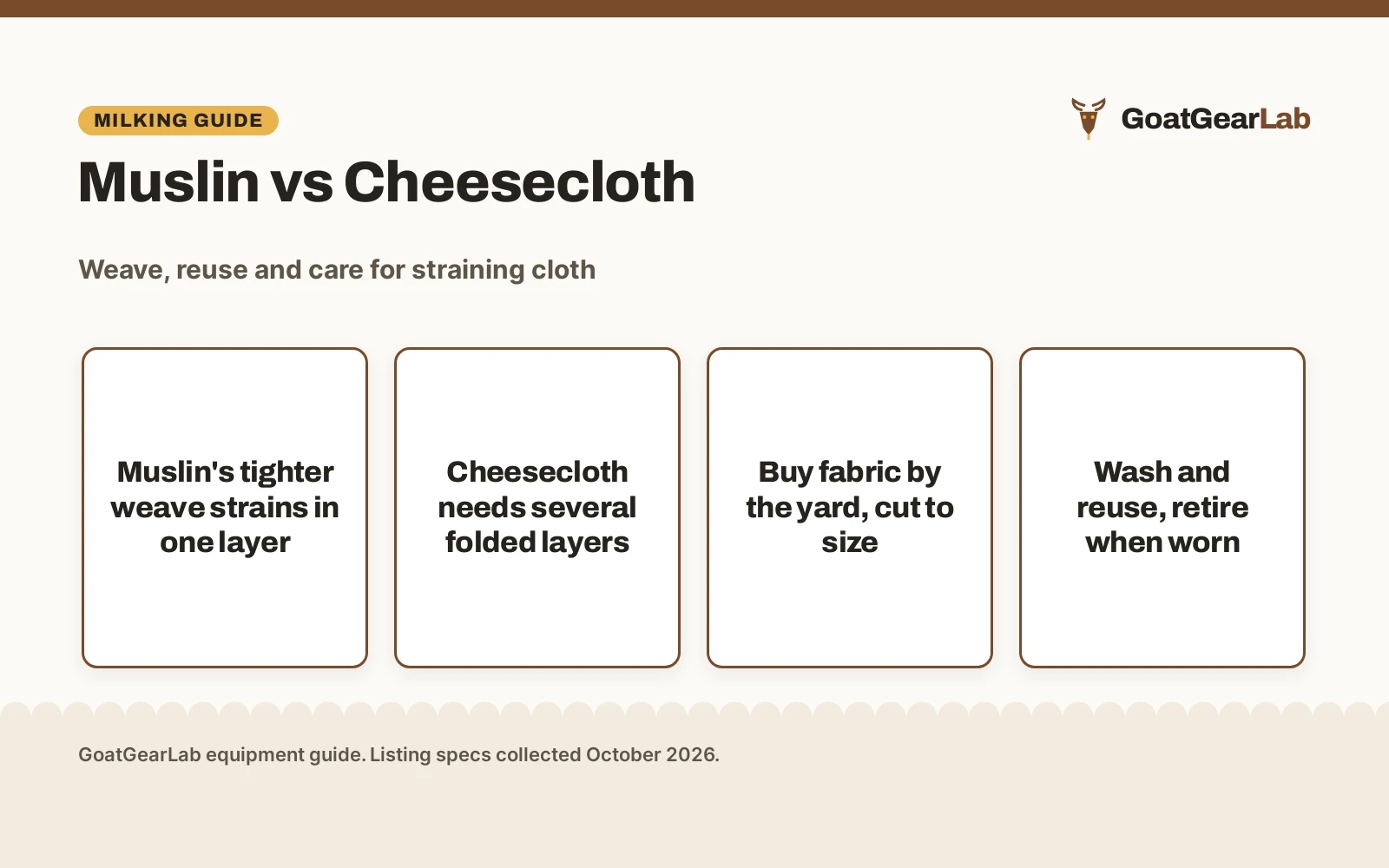
Morning milking is done, the pail is full, and now the milk needs straining before it goes into the jar. That is where muslin vs cheesecloth matters: pick muslin, specifically a plain tight-weave cotton muslin, for straining goat milk. Cheesecloth is a looser, gauzier fabric that lets fine sediment slip through unless you fold it into many layers, while muslin’s tighter weave catches more in a single layer and holds up to repeated washing.
Also worth comparing
 Butter MuslinCheck price on Amazon
 14 Pack Cheese ClothsCheck price on Amazon
GoatGearLab earns a commission when you buy through links on this page, at no extra cost to you. As an Amazon Associate I earn from qualifying purchases. Affiliate disclosure.
Muslin vs cheesecloth: the short answer
For straining milk, muslin wins. It is a plain-weave cotton cloth with a tighter weave than cheesecloth, so one layer strains out fine bits that would pass through a single layer of cheesecloth. Cheesecloth is woven much looser and is usually sold in a gauzy, open texture that works for wrapping or draining, but it needs to be folded several times to strain anything fine. Muslin also survives the wash better, which matters when you strain milk twice a day.
If you want to see the rest of the milking setup, our milking bucket with strainer roundup covers pails that work with cloth, and how to clean milking equipment walks through wash routines.
What muslin is
Muslin is a plain-weave cotton fabric sold both as sewing fabric by the yard and as finished cloths. The listings we looked at show unbleached muslin sold 63 inches wide, with bleached muslin at 59 inches wide, and sold in cuts such as 2 yards (72 inches long) or 10 yards (360 inches long). One bolt gives you plenty of cloth to cut into straining squares, and the edges can be hemmed or left to fray depending on how you use them.
Finished muslin goods show how versatile the fabric is: Comfy Cubs lists 6-layer muslin cloths for absorbency, and swaddle blankets in the listings measure 38 by 40 inches. For milk straining you want the plain fabric form, not a baby product, but the point stands that muslin is a sturdy, washable cotton that softens with washing rather than falling apart.
What cheesecloth is
Cheesecloth is a very loosely woven cotton gauze. It is made for wrapping, lining molds and draining, where the liquid needs to flow through fast. As a straining cloth it is the weaker choice: a single layer leaves too much behind, so you end up folding it into several layers, and the loose weave snags and stretches each time you wring it out. It is also harder to wash clean because the open weave catches fibers and breaks down with repeated scrubbing.
| Cloth | Weave | Straining job | Care |
|---|---|---|---|
| Muslin | Plain weave, tighter | Catches fine sediment in one layer | Machine wash on low or hand wash, air dry |
| Cheesecloth | Open gauze, looser | Needs several folded layers for fine straining | Washes out of shape faster |
Why weave matters for straining milk
Straining is a physical filter job: the cloth has to let milk through and hold back everything else. A tighter weave does that in one pass. A loose weave forces you to compensate by folding, and every fold doubles the rinsing work and the places where sediment can hide. Over months of twice-daily milking, the cloth you reach for is the one that rinses clean with a shake under the tap.
Muslin has one more advantage for the barn: the unbleached kind shows up on listings as a plain, unfinished cotton with no dyes to worry about, and the makers describe it as soft and breathable. If you want a dedicated straining cloth rather than a cut square, look for “butter muslin” on the listing, which is the fine-weave version sold for this exact job.
How much cloth to buy
Buy fabric, not finished cloths, if you strain every day. AK TRADING CO. lists its unbleached muslin at 63 inches wide, and 10 yards measures 360 inches long, so a single bolt cuts into a stack of squares with plenty to spare. A few squares in rotation means you always have a clean one while the rest are in the wash.
Cut the squares a little larger than your strainer or jar mouth so the cloth stays put while you pour. Hem the edges if you can sew, or pink them to slow fraying; a raw edge will keep working, it just frays faster. Keep one set for milk and a separate set for anything else, so flavors and residues never cross over.
Washing and reuse
Muslin is a wash-and-reuse cloth. The fabric listings split on method: HOTGODEN lists machine wash on a low setting or hand wash with air drying, while AK TRADING CO. lists hand wash only. For straining cloth, rinse the cloth in cool water right after milking so milk residue never sets, then wash per the care label and let it air dry. Lovely Care, in a related cloth listing, recommends machine washing below 70 degrees C, which is a reasonable ceiling for cotton cloths.
Replace a square when the weave opens up, the edges fray past use or it stops rinsing clean. Because a bolt gives you so many squares, replacement is cheap and there is no reason to keep a worn cloth in the rotation.
What this guide does not cover
This guide covers straining cloth choice only. It does not cover how often to milk, milk handling times, or any health question. Ask your veterinarian or local extension office about milk safety and herd health.
FAQs from goat keepers
Which cloth is better for straining goat milk?
Muslin. Its tighter plain weave catches fine sediment in a single layer and stands up to repeated washing, while cheesecloth’s loose weave usually needs several folded layers to do the same job.
Can I reuse muslin for straining milk?
Yes. Rinse it in cool water right after milking, then wash per the care label: HOTGODEN lists machine wash on a low setting or hand wash with air drying, and AK TRADING CO. lists hand wash only for its muslin.
What size should I cut my straining squares?
Cut them a little larger than your strainer or jar mouth. Unbleached muslin is listed at 63 inches wide and sold by the yard, with 2 yards measuring 72 inches long, so one piece cuts into many squares.
Does unbleached or bleached muslin matter for straining?
The listings show both: unbleached at 63 inches wide and bleached at 59 inches wide. Either works as a straining cloth; pick unbleached if you prefer the plain unfinished cotton the listings describe.
How do I wash muslin straining cloths?
Rinse in cool water immediately after milking, then machine wash on low or hand wash and air dry. One cloth listing recommends machine washing below 70 degrees C, and you should retire any square that stops rinsing clean.
More from the barn
See every milk pails and strainers guide and all milking guides.
More picks: milking buckets with strainers, hand vs machine milking, cheese making kits and oil vs oil free milking machines.